


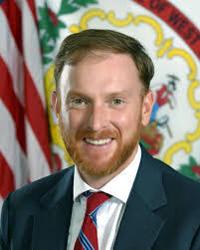


CHARLESTON – West Virginia Attorney General J.B. McCuskey has joined a bipartisan coalition of 49 other attorneys general pushing the Federal Communications Commission to strengthen its “Know Your Customer” rules to help prevent scammers from using the U.S. communications network to make illegal robocalls.
KYC rules require phone companies to know who is making calls through their networks and what kinds of business these firms are conducting. With that information, phone companies can suspend or terminate callers who use their networks to make unlawful calls or decline to do business with agencies that aren’t legitimate companies or can’t prove that they conduct lawful business.

McCuskey
“Robocalls aren't just an annoyance – they're a gateway for scammers to defraud West Virginians out of their hard-earned money,” McCuskey said. “Strengthening the FTC’s Know Your Customer rules puts real accountability back into the system by making it harder for bad actors to hide behind anonymous accounts and spoofed numbers.
“When telecom providers and platforms actually know who their customers are, it becomes far easier to shut down fraud rings before they ever reach a consumer's phone.”
According to the AG’s office, illegal robocalls start with an originating voice service provider allowing bad actors to use their network. If scammers can’t get their calls onto the U.S. communications network, they can’t make illegal robocalls.
So, the AGs say these originating voice service providers are key to stopping these calls from reaching people. McCuskey has previously asked the FCC to strengthen its KYC rules.
Even though providers already are required to know who their customers are, the AGs say the current requirements aren’t strong enough. Last year, Americans received more than 29.6 billion scam robocalls and texts and lost nearly $2 billion to these scams.
In addition to what the FCC is already doing, the AGs urge the FCC to:
Require providers to understand their commercial clients’ business. In addition to verifying a customer’s identity and existence, originating providers should also be required to examine and understand the customer’s business practices, reputation, history, intended use of services, and their compliance with state and federal laws.
Hold all originating providers to KYC standards. Even small originating service providers should be required to meet enhanced KYC standards. Illegal calls are often facilitated by smaller voice service providers. Not holding small providers to the same standards could cause them to be even more attractive to bad actors looking to use them to make illegal robocalls.
Require originating providers to collect additional information on high-risk customers. While KYC requirements should be universal, the attorneys general support additional, long-term monitoring of customers who are more likely to make illegal robocalls, such as those subscribing to high volume services.
Earlier this month, the coalition of AGs sent reply comments to the FCC encouraging it to crackdown on illegal robocalls by strengthening rules that would cut off scammers’ access to legitimate phone numbers.
The two letters are part of Phase 2 of Operation Robocall Roundup, an effort by the Anti-Robocall Multistate Litigation Task Force to crack down on robocalls across the country. Phase 1 launched in August 2025 with warning letters sent to 37 smaller voice providers that were allowing suspected illegal robocalls onto the U.S. telephone network. Phase 2 launched in December and expanded the crackdown to four of the largest intermediate voice service providers in the country.