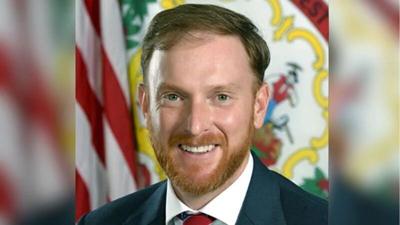



West Virginia Attorney General J.B. McCuskey
CHARLESTON — Tax season is here, and West Virginia Attorney General J.B. McCuskey says scammers could try to steal your refund before you can claim it.
McCuskey’s office is warning consumers about emails or texts promising a tax refund.
The AG’s office says if you get a text or email about a tax refund – especially one that asks you to click a link – know that it is a scam designed to steal your personal identity, your actual tax refund or both.
McCuskey says “tax refund” scams are emails or texts that appear to be from the Internal Revenue Service (IRS) or a state tax office and claim they’ve “processed” or “approved” your tax refund. They tell you to “verify your identity” to receive the money and ask you to click a link to enter personal identifiable information such as your Social Security number and bank account number.
The AG’s office says this is a phishing scam designed to trick you into giving scammers your personal and financial information.
McCuskey’s office offers other tips to help if you receive a message like that. It says:
Know that the IRS and state tax offices do not reach out by text, email or by social media to confirm your information.
Do not respond or click any links. To check on the status of a pending tax refund, visit USA.gov to learn how to find out if you are really getting a federal or state tax refund.
Report and delete the message then block the number or email address. Use your phone’s “report junk” option or forward unsolicited texts to 7726 (SPAM) and mark unwanted emails as junk or spam. Delete the message once you have reported it.
The AG’s office also says watch for signs indicating an email or text is fake. Consumers can follow these tips to avoid becoming a victim. Look for:
Emails that do not include a name, telephone number, or other verifiable contact information.
Claims that there is a problem with your payment information or account.
Incorrect or unusual grammar.
Requests for you to verify your personal or payment information.
Unusual email addresses or URL structures. The URL is the address of the website found at the top of your web browser, for example, https://www.wvago.gov. Examine the URL of the website you are visiting and look for misspellings, for example, https://www.yourbonk.com instead of https://www.yourbank.com.
URLs that begin with what looks like a legitimate website but have unusual spelling or extra characters at the end. Example: https://www.yourbank.com.ir123g.
If you receive a text or email with any of these characteristics, the AG’s office says it’s a scam.
Anyone who believes they have been the victim of a scam is asked to contact the Attorney General’s Consumer Protection Division at 800-368-8808 or visit the office online at ago.wv.gov.