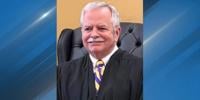


Judge Tim Sweeney
CHARLESTON – The West Virginia Supreme Court of Appeals has admonished Circuit Judge Tim Sweeney for using a court order threatening state officials with contempt and soliciting media coverage to pressure the Department of Human Services to address child welfare staffing shortages.
In a November 12 opinion, the court said Sweeney crossed the line from legal error into judicial misconduct when he ordered senior DHS officials to appear for assignments as front-line child welfare workers, even though he did not intend to make them perform those jobs.

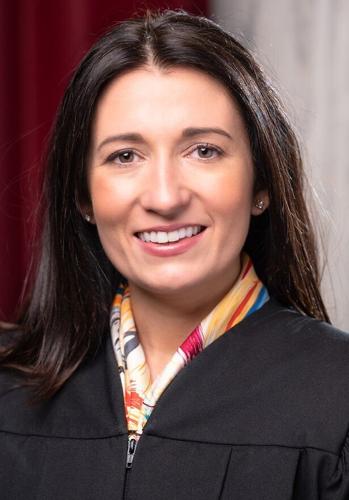
Bunn
“Entering an order in good faith that lacks a legal basis is error; openly and admittedly utilizing it as a coercive tactic is misconduct,” Chief Justice Haley Bunn wrote for the court.
The justices found seven violations of the Code of Judicial Conduct arising from the DHS matter and separate Facebook activity. They ordered Sweeney to pay the costs of the disciplinary proceeding but imposed no suspension or fine.
The court acknowledged Sweeney acted out of genuine concern for children and that his intervention prompted a staffing plan. But the justices said those results did not excuse using judicial authority and publicity to pressure an agency that appears before him as a litigant.
When asked to comment on the admonishment, Sweeney said his actions did have some positive results.
“Sometimes you just have to take a punch for the kids,” he told The West Virginia Record. “Abused and neglected children were helped, and shortcomings were addressed. That was and continues to be my goal. Curiously, despite significant similarities, a related case produced an opposite result.”
Sweeney seemingly was referring to the Supreme Court dismissing ethics charges against Kanawha Circuit Judge Maryclaire Akers in August.
Delayed placement prompted order
The Sweeney dispute began in a confidential abuse and neglect case in which Sweeney had ordered a child placed at an out-of-state treatment facility in October 2024. By a February 3, 2025, review hearing, the placement still had not occurred.
Two Child Protective Services workers testified about understaffing in their local office and unanswered requests for help from DHS. Sweeney later testified their accounts made him “very angry” and prompted him to consider responses he described as “pretty extreme,” including incarcerating the agency’s commissioner for civil contempt.
Instead, Sweeney issued an order that day titled “In Re: Critical Understaffing” of DHS directing the department’s secretary, general counsel and other officials to appear February 20 “personally, under penalty of contempt” to receive assignments in child protective services.
The next day, Sweeney provided the order to a Parkersburg newspaper reporter and solicited an interview. He appeared February 5 on MetroNews’ “Talkline,” where he discussed the order, testimony from the underlying hearing and the state’s legal obligations.
Sweeney testified that he wanted to highlight the staffing problem in a “very serious and alarming way,” but also said “nobody was going to go to jail.”
He met with then-DHS Secretary Alex Mayer on February 10 and developed a plan to address staffing, leading to cancellation of the scheduled hearing. DHS’s general counsel testified that she understood the order was intended to get the department’s attention and never believed Sweeney actually intended to turn agency officials into CPS workers.
Court distinguishes error from misconduct
The Judicial Hearing Board recommended an admonishment for six ethics violations. The Supreme Court agreed with those findings but added a violation of Rule 2.2, which requires judges to uphold and apply the law and perform their duties fairly and impartially.
The additional violation concerned the substance of the staffing order itself.
“Under the guise of a compulsory job reassignment which had no legal basis and was designed to garner attention and prompt reaction from DHS, Judge Sweeney brazenly threatened its officials with the ‘penalty of contempt’ for failure to appear and submit to the reassignment,” Bunn wrote.
The opinion distinguished Sweeney’s conduct from the legal overreach addressed in the court’s separate decision involving Judge Redding and DHS staffing. While that decision clarified limits on judicial intervention in executive branch operations, Sweeney’s admitted use of fictitious work assignments went beyond a good-faith legal mistake, the court said.
The justices rejected a separate allegation that Sweeney denied DHS officials the right to be heard. The scheduled appearance provided an opportunity to challenge the order, and the staffing agreement resolved the matter before that date.
But the court concluded Sweeney’s media appearances violated restrictions on public statements about pending matters and undermined confidence in his impartiality.
Sweeney argued the order addressed a systemic problem rather than a case requiring adjudication. He also maintained his comments explained court procedures and that DHS responded to the order itself, not the publicity.
The court disagreed. The order created a pending matter because it imposed mandatory obligations on identified officials under threat of contempt, the justices said.
“Because Judge Sweeney’s public statements were admittedly an integral part of his plan to exert pressure upon DHS to address staffing, he cannot now disavow the impact of the publicity he actively solicited for precisely that purpose,” Bunn wrote.
The Supreme Court acknowledged both the seriousness of staffing problems and the frustration judges experience when agency failures threaten children’s welfare. But the court said judges cannot use their responsibility for abuse and neglect cases as authority to unilaterally investigate and remedy broader agency problems outside a proper case or controversy.
“While Judge Sweeney’s conduct happened to concern a matter that elicits universal agreement – the well-being of children – judges who stray so far outside their role such as to violate the Code are not immunized from discipline based on the popularity or success of their misconduct,” Bunn wrote.
The opinion emphasized that judges can help address systemic problems through collaborative meetings with local professionals. The judicial conduct code encourages such off-the-bench leadership, provided those meetings do not involve discussion of individual cases.
Facebook conduct also drew discipline
The court separately upheld findings involving Sweeney’s Facebook activity, which included sharing law enforcement hiring notices, criminal investigation alerts and reports about human trafficking prosecutions through an account displaying a photograph of him in his judicial robe.
The justices concluded the cumulative effect created an appearance of alignment with law enforcement and prosecutors. They also found that reposts concerning a wanted man and an investigation into a St. Marys business violated restrictions on public statements about pending or impending matters.
The court rejected an allegation that Sweeney improperly solicited charitable contributions by sharing fundraiser announcements without adding a direct request for donations.
Sweeney sought exoneration on all violations found by the hearing board. Judicial Disciplinary Counsel Teresa Tarr supported an admonishment while asking the court to find additional violations.
In deciding the sanction, the justices credited Sweeney’s honorable motives, cooperation and previously unblemished disciplinary record. He has served as a judge since 2010 and previously was Pleasants County’s prosecuting attorney. His circuit includes Pleasants, Doddridge, Ritchie and Wirt counties.
“He was cooperative and forthright in this matter, and his misconduct was neither self-promoting nor dishonest,” Bunn wrote. “And while his motivations do not justify his actions, we find that an admonishment adequately deters similar misconduct in the future and is a proportionate sanction for Judge Sweeney’s conduct viewed in its totality.”
Sweeney was represented by J.H. Mahaney of Dinsmore & Shohl. Tarr represented the Judicial Investigation Commission.
Supreme Court of Appeals of West Virginia case number 25-475