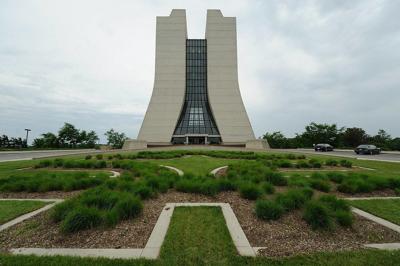


Fermilab, Batavia, Illinois
CHICAGO — A federal judge will permit an Italian scientist to keep pressing a few portions of her discrimination lawsuit against the company that operates Fermilab.
Emanuela Barzi, now 57, worked for 27 years at Fermi National Accelerator Laboratory which, until 2025, was under management and operation of the Fermi Research Alliance, a group formed through the University of Chicago and the Universities Research Association and contracted with the U.S. Department of Energy. FermiForward Discovery Group became the management/operations contractor in 2025.
But it was FRA that laid off Barzi and 53 other employees in November 2024. Her lawsuit claims the termination was the final act of sexual discrimination dating to her 1997 hiring as a guest engineer when, she claimed, similarly qualified male counterparts got offered scientific-track roles, a position she had to wait 20 years to access. In addition to other allegations of gender-based professional exclusions, the claims involve direct sexual harassment, including stalking, unwanted physical contact, more than 300 “lewd emails” from one colleague and in-office sexual assault.
Barzi’s lawsuit names FRA, FermiForward and seven individual Fermi employees, all of whom had repeatedly moved to dismiss Barzi’s litigation.
In an opinion filed Nov. 6, U.S. District Judge Virginia Kendall largely denied those motions to toss the claims.
The defendants asked Kendall to dismiss the entire complaint on the grounds it violated federal court rules mandating brevity and adequate notice of actionable claims. She noted the “second amended complaint consists of 70, single spaced pages, and included 70 additional pages of exhibits. Although coherent, the complaint fails to be concise and is drowning in extraneous details.”
Barzi is representing herself, Kendall noted, but nonetheless “is required to follow the law and federal and local rules.”
Because Barzi didn’t replead or amend her claim of national origin discrimination, Kendall agreed to dismiss that portion with prejudice. She likewise agreed claims of discrimination linked to post-traumatic stress disorder failed to adequately draw a connection between her condition and the end of her employment and also tossed as underdeveloped several claims accusing the named individual defendants aided and abetted discrimination and retaliation under the Illinois Human Rights Act.
A First Amendment retaliation claim failed for being unable to show the individual defendants operated under color of state law. In trying to preserve this claim, Barzi added allegations about retention of DuPage County sheriff’s deputies “to revoke her access to Fermilab and to prevent her from obtaining her personal belongings and records,” Kendall wrote. But “Barzi did not include any allegations that state employees or deputies had direct involvement in the adverse employment action the Individual Defendants took against her.”
An equal protection claim likewise failed in that it didn’t sufficiently allege government action, while Brazi also failed to sufficiently plead that discounting her Italian training and academic credentials rose to the level of racial or ethnic discrimination. Kendall further rejected claims for breach of implied contract and promissory estoppel for failure to allege such implications or promises existed or would have offered protections.
However, Kendall did find Barzi’s retaliation claim sufficient to allow her another chance to amend the pleading.
“It is difficult to discern which actions Barzi alleges were retaliated against due to the wordy complaint,” Kendall wrote, adding she inferred the allegations involved Barzi “filing an Equal Employment Opportunity Commission complaint alleging discrimination and publishing a whistleblower article alleging that Fermilab discriminates against women in the workplace by not paying them the same, not promoting them the same as men, and harassing them in the workplace.”
Because those “allegations would sufficiently state a claim,” Kendall wrote, Barzi has a chance to improve her filing.
But turning to a claim of retaliatory discharge, Kendall said Barzi failed to show how the termination violated public policy. Barzi argued that was the case because her firing contravened the Illinois Whistleblower Act, the IHRA along with case law and Department of Energy regulations.
The Whistleblower and Human Rights acts have “their own deterrent mechanisms,” Kendall wrote, and therefore “do not constitute clearly mandated public policy in retaliatory discharge claims.” Further, although Barzi cited legal precedent, she used cases that don’t “embody the specific public policy she claims FRA violated” and her “reliance on DOE provisions” doesn’t fall within the narrow definition of applicable retaliatory terminations, such as those based on reporting of an employer’s criminal acts or violating health and safety standards.
Kendall denied the motion to dismiss five other claims but didn’t address those allegations in her Nov. 6 order.