

Stop sign
CHICAGO — Motorola has improperly shared data from its license plate reading cameras with federal immigration agents and other federal law enforcement offices, allegedly in violation of California state privacy law, according to a new class action lawsuit.
On May 27, attorney and Democratic former Illinois state lawmaker Scott Drury filed the lawsuit in Cook County Circuit Court against Chicago-based Motorola Solutions. Drury and his firm, Drury Legal, of HIghwood, was joined in the action by attorney Joshua D. Arisohn, of Litchfield, Connecticut.
The lawsuit was filed on behalf of named plaintiffs Michelle Rojas and Marissa Barriga, both identified as residents of Merced.
However, the plaintiffs seek to advance the lawsuit as a class action, potentially on behalf of thousands of California residents.
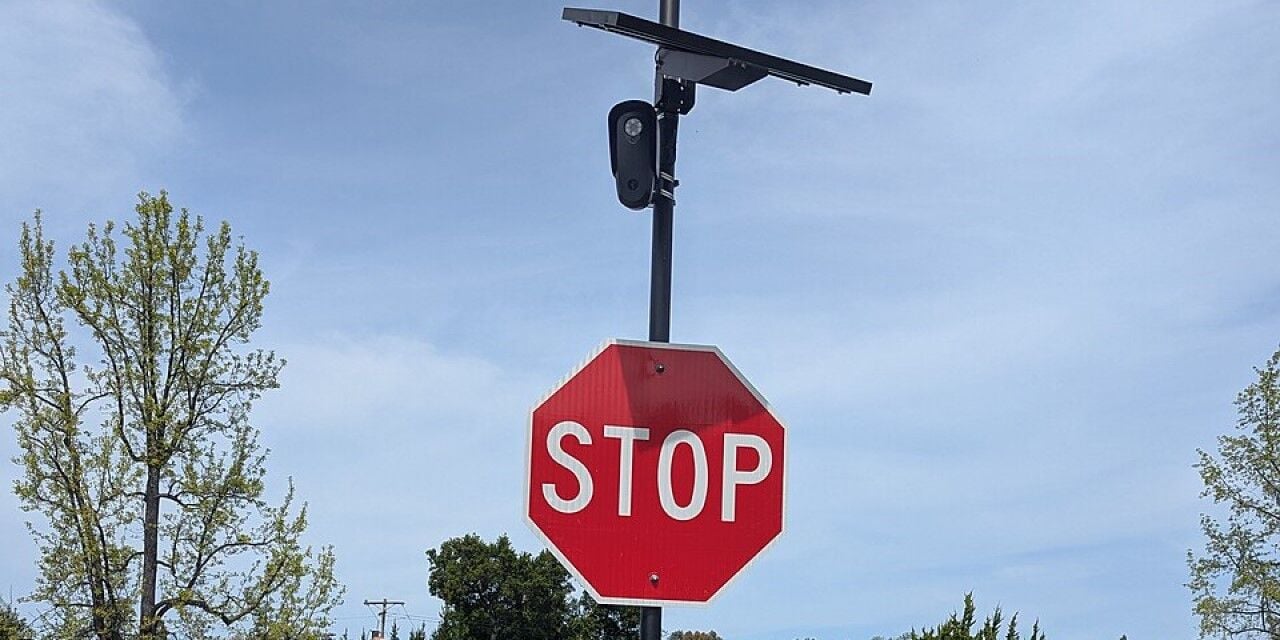
The lawsuit centers on Motorola Solutions' manufacture and operation of advanced license plate reader (ALPR) cameras.
The lawsuit further represents a new escalation in the litigation fight now ongoing in courts in California and elsewhere over the use of ALPR technology.
In recent months, at least five major class action lawsuits have been filed over the tech. The lawsuits have primarily targeted Flock Group, a company that has supplied such ALPR systems to cities, counties, and other public and law enforcement entities, as well as private property owners, throughout the U.S.
The ALPR cameras have been marketed, sold and operated with the stated goal of using their surveillance capabilities to assist law enforcement in discouraging and combating crime.
However, privacy advocates, criminal justice reform activists and opponents of immigration enforcement have sued Flock and their partners in law enforcement and private enterprise.
In some of the ALPR cases, plaintiffs have asserted use of the license plate readers amount to violations of Fourth Amendment rights to be protected against warrantless searches.
In litigation that has been consolidated in San Francisco federal court, the plaintiffs accuse Flock of violating California's privacy laws, which Democratic lawmakers wrote to generally forbid data collected from ALPRs to be shared with federal law enforcement or police agencies outside California.
The new lawsuit against Motorola Solutions levels similar allegations against that company.
According to the complaint, ALPR cameras from Motorola Solutions have allegedly been deployed by law enforcement agencies and other entities throughout California.
According to the complaint, those ALPR devices "capture license plate information" and "GPS coordinates" of people. "each time they pass by or park near one of the cameras."
The lawsuit asserts the information "may be used to identify the operator or registered owner of the vehicle" and Motorola has allegedly boasted the data and recorded "location history" can be used to "determine where (a vehicle) may be located in the future."
According to the complaint, the named plaintiffs claim their movements were allegedly recorded and tracked daily by ALPR devices installed near the entrance to the University of California at Merced in 2025 and 2026.
The lawsuit asserts the collection of the license plate recordings and other data without consent amounts to a violation of the California privacy law.
The lawsuit claims a January 2025 report indicates "real-time footage and data" from Motorola's ALPR cameras can be viewed online "without any sort of login."
And the plaintiffs claim Motorola Solutions has also allegedly shared the information with federal law enforcement, particularly including federal immigration enforcement agencies, which they assert is a violation of California state law, as well.
California has prohibited the sharing of ALPR data since the law took effect in 2016. The data can be shared with California state and local police agencies.
The lawsuit asserts that in April 2026 a news report indicated the Merced Police Department was sharing its ALPR data "with numerous federal and non-California agencies, including the United States Marshals Service and the Bureau of Indian Affairs."
The lawsuit asserts this sharing was allegedly enabled by Motorola's "failure to maintain reasonable security procedures and practices, in violation of the ALPR regulations."
The lawsuit seeks actual damages of $2,500 per plaintiff and class member, plus unspecified punitive damages against Motorola.
They also seek a court order blocking Motorola from continuing to engage in their alleged ALPR practices.
Motorola Solutions did not respond to a request from The Record for comment.