
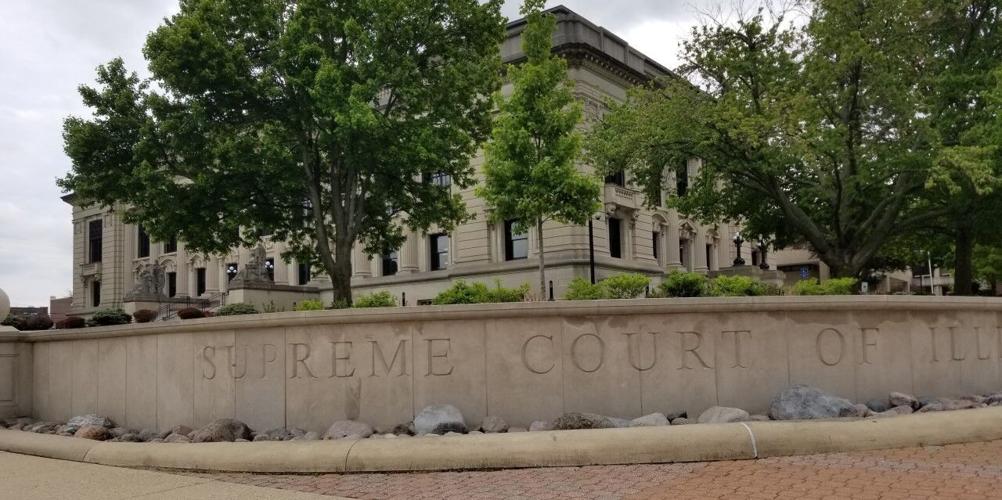


Illinois Supreme Court, Springfield, Ill.
SPRINGFIELD - Gunmaker Smith & Wesson will get a chance to appeal a Lake County judge's decision clearing the way for the families of victims of the 2022 Highland Park parade massacre to sue the company over the mass murders, after the Illinois Supreme Court indicated a state appeals court was wrong to deny out of hand the company's appeal petition, seeking a higher review of complex legal and constitutional matters.
On Jan. 28, the Illinois Supreme Court ordered the Illinois Second District Appellate Court to grant Smith & Wesson's petition and take up the appeal.
The state high court did not explain its unsigned order, beyond saying it was exercising its supervisory authority. The order reversed the Second District's decision to deny Smith & Wesson its opportunity to appeal the ruling from Lake County Circuit Judge Jorge L. Ortiz.
In April 2025, Ortiz had rejected attempts by Smith & Wesson to dismiss 25 consolidated lawsuits.
All of the actions seek to use a law enacted by Illinois Democrats in 2023 which would allow plaintiffs to essentially use lawsuits to punish the firearms maker for the actions of the accused murderer, because, they argue, the company allegedly illegally marketed its products to allegedly entice the accused shooter to use a Smith & Wesson rifle to carry out the mass shooting.
The lawsuits have been pending in court since 2022, when a collection of families from Highland Park filed them in Lake County Circuit Court against Smith & Wesson, the world's largest maker of handguns and rifles.
The lawsuits all asserted Smith & Wesson should be made to pay for allegedly marketing its semi-automatic weapons to young men to make it more likely they would commit a mass shooting. In these cases, the lawsuits focus on the mass shooting that killed seven people at the Highland Park Independence Day Parade in 2022.
In addition to Smith & Wesson, the lawsuits also name as defendants the accused shooter, Robert Crimo III; Crimo's father, Robert Crimo Jr.; and two firearms stores believed to have been involved with Crimo III's purchase of the weapon he allegedly used, identified as BudsGunShop.com LLC and Red Dot Arms Inc.
Crimo III pleaded guilty to 117 counts of murder and other charges in connection with the shootings, including three counts for each victim. He was sentenced to seven consecutive life sentences.
However, while conceding Crimo III pulled the trigger, and that his father is accused of helping him obtain the weapon allegedly used in the shooting - a Smith & Wesson M&P (Military & Police) semiautomatic rifle - the plaintiffs assert Smith & Wesson must also be made to pay for making and marketing the weapon in the first place.
The lawsuits have been lodged by attorneys from some of the top class action law firms in Chicago and elsewhere in the U.S., including the firms of Romanucci & Blandin, of Chicago; Edelson P.C., of Chicago; and Paul Weiss Rifkind Wharton & Garrison, of New York.
They are also joined by lawyers from some of the country's leading supporters of gun control, including Everytown USA and the Brady Campaign, who have made no secret of their intent to use such lawsuits to extract massive payouts from gunmakers to punish them for making the products ostensibly protected by the Second Amendment's guarantee of Americans' right to keep and bear arms.
The legal team behind the Highland Park lawsuits notably included a number of groups and law firms who also sued gunmaker Remington over the school shooting at Sandy Hook Elementary in Connecticut in 2012, which killed 28 people, including numerous children. That legal action resulted in a $73 million settlement from Remington, marking the first time plaintiffs had successfully secured payment from a gun maker over a mass killing.
The lawyers in the Highland Park case indicated they intend to use the Illinois lawsuits to replicate or exceed the Sandy Hook settlement in the name of "justice" and holding "one of the most powerful and profitable gun companies accountable for inspiring generations of mass shooters."
In response, among other defenses, Smith & Wesson has argued the lawsuits should be disallowed, both under a prior court decision which had rejected the city of Chicago's attempt to sue gun maker Beretta for contributing to a "public nuisance" of gun violence and under a federal law which was designed to shield firearms makers from lawsuits over the acts of criminals who use their weapons to commit crimes.
Ortiz, however, rejected those arguments, saying he believed the Highland Park lawsuits were not an attempt by the plaintiffs to use the courts to punish Smith & Wesson for Crimo's actions, but rather represented a claim narrowly targeted at the company's marketing strategies, which the judge agreed appeared to increase the risk that people like Crimo might use Smith & Wesson weapons to carry out such acts.
The judge also said he did not believe federal law should disallow the lawsuits. In the ruling, Ortiz noted the federal law includes exceptions for legal actions against gunmakers who violate state or federal laws.
In this case, Ortiz said, Smith & Wesson is accused of violating Illinois' state law forbidding gun makers from certain marketing tactics designed to make their weapons more appealing to young men seeking to engage in military-style targeted actions or assaults.
Smith & Wesson had argued that law should be inapplicable to this case. The company noted the state law in place in 2022 did not include such language. Rather, Illinois' Consumer Fraud and Deceptive Practices law was amended in 2023, in the wake of the Highland Park shooting, to explicitly include anti-gun marketing language.
At the time the law, known as the Firearms Industry Responsibility Act (FIRA) was passed, Illinois Democrats said they intended for the law to be used by trial lawyers to attack gun makers in court.
However, when the FIRA law was enacted, Democratic lawmakers included a statement indicating lawmakers believed the new law was merely clarifying that the old law always included such intent.
Ortiz said that statement of intent was sufficient to allow the 2023 law to be used to sue Smith & Wesson under state law for actions that occurred in 2022, under the exception expressed in the federal law.

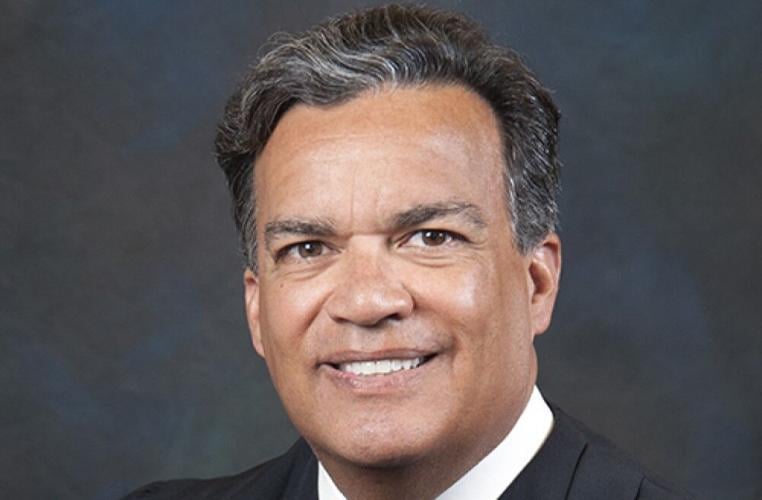
Lake County Circuit Judge Jorge Ortiz
In his ruling, Ortiz explicitly declared the FIRA law to be constitutional.
Following the ruling, Smith & Wesson petitioned the Second District court for the opportunity to appeal.
In their petition, Smith & Wesson argued Ortiz's ruling runs counter to both the law and the evidence presented in the case so far.
Among other appellate issues, the company said Ortiz allowed the lawsuits to continue even though plaintiffs have yet to provide any proof that Crimo III ever saw a single Smith & Wesson advertisement or other marketing materials promoting its products, or demonstrating how those marketing materials in any way "radicalized or otherwise motivated the gunman."
And they said appellate review was necessary to answer key constitutional and legal questions concerning whether the FIRA law can be used in this case or even if it is constitutional at all; or if the lawsuits are preempted altogether by the federal PLCAA law.
In September 2025, however, the Second District court denied the appeal petition without explanation.
That, in turn, prompted Smith & Wesson to appeal to the Illinois Supreme Court, seeking review of both Ortiz's ruling and the Second District's refusal to take up the case at this point.
The state high court refused to take up the appeal itself. But instead ordered the Second District to hear the appeal and weigh in on the constitutional and legal questions raised by Smith & Wesson surrounding Ortiz's decision.
The appeals court has not yet taken any further action in the matter.