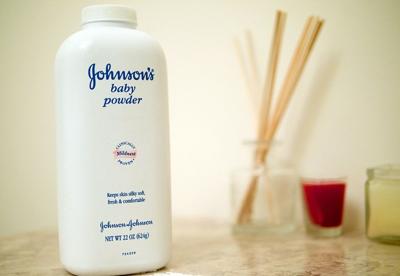


Johnson & Johnson Baby Powder no longer contains talc powder.
TRENTON, N.J. - An attempt by plaintiff lawyers to collect all the women who haven’t yet sued Johnson & Johnson over talcum powder into a single class action failed as a federal judge in New Jersey ruled the lawsuit suffered from fatal conflicts of interest between present and future claimants.
It was the second major defeat for Beasley Allen in New Jersey, after an appeals court last week disqualified the Alabama law firm from representing thousands of plaintiffs in state court because of its association with a former J&J defense lawyer. Golomb Legal of Philadelphia partnered with Beasley Allen in the failed class action in federal court.
Beasley Allen and Golomb purported to represent every woman in the U.S. who used Johnson’s Baby Powder or Shower to Shower for more than four years, or their legal representatives or family members. They sought damages both for women claiming cancer and for those who feared contracting talc-related diseases. The lawyers also sought money for medical monitoring.
That was too complex a package to combine into a single lawsuit, U.S. District Judge Michael Shipp said in a Jan. 29 order. As the U.S. Supreme Court ruled in two landmark asbestos cases, the same lawyers can’t claim to represent both current and future plaintiffs because the interests of the two groups are directly opposed. The current plaintiffs – and their lawyers – want payment immediately, while the future claimants seek to conserve assets so they can be paid later.
“Plaintiffs seek to litigate a class action on behalf of individuals who allege a present cancer diagnosis, as well as individuals who allege no present injury at all,” Judge Shipp wrote.
“Those already diagnosed with cancer may reasonably prioritize immediate compensatory and punitive damages, while those without a cancer diagnosis may reasonably prioritize a fund for medical monitoring, long-term preservation of resources and protections against premature valuation of their claims.”
Judge Shipp granted J&J’s motion to strike the complaint, giving lawyers the chance to try to amend it to fix the conflicts between present and future claimants.
The class action represented yet another attempt by plaintiff lawyers to conclude the litigation they started over claims cosmetic talc contains cancer-causing asbestos. J&J steadfastly denies there ever was asbestos in its products, but plaintiff lawyers have hired a small group of experts who testify they have can identify asbestos fibers in talc, and doctors who say that asbestos was in large enough amounts to cause cancer.
J&J has won plenty of defense verdicts, but when it loses, jurors have delivered massive verdicts. In December, one woman won $1.5 billion in Baltimore, and two women in Los Angeles won $40 million.
The problem for J&J, and the lawyers suing the company, is virtually every person born before J&J removed mineral talc from the market in 2020 can claim damages under the theories plaintiff lawyers promote, so ubiquitous was the product.
That means attempts to settle the litigation run head-on into the problem highlighted by Judge Shipp: Plaintiff lawyers can’t claim to represent both current claimants and those who are certain to assert the same claims in the future, if the experts they hire are to be believed.
Johnson & Johnson attempted to settle talc litigation through a $9 billion bankruptcy plan but Beasley Allen succeeded in killing the approach by citing concerns with the voting process for claimants. After that defeat, J&J vowed to fight talc cases in court, but both sides know there is no feasible way to litigate tens of thousands of individual talc lawsuits.
That leaves creative solutions like the class action Beasley Allen tried to assemble for all the women it doesn’t already represent. Unfortunately for it, the U.S. Supreme Court emphatically closed the door on that approach with its Amchem and Ortiz decisions striking class action settlements on behalf of everyone exposed to asbestos.
Since then, asbestos litigation has become a multibillion-dollar business, driving scores of companies into bankruptcy and causing huge losses to insurance companies forced to pay out on policies that may have been written decades earlier.