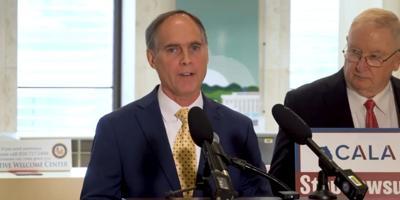



Tom Gaitens
The Florida legislative session that opens this week could be a positive one for civil justice reforms if a pair of bills seeking transparency in the litigation financing industry pass and a bill expanding medical damages is blocked.
That’s the view of Tom Gaitens, executive director of Florida Citizens Against Lawsuit Abuse (CALA) as the session gets under way on Tuesday. The Florida Justice Reform Institute is also advocating for passage of the litigation funding bills while opposing House Bill 6003, which would allow for adult children of deceased parents or parents of adult, deceased children to sue for non-economic damages in medical negligence cases.
HB 6003 is sponsored by Rep. Dana Trabulsy (R-Fort Pierce) and Rep. Johanna López (D-Orlando).
Gaitens expressed cautious optimism about the 2026 session, noting that two companion bills – HB 1157, sponsored by Rep. Fabián Basabe (R-Miami Beach), and Senate Bill 1396, sponsored by Sen. Colleen Burton (R-Lakeland) – could provide long-overdue guardrails for third-party litigation funding (TPLF). This funding mechanism allows parties not directly involved in a lawsuit to pay for legal costs in exchange for portions of a settlement.
“It remains to be seen what (the two bills) will look like after the sausage-making process is through, but we are hopeful,” Gaitens told the Florida Record in an email. “These could help provide an important first step in the effort to close a loophole on who is funding lawsuits and providing transparency for juries and judges in the courtroom.”
The bills aim to create more transparency about the existence of TPLF contracts in civil litigation and to allow courts to determine whether a class representative or lead counsel to a class action could fairly represent the class under such a funding agreement. Additional restrictions and reporting requirements would be required if the TPLF contract involves a foreign person, foreign principal or a sovereign wealth fund, according to the measures’ text.
Another challenge facing tort-reform supporters in the 2026 session will be to stop efforts to roll back tort-reform measures passed in 2023 and earlier, according to Gaitens.
“The governor will again be the final arbiter on protecting the landmark reforms from 2023,” he said. “Those reforms have proved very successful in reducing frivolous lawsuits (and bringing) balance back into the civil justice system along with fairness. Last session, we saw efforts to erode the successes.”
In fact, Gov. Ron DeSantis this week cited those previous insurance and tort reforms in announcing that state-run Citizens Property Insurance policyholders will receive rate decreases this spring averaging 8.7%.
“The reductions in Citizens Insurance rates are the most significant in recent memory,” DeSantis said in a prepared statement. “Premiums are lowering because we’ve enacted real reforms and withstood the pressure to reverse course. We will hold firm in our commitment not to go back to the broken insurance market of the past.”
More than 150,000 Citizens policyholders around the state will receive reductions of 10% or more, the governor said.
Florida tort reforms involving statutes of limitation, rules on attorney fees and bad-faith claims that were passed in previous years have since been replicated in other states, such as Georgia, Gaitens said.
“It has been a very interesting decade for tort- and civil-justice reform,” he said. “We have led the nation but also have been able to stop bad bills in the process. We have reformed enough to be taken off the (American Tort Reform Association’s) 'Judicial Hellholes' annual list but also have been placed on the 'watch list' for the state House of Representatives.”