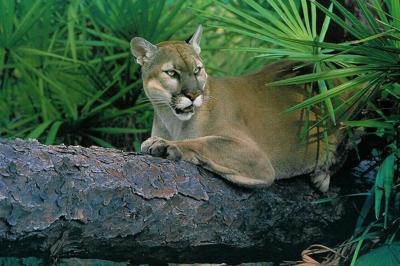


The Florida panther population is now estimated to be less than 230.
Several environmental groups are suing federal officials in the wake of their actions clearing the way for a major mixed-use development in Collier County – a project that critics say will spell extinction for the struggling Florida panther population.
The Center for Biological Diversity, Sierra Club and South Florida Wildlands Association filed a federal lawsuit in the Middle District of Florida on April 8, accusing officials with the U.S. Fish and Wildlife Service, Secretary of the Interior Doug Burgum and U.S. Army Corps of Engineers officials of violating the Endangered Species Act (ESA) and the federal Administrative Procedure Act (APA).
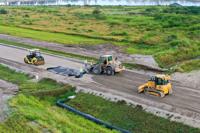
The project at the center of the litigation is known as Rural Lands West, a development proposed for eastern Collier County that would contain more than 10,000 homes and more than 2 million square feet of commercial and other nonresidential space. The project would destroy almost 5,000 acres of panther habitat in southern Florida and jeopardize the species’ existence, according to the complaint.
Due to habitat loss and fragmentation, fewer than 230 adult panthers now live in the state, mostly in the southern region, occupying less than 5% of the panthers’ former range, the plaintiffs argue.
“This remaining suitable habitat amounts to a mere fraction of what (the U.S. Fish and Wildlife Service) maintains is necessary to support a viable population and ultimately recover the species,” the complaint states. “... Urban and suburban development also brings new infrastructure, which further fragments panther habitat, isolates individual panthers and increases the risk of vehicle collisions, a leading cause of panther mortality.”
The lawsuit faults the Fish and Wildlife Service’s 2025 biological opinion that concludes the Collier County project would not jeopardize the continued existence of the panther population. Relying on the opinion, the Army Corps issued a permit authorizing construction of the development, the complaint states.
The Fish and Wildlife Service violated the ESA by failing to meaningfully consider the project’s impact on the species’ survival and recovery and acting in a way that is “arbitrary and capricious” and not in accordance with federal law, according to the lawsuit.
A statement from the Florida Fish and Wildlife Conservation Commission (FWC), however, paints a less bleak picture of the panthers’ status.
“Thanks to public support and the efforts of the FWC and its partners, the endangered Florida panther has rebounded from as few as 20-30 remaining wild panthers in the 1990s to an estimated 120-230 adults currently on the landscape,” the statement emailed to the Florida Record says.
The reasons contributing to the rebound include habitat conservation and management, wildlife crossing installations, public outreach and genetic restoration, according to the FWC.
“Conservation efforts are ongoing to build on this progress, especially as panthers potentially expand their range northward in Florida,” the statement says.
The FWC also indicated that in 2024 it launched the Florida Panther Payment for Ecosystem Services pilot program, which provides for per-acre payments to private landowners for supporting the panther habitats through conservation and landscape connectivity, according to the FWC.
“The pilot program funded the enrollment of more than 40,000 acres of high-quality panther habitat, and nearly half of the participating landowners agreed to host FWC cameras to monitor panther activity and increase biologists' understanding of their distribution and behavior,” the statement says.
In addition, Floridians can support panther management and research by purchasing the state’s “Protect the Panther” license plate.
Most of the panther breeding population lives below the Caloosahatchee River, though some panthers can be found further north in the Orlando region, according to the FWS.
The environmental groups’ lawsuit calls on the court to conclude that the defendants violated the ESA and the APA and to set aside the biological opinion and Army Corps permit until the Fish and Wildlife Service reconsiders the Rural Lands West project’s impact on the panthers.