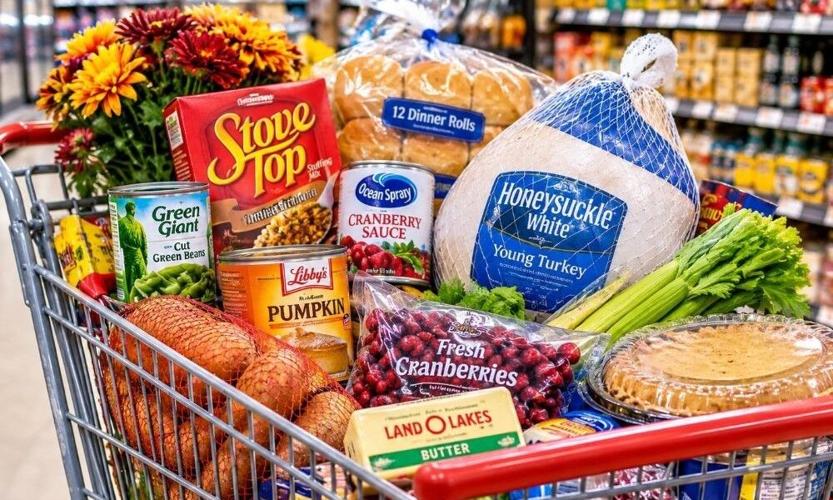




With Thanksgiving fast approaching, imagine two shoppers standing shoulder to shoulder at their local grocer’s turkey case, picking out the centerpiece for Thursday’s feast.
The electronic shelf tag shows 70 cents a pound for one, but somehow asks the other to pay 90 cents.
It’s a hypothetical that Jacob Blondin, CEO of RDSolutions, says runs into an immediate practical problem: Both shoppers can see the same price display.
“How can you give one person this price and the other person another price?” Blondin said Tuesday. “Not in the store.”
Wednesday is typically the busiest grocery shopping day of the year, with visits peaking the day before Thanksgiving, according to location analytics firm Placer.

Blondin
As customers fill grocery aisles, Blondin is questioning scenarios in which retailers use electronic shelf labels to charge individual shoppers different prices. He said those scenarios overlook the difficulty of targeting one customer through a shared display, along with the risk of alienating shoppers.
“It’s not practical, and it’s not how grocery retailers operate,” Blondin said.
RDSolutions provides retailers with pricing intelligence and in-store services.
Blondin’s comments add to a broader debate over “surveillance pricing,” in which businesses use consumers’ personal information to tailor prices. The Federal Trade Commission’s initial findings from a study of pricing intermediaries described tools that can use information such as location, browsing history and shopping behavior to target prices and promotions.
Blondin distinguished the potential for personalized pricing online from what customers encounter at a grocery store shelf.
“Online there is a different potential,” he said, noting how dynamic pricing is often use by airlines and ride-share companies.
Inside a store, however, he questioned how a retailer could make a shelf price apply to one shopper without displaying it to someone nearby. He also identified potentially discriminatory practices, including accidental discrimination, as a material risk for retailers.
Blondin’s comments follow earlier reporting on Lindsay Owens’ book, “Gouged: The End of a Fair Price – and What That Means for Your Wallet,” and its arguments about retailers’ use of consumer data and pricing technology.
In that report, RDSolutions Chief Commercial Officer Lee Kallman challenged a hypothetical involving a customer selecting tuna and then encountering a higher price for mayonnaise. Kallman questioned how a shared shelf display could charge two customers standing together different prices.
Blondin raised similar objections, saying a retailer would generally have an incentive to encourage the additional purchase rather than make it less attractive.
A grocer that has already brought a customer into the store could promote or discount a related product to help secure another sale, he said.
“You’ve already done the work of getting the people into the store,” Blondin said.
Thanksgiving shopping illustrates the stakes, he said. A store that frustrated customers buying their holiday meal would risk undermining its relationship with them.
“You’re going to really frustrate the consumer,” he said.
Phil Lempert, editor of SupermarketGuru.com, agrees that individualized prices could undermine customer trust.

Lempert
Discussing that hypothetical in which one shopper pays 70 cents a pound for a turkey while another pays 90 cents because they were assigned different prices, Lempert said customers would eventually compare notes.
“People talk,” Lempert told Legal Newsline. “It’s not going to be a secret. People would revolt.”
Lempert also sees benefits in the technology, including helping stores keep shelf and checkout prices consistent and reducing the work of replacing paper tags.
“Having the technology to change prices on the shelves is a good thing,” he said. “Remember, digital shelf labels display prices. They do not decide them.”
Blondin said that customer frustration would run counter to retailers’ concern for their brands and the shopping experience they provide.
“Your perception of the quality of the experience is a big thing to retailers,” he said.
Electronic shelf labels, often called ESLs, have a more straightforward purpose, according to Blondin: reducing the time and labor required to replace paper price tags.
The displays allow stores to update prices electronically instead of having employees change individual tags throughout the aisles. Blondin said that makes it easier for retailers to respond to competitors and frees employees to spend more time helping customers.
“Speed of change and labor intensity is a value,” he said.
He said the availability of workers to perform the repetitive task of changing tags is another consideration for retailers adopting the technology.
The ability to update a price electronically is distinct from using a shopper’s personal information to determine what that shopper pays. Grocery industry representatives have made that distinction in the federal debate over personalized pricing, saying electronic shelf labels do not automatically change prices based on individual customers.
Blondin’s argument is not that all forms of personalized pricing are impossible. He acknowledged different possibilities online. His objection concerns the practicality of using a common shelf display to charge neighboring shoppers different prices — and whether doing so would make business sense.
He said retailers’ investments in pricing systems are intended to help present a consistent experience, not undermine confidence in the prices customers see.
For the shoppers choosing turkeys and gathering last-minute ingredients, Blondin said, the grocer’s incentive is to keep them coming back.
“The bias of a retailer is to provide value for their customer,” he said.