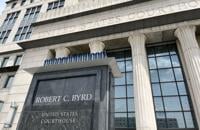



Robert C. Byrd federal courthouse in Charleston.
HUNTINGTON — A federal judge again has ruled that three major drug distributors are not liable for the opioid epidemic in Huntington and Cabell County, issuing a new decision after an appeals court threw out his earlier ruling and ordered him to reconsider the case.
Senior U.S. District Judge David A. Faber entered amended findings November 18 in favor of AmerisourceBergen Drug Corp., Cardinal Health Inc. and McKesson Corp., concluding the local governments failed to prove the companies’ distribution practices created a public nuisance.

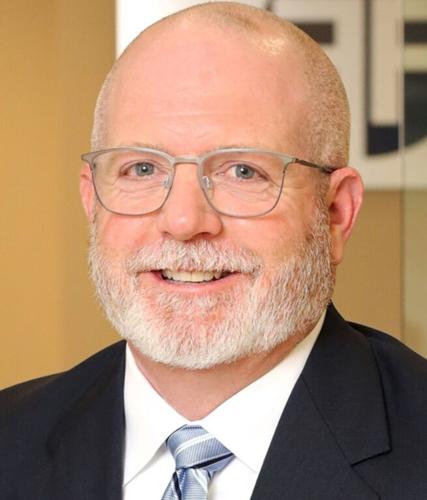
Farrell
Paul Farrell, who leads the representation of the city and county, said the fight isn’t over.
“We are disappointed the federal judge ruled in favor of the defendants again and will file an immediate appeal,” Farrell told The West Virginia Record.
The 243-page opinion delivers another setback to the communities’ effort to obtain roughly $2.5 billion for a 15-year plan to address addiction and its consequences. Faber said a separate judgment had been entered for the distributors.
Although he rejected liability, Faber also outlined an alternative calculation that would limit the distributors’ share of any abatement remedy to about $329.6 million if they ultimately are found liable. That figure is not an award to the city or county.
“There is a natural tendency to assign blame in cases like these,” Faber wrote, but the cases “must be decided not based on sympathy, but on the facts and the law.”
A second decision after appellate reversal
Huntington and the Cabell County Commission sued the distributors in 2017, alleging the companies helped fuel the opioid crisis by supplying excessive quantities of prescription painkillers and failing to adequately monitor, investigate and report suspicious pharmacy orders.
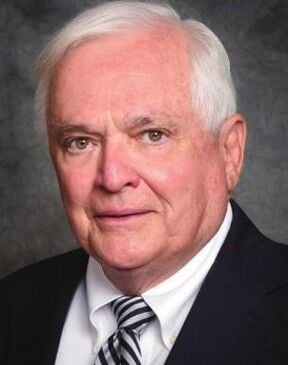
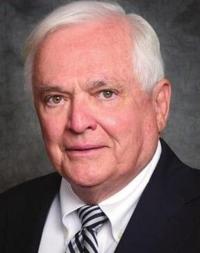
Faber
Faber initially ruled for the companies on July 4, 2022, following a trial that included testimony from 70 witnesses, either in person or through previously recorded testimony. He concluded both that West Virginia public nuisance law did not extend to opioid distribution and that the evidence did not establish liability.
The 4th U.S. Circuit Court of Appeals vacated that judgment October 28, 2025. It held that conditions resulting from opioid distribution could constitute a public nuisance under West Virginia law and that monetary relief could be available to address the resulting harm.
The appeals court also found Faber had interpreted the distributors’ obligations too narrowly. It directed him to reconsider their systems for detecting suspicious individual orders, increases in pharmacy ordering limits and their conduct involving pharmacies that filled prescriptions from unusually high-volume prescribers.
Before that decision, the West Virginia Supreme Court declined to answer a certified question about whether opioid distribution could support a public nuisance claim, saying it could not resolve the issue without considering the factual findings in the case.
After the case returned to district court, Faber received additional briefs and heard arguments May 28. In the amended opinion, he acknowledged the appeals court’s legal holdings were binding but again found the trial evidence insufficient to hold the distributors responsible.
Monitoring systems and prescribing practices
Faber found the companies substantially complied with their duties under the federal Controlled Substances Act to develop and operate systems that examined individual pharmacy orders for signs that drugs could be diverted into illegal channels.
A central dispute involved ordering thresholds, or internal limits that trigger additional review. The appeals court had questioned evidence that distributors raised those limits, potentially allowing suspicious orders to avoid investigation or reporting to the Drug Enforcement Administration.
On reconsideration, Faber said the evidence showed thresholds were adjusted both upward and downward and that the companies’ programs permitted changes supported by appropriate investigation. He rejected the inference that an internal McKesson email demonstrated increases were nearly automatic, finding the full message and other testimony showed employees were working to tighten the process.
“Just because an order hits a threshold, it is not suspicious,” Faber wrote. He credited testimony that the companies investigated flagged orders and reported those they determined were suspicious.
Faber also rejected key assumptions underlying an analysis by plaintiffs’ expert James Rafalski, a former DEA diversion investigator. The judge found unpersuasive Rafalski’s assumption that the companies had not performed investigations sufficient to resolve concerns about orders flagged by his proposed screening methods.
Addressing high-volume doctors, Faber said the plaintiffs failed to establish that the distributors knew particular physicians were prescribing illegally. High prescribing totals alone did not establish unlawful conduct, he found, and distributors lacked access to some comprehensive prescribing information used in the plaintiffs’ analysis.
The judge attributed the volume of opioid shipments largely to medical prescribing practices that evolved as physicians treated pain more aggressively.
“Overprescribing – and not illegal prescribing – drove the volume of opioids coming into Cabell/Huntington,” Faber wrote. He said the plaintiffs did not establish through competent evidence that illegal prescribing drove that volume.
Alternative remedy would be substantially smaller
Faber separately examined the proposed abatement plan despite finding the companies were not liable. The plan covered prevention, treatment, recovery and services for populations affected by the epidemic.
He excluded several categories, including vocational training, grief support, certain housing and family services, syringe service programs and treatment of medical complications, finding the evidence did not sufficiently establish that those expenses would directly abate the alleged nuisance. The exclusions reduced the proposed plan to approximately $1.76 billion.
Faber then reduced that amount by 25% to account for harm attributable solely to illicit, nonprescription opioids. He allocated one-quarter of the remaining costs to distributors, reasoning that manufacturers, pharmacies and prescribing physicians also would bear responsibility for any nuisance found to exist.
Those adjustments produced the alternative figure of $329,596,804. Faber said any lump-sum award should be reduced to present value and any future abatement order should prevent the local governments from retaining money not spent on approved expenses.
The judge emphasized that his decision did not dispute the epidemic’s severity. His findings cited trial evidence of 1,151 overdose deaths in Cabell County from 2001 through 2018, including 1,002 involving opioids, along with extensive effects on children, families, emergency services and public health.
The question, Faber concluded, was whether the evidence established legal responsibility on the part of these distributors. He found it did not.
U.S. District Court for the Southern District of West Virginia case numbers 3:17-cv-01362 (Huntington) and 3:17-cv-01665 (Cabell)