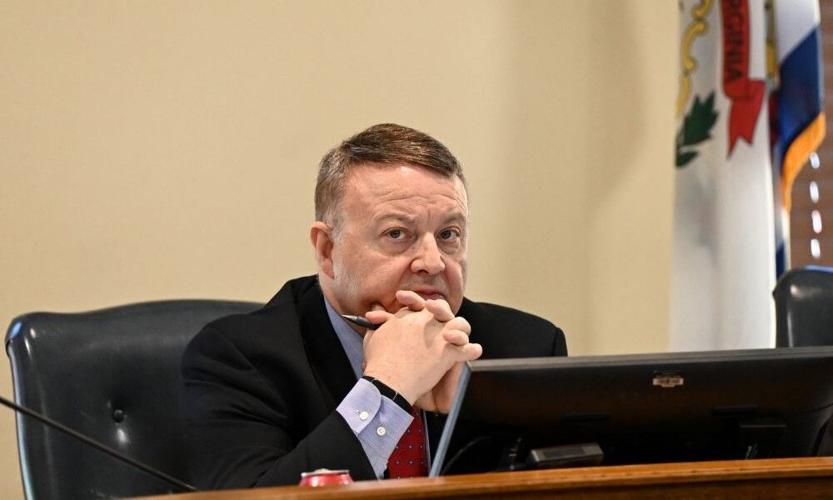



Mark Hunt
CHARLESTON – On Monday, a federal grand jury indicted West Virginia Auditor Mark Hunt.
According to U.S. Attorney Moore Capito, Hunt personally signed and issued nine tax deeds for properties in Kanawha and Boone counties to benefit a longtime friend and business associate. Career employees in the Auditor’s Land Division had found every one of those properties ineligible because the buyer missed required payments and deadlines.
Prosecutors say Hunt issued the deeds anyway, over staff objections, and that the friend was later hired as special counsel in the Auditor’s Office. Hunt faces nine counts of theft of property. He is also charged in a separate scheme in which an Auditor’s Office employee allegedly drew state pay for hours spent working at Hunt's private law firm. His deputy chief of staff and his general counsel were indicted as well.
The reaction was swift, and it came from every direction.

Thomas
Within hours, the West Virginia Republican Party and the West Virginia Democratic Party both called on Hunt to resign. So did State Treasurer Larry Pack. House Speaker Roger Hanshaw said Hunt should step down immediately and made clear that impeachment proceedings could follow if he doesn't.
On Tuesday, Gov. Patrick Morrisey called on the House of Delegates to consider articles of impeachment and announced that a separate Division of Motor Vehicles investigation into Hunt’s “After Hours” used car dealership has been referred to federal prosecutors.
Hunt says he is innocent and intends to stay in office. He is presumed innocent, and a jury will decide the charges. But whether he can continue to serve as the taxpayers' watchdog is not a question for a jury.
It is a question for the Legislature, and the bipartisan consensus is clear: if Hunt will not resign, the House of Delegates should move forward with impeachment.
West Virginians also don’t need to wait for a verdict to ask a fair question: How did someone with this background end up as the taxpayers’ watchdog?
The state Auditor is supposed to root out fraud, waste and abuse in state and local government. The job demands judgment, independence and a willingness to tell friends “no.” Character is not a nice extra for that office. It is the qualification.
For three decades, Hunt’s day job was running a Charleston personal injury law firm. That is not a crime, and plenty of honest lawyers do that work.
But it is worth remembering what West Virginia’s personal injury bar spent those same years doing: fighting, bill by bill, the common-sense legal reforms that finally pulled our state off the national Judicial Hellholes list. Those reforms were about one thing: making sure our courts serve injured people and honest businesses, not lawyers looking for the next big payday.
For most of that career, Hunt was a Democrat. He served 14 years in the House of Delegates as a Democrat. In 2016, he announced a run for attorney general, ironically, promising to be a “tough watchdog,” then switched races, ran for Congress as a Democrat and lost.
In 2022, with Democrats collapsing statewide, he became a Republican.
There's nothing wrong with changing parties. Plenty of good West Virginians have done it, and many of them have been strong allies in the fight for fair courts.
Conversion is welcome. Convenience is something else.
A candidate who changes his label when the political winds shift, without ever changing his record, tells voters something important about his character. If principles can be traded for a better shot at winning, they can be traded for a friend, a donor or a favor, too.
Hunt’s path to statewide office was not a typical one, either.
He won a state Senate seat in 2022 after a primary opponent was disqualified in court. Two years later, he won a crowded four-way primary for auditor with about 39 percent of the vote.
None of that proves the charges against him. But it should prompt every voter to look harder at who is asking for their trust, and who is paying for it.
Personal injury firms and their allies have long been among the biggest players in West Virginia campaign finance. They don’t give because they love good government. They give because they expect access, influence and friendly ears when the Legislature takes up legal reform, and when courts and officeholders make decisions that affect their bottom line. Politicians who depend on that money learn quickly whose calls to return.
Hunt was no exception. Attorneys, many of them from the state’s best-known plaintiffs’ firms, supplied more than 40 percent of the money he raised for his 2024 auditor campaign.
And that money no longer flows to just one side of the aisle.
West Virginia Citizens Against Lawsuit Abuse has tracked it race-by-race through public campaign finance reports, and the results should alarm anyone who cares about a fair court system.
In the 2026 cycle, personal injury lawyer money backed 12 of the 30 Republicans now serving in the state Senate, totaling more than $250,000. Many of those senators served alongside Hunt and were funded by the same donors.
What kind of support did that buy?
In the 2024 session, then-Senator Hunt was the lead sponsor of Senate Bill 570, which would have imposed a one-year statute of limitations on ethics complaints against public officials.
In hindsight, it is hard to miss the irony: the man who would become the state’s watchdog wanted to put a time limit on guarding the henhouse.
The personal injury lawyers figured out what voters sometimes forget. In a state where one party holds a supermajority, the smart money doesn’t fight the majority. It buys a piece of it.
A senator who campaigns as a conservative but cashes checks from the lawsuit industry has made a promise to somebody. Voters deserve to know which promise he intends to keep.
That is the real lesson here. The problem isn’t a party label. It is officeholders who see public office as a business opportunity, and a campaign finance system that lets special interests shop for candidates the way they shop for clients.
The fix is not complicated, and it starts with voters.
First, follow the money. Before you vote, look at who is funding a candidate. Campaign finance reports are public. If a candidate’s account is stocked by personal injury firms and their political action committees, ask what those donors expect in return.
Second, judge the record, not the slogan. Where was this candidate when the Legislature fought to fix our courts? Did they stand with the small businesses, doctors and job creators who were being driven out of the state, or with the lawyers suing them? A candidate’s past votes, clients and donors tell you far more than a glossy mailer.
Third, demand character. Ask how a candidate has treated employees, partners and the public when no one was watching. Ask whether they have ever used a position of trust to help a friend. For a watchdog office especially, integrity should be the first test, not an afterthought.
West Virginia has come a long way. We have passed meaningful legal reform, restored confidence in our courts and told employers across the country that our state is open for business. That progress depends on officeholders who believe in a fair civil justice system, not ones who spent their careers profiting from a broken one.
Mark Hunt will have his day in court. In the meantime, West Virginians should make sure the next person entrusted to guard the public's money is someone whose character was never for sale.
Thomas is executive director of West Virginia Citizens Against Lawsuit Abuse.