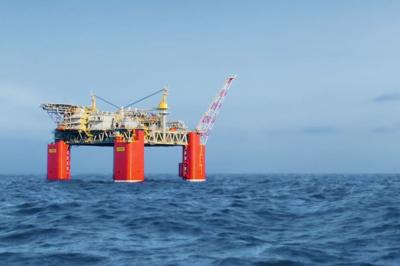


BP’s Kaskida deepwater drilling project is located in the Gulf 250 miles southwest of New Orleans.
An environmental group has denounced a decision by the Louisiana Department of Conservation and Energy (C&E) to approve a coastal use permit for a pipeline to ship oil from BP’s proposed new deepwater drilling project offshore from New Orleans.
The Center for Biological Diversity said both environmental and community groups had urged the department to reject the permit due to oil spill risks to coastal communities and threats to endangered wildlife and coastal restoration efforts. C&E agreed to issue the permit on June 23.
In April, the center challenged the federal Bureau of Ocean Energy Management’s approval of BP’s Kaskida project in the 11th Circuit Court of Appeals, arguing that BOEM’s approval was “arbitrary, capricious and not in accordance with law.” The April 20 petition was filed on behalf of several groups, including Healthy Gulf, Turtle Island Restoration Network, Habitat Recovery Project and the Sierra Club.
The center said the approval of the planned underwater Rome Pipeline – a 100-mile section of a more than 500-mile-long conduit system to ship oil and gas from the Kaskida project to an onshore terminal – was unfortunate given safety risks.
“If the pipeline is fully built as planned, it’ll enable a new era of high-risk ultra-deepwater drilling,” Nick Katkevich, an oceans campaigner at the Center for Biological Diversity, said in a prepared statement. “I’m disappointed that Louisiana signed off on this dangerous project without even holding a public hearing about oil spills and other risks, but we’ll keep fighting to protect the Gulf from dangerous pipelines and deepwater drilling projects like Kaskida.”
Katkevich told the Louisiana Record that the center is exploring all its options to fight the Rome Pipeline, including another legal action.
But C&E Press Secretary Patrick Courreges said the center mischaracterized the state’s coastal use permitting process and failed to understand the agency’s jurisdiction while exploiting the memory of the 2010 Deepwater Horizon disaster.
“This group is clearly using typical scare tactics and trying to leverage the specter of a horrible event that cost the lives of 11 men to justify opposing any project that involves oil and gas production in the Gulf of America,” Courreges told the Record in an email. “Tactics like this serve only to water down the memory of their loss and ignore the work done by the men and women in the federal government and industry to find new safeguards against any repeat of that disaster in 2010.”
The state’s permitting process examines the physical footprint of the proposed pipeline and its effects on vegetated wetlands in Louisiana’s coastal region, he said, adding that the process does not include “the assumption that an imagined worst-case catastrophic scenario is the baseline for construction or daily mid-stream operations.”
The environmental group seems to be targeting a section of pipeline coming in from federal waters as a collateral attack on deepwater drilling projects in the Gulf of Mexico, according to Courreges. C&E does not have jurisdiction over such projects in federal waters, he said.
“Whether that particular design of pipeline is approved or not, the operators in the Gulf will be moving the energy resources the world needs onshore, and pipelines are far safer than the staggering fleet of short-range oil tankers it would take to replace them,” Courreges said.
The center has criticized the pipeline route because it crosses habitat for the endangered Rice’s whale, Kemp’s ridley sea turtle and other marine species. The planned pipeline also crosses under the Caminada Headland region in Lafourche Parish, which has been the recipient of $200 million in coastal restoration funds, the center said.
C&E’s permit contains multiple conditions aimed at protecting the coastal zone and its wildlife.