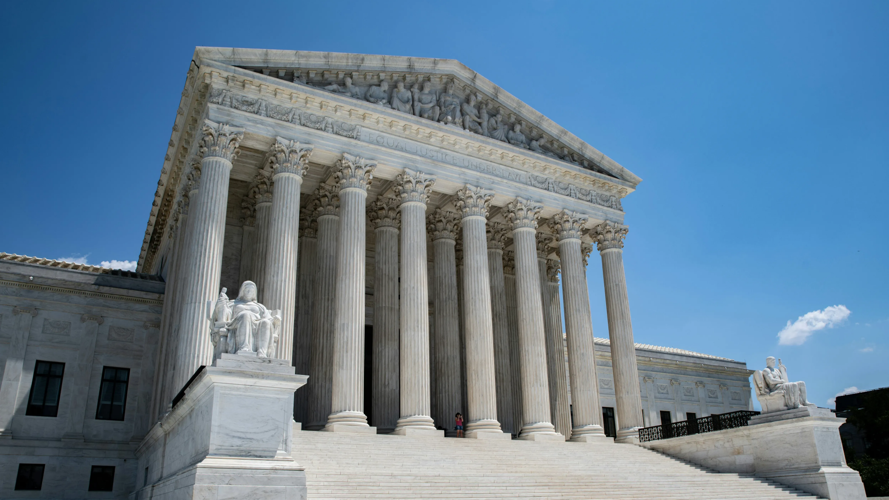



The U.S. Supreme Court stands in Washington.
WASHINGTON — The U.S. Supreme Court has rejected Louisiana’s congressional map that used race to draw district boundaries.
Wednesday’s 6-3 ruling opens the door for conservative state to eliminate districts with heavily Black or Latino residents that often vote Democratic. Chief Justice John Roberts has described the district in question as a snake, stretching more than 200 miles through Shreveport, Alexandria, Lafayette and Baton Rouge.
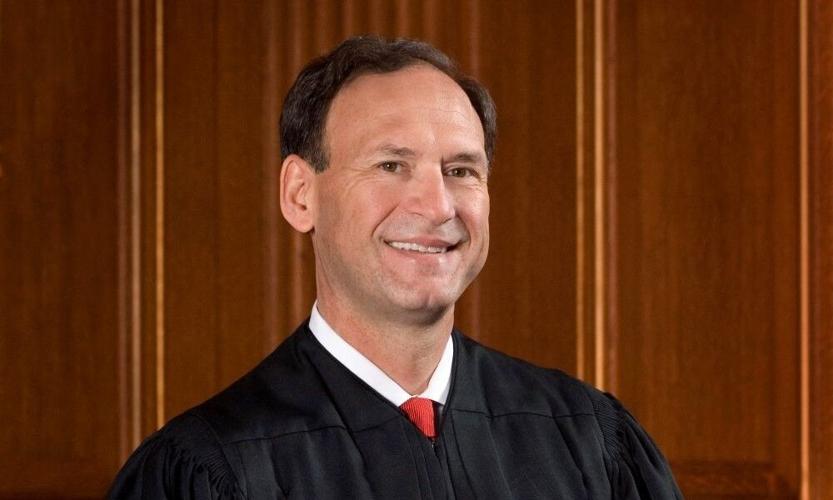
“That map is an unconstitutional gerrymander,” Justice Samuel Alito wrote in the 6-3 conservative majority ruling. “Section 2 of the Voting Rights Act of 1965 … was designed to enforce the Constitution – not collide with it.
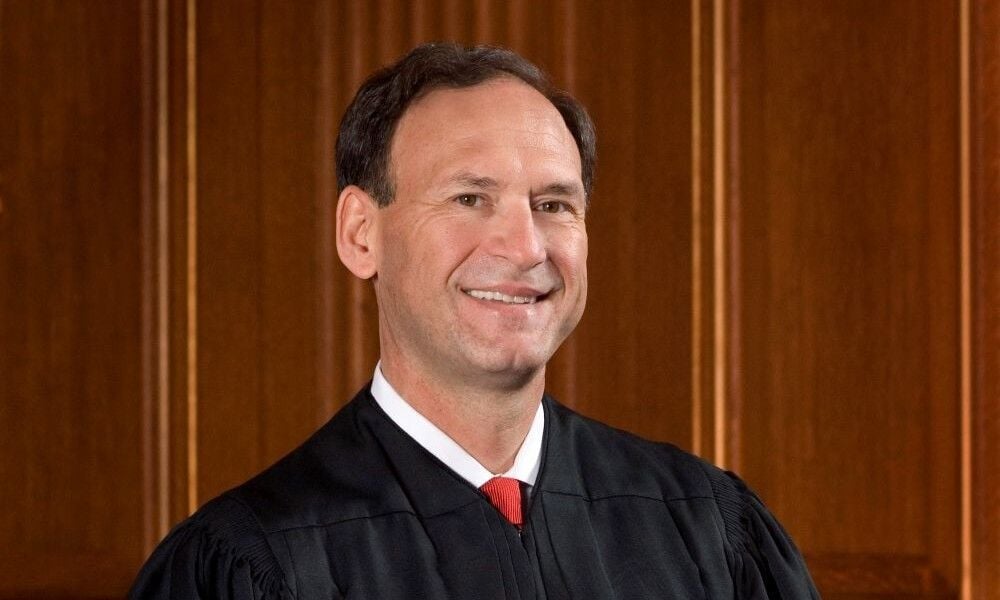
Justice Samuel Alito
“Unfortunately, lower courts have sometimes applied this Court’s (Section 2) precedents in a way that forces states to engage in the very race-based discrimination that the Constitution forbids.”
Section 2 of the Voting Rights Act of 1965 is the primary voting right’s law protection to challenge racially discriminatory election practices.
“These and other problems convinced us that the time had come to resolve whether compliance with the Voting Rights Act can indeed provide a compelling reason for race-based districting,” Alito wrote. “We now answer that question: Compliance with (Section 2), as properly construed, can provide such a reason. …
“Correctly understood, §2 does not impose liability at odds with the Constitution, and it should not have imposed liability on Louisiana for its 2022 map.”

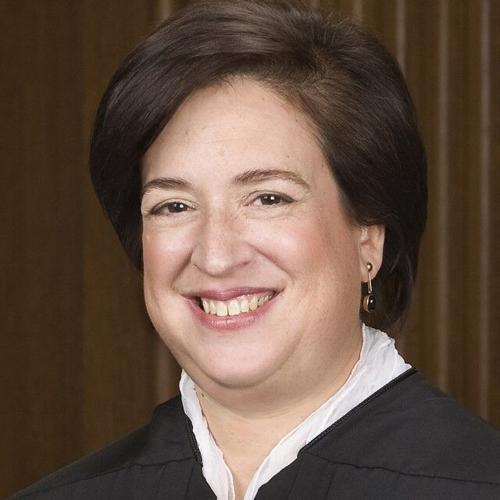
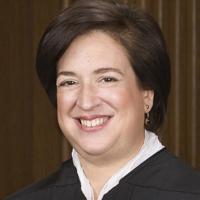
U.S. Supreme Court Justice Elena Kagan
In the dissent, Justice Elena Kagan wrote that the ruling is a major hit to Section 2.
“The consequences are likely to be far-reaching and grave,” Kagan wrote. “Today’s decision renders Section 2 all but a dead letter. …
“For the first time, this court turns Section 2 against itself – using a law meant to secure racial equality in voting as a tool to invalidate a state’s effort to remedy racial inequality. … The majority insists that it is merely ‘realigning’ our Section 2 jurisprudence with the Constitution. In truth, it is dismantling that jurisprudence and draining the statute of much of its force.”
Kagan writes that the majority leaves minority voters with “little protection from more subtle but equally effective devices of vote dilution.”
“Louisiana did exactly what a federal court told it the Voting Rights Act required,” she wrote. “For that, the court now punishes the state, branding its compliance with Section 2 as an unconstitutional racial gerrymander. …
“The message to states going forward is unmistakable: They risk constitutional condemnation whether they comply with or resist Section 2. That is not a regime any rational legislature can navigate. …
“Section 2 once stood as a central safeguard of the right of racial minorities to participate equally in our democracy. After today, that safeguard is weakened to the point of near-irrelevance.”
Legislatures already are free to draw extremely partisan districts because of a 2019 Supreme Court decision.
Louisiana redrew its congressional districts after the 2020 census. In 2022, a federal judge ruled the map likely violated Section 2 because it didn’t include an additional majority Black district. When the state redrew that map with the district, the new map was challenged as racial gerrymandering.
A three‑judge federal court agreed and enjoined the map. The U.S. Supreme Court stayed that ruling for the 2024 elections and took the case, asking if deliberately creating a majority‑minority district as a Voting Rights Act remedy itself violates the Constitution.
The court heard the case for the second time in October that led to Wednesday’s ruling, which is quite different from its ruling in a similar 2023 Alabama case that led to a new congressional map that sent two Black Democrats to Congress.
The Alabama ruling is what prompted Louisiana to add the second majority Black district. About a third of Louisianans are Black and they now form majorities in two of the state’s six congressional districts. Alabama has a separate appeal pending before the Supreme Court.