
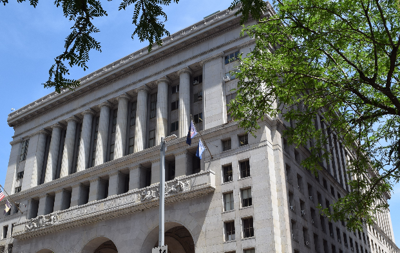


Allegheny County Courthouse
PITTSBURGH – Attorneys filing addiction lawsuits against online sportsbooks have made a stop in Pittsburgh, where they found a plaintiff who has lost about $75,000 betting.
The lawsuit against FanDuel and related companies was filed last week in the Allegheny County Court of Common Pleas over the “dangerously addictive design” of the app. The firm Aylstock, Witkin, Kreis & Overholtz has already gone to Massachusetts to file similar cases, teaming with the Public Health Advocacy Institute to do so (which has also filed suit in Philadelphia).
Cases in Massachusetts are possibly headed to a specialized business program within the Superior Court, and defendants have not yet filed substantive responses to the allegations. The Aylstock firm must be hoping the litigation explodes like addiction cases against social-media platforms.
There are thousands of those lawsuits in federal court, and state juries have hammered defendants like Meta with large verdicts, including $942 million in New Mexico, and a trial in Oakland, Calif., started this week as a coalition of 29 states pursues consumer-protection claims.
Incessant gambling on a phone can be more costly than just the time lost while scrolling through Facebook and Instagram. Pittsburgh plaintiff Maurice Faulk says he has wagered more than $970,000 through the years thanks to targeted advertisements and incentive-based promotions intended to “repetitively lure” him back to the FanDuel app.
“Plaintiff Maurice Faulk spends about 8 to 10 hours per day on average gambling on FanDuel’s apps, which has significantly impacted their way of life,” the suit says.
He’s maxed out his credit cards and faces “constant harassment” from debt collectors. Socially, he is unable to attend family functions and has grown isolated from his wife and children.
“(Faulk’s) mental strain and feelings of failure have grown so severe that (Faulk) now struggles with suicidal thoughts and suicidal ideation,” the suit says.
The case alleges a defective design of the FanDuel app. Algorithms in it are designed to keep users betting and losing money, the suit says, and the “inherent risk of danger” includes a risk of abuse or addiction.
The Aylstock firm will need better luck than lawyers at Loevy & Loevy had in a Pennsylvania federal court. Judge Joseph Leeson Jr. in March threw out a proposed class action that blamed DraftKings for gambling addictions, finding the company owed those users no duty to care.
Imposing such a duty “is best left to the Pennsylvania General Assembly,” he wrote. That suit was filed in April 2025 and alleged DraftKings preyed on and created addicts to dominate a Pennsylvania online-gambling market that reported more than $2 billion in revenue in 2024.
DraftKings was alleged to use data to create profiles of gamblers based on their demographic and financial information, plus their betting behavior. It then allegedly marketed to them to maximize the amount of money it can take from them.
One plaintiff, Avi Setton of Allentown, says he lost more than $350,000 over four years on DraftKings before it closed his account – years after he had requested it do so. The case is different from Faulk’s in that it did not allege a defective design of the app, and lawyers have appealed its dismissal to the U.S. Court of Appeals for the Third Circuit.
Leeson noted that there is no guidance from the Pennsylvania Supreme Court on whether gambling apps owe a duty of care to users but predicted it would agree with his decision. DraftKings has also gone to court to prevent the City of Philadelphia from suing it.