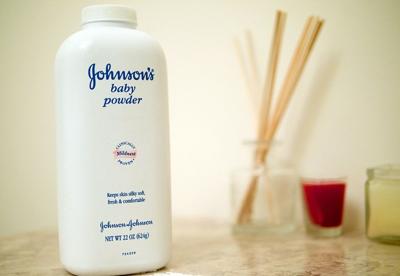


Johnson & Johnson Baby Powder no longer contains talc powder.
PHILADELPHIA – A Pennsylvania appeals court should affirm the removal of a law firm that once led tens of thousands of talc lawsuits from a case now on appeal, a Philadelphia judge recently wrote.
As part of three recent opinions sent to the Superior Court on issues in the city’s mass torts program, Judge Joshua Roberts - who oversees pretrial issues on cases involving Zantac, Paraquat and Roundup, among others – urged judges to find Beasley Allen violated the rules of professional conduct by collaborating with a former lawyer for Johnson & Johnson, the main defendant in cases alleging asbestos-containing talc caused ovarian cancer.
Beasley Allen’s out-of-state lawyers were granted permission to practice in Philadelphia cases, but that privilege was withdrawn earlier this year amid other disqualification orders in New Jersey, Florida and Illinois courts. Most costly was its DQ from its lead-counsel position in the federal multidistrict litigation proceeding that houses nearly 70,000 lawsuits.
Roberts’ opinion concerns a recent talc verdict in Philadelphia of $250,000 – an amount Johnson & Johnson called a “token.” Beasley Allen is appealing being kicked off that case, one of more than 170 pending in the Court of Common Pleas.
“Doubt created by infidelity can never be cured, and the Court should not have to require a party (here, J&J) - even a multinational highly sophisticated company - to overlook infidelity so that an opposing party may have counsel of their choice, especially when the offending firm could have easily avoided the harm complained of,” Roberts wrote July 22.
Beasley Allen was the driving force behind the rejection of J&J’s $9 billion settlement offer in Houston bankruptcy court, opting to have its clients seek more. But along the way, lawyer Andy Birchfield discussed an alternate resolution strategy with James Conlan, who had worked for J&J on talc cases.
That plan included Conlan creating a company that would buy J&J’s talc liabilities. When the bankruptcy plan failed, J&J vowed to fight harder in the various courts processing talc lawsuits, leading to Beasley Allen’s first disqualification from thousands of cases in New Jersey. That state’s supreme court has refused to hear the firm’s appeal.
It is fighting the Philadelphia order by arguing J&J waited too long to file for revocation of pro hac vice orders that let Beasley Allen practice in that court. It’s a strategy that found success with Los Angeles and Georgia judges.
But Roberts says it was “eminently reasonable” to wait until the New Jersey DQ. And without Beasley Allen, clients in Philadelphia cases still had capable lead counsel – Richard Golomb of Golomb Legal – the judge said.
Another argument from the firm says Birchfield should not be “guilty by association” with Conlan, though Roberts said that “offends common sense.” The two worked together on a settlement plan, discussed a settlement matrix, collaborated on articles critical of the bankruptcy settlement and appeared at symposiums, Roberts wrote.
“Motions to revoke PHV (or disqualify) should not be used as a litigation strategy,” he added. “At the same time, it is also equally, if not more important that lawyers comport themselves in a way that instills public confidence in legal proceedings and the legal profession.
“The parties to a case and the public at large should have confidence that they are receiving a fair shake. And in the same way the rules should not be used as litigation strategy, lawyers should not rely on technicalities or strained interpretations of the rules in an attempt to vindicate or excuse questionable conduct.”