


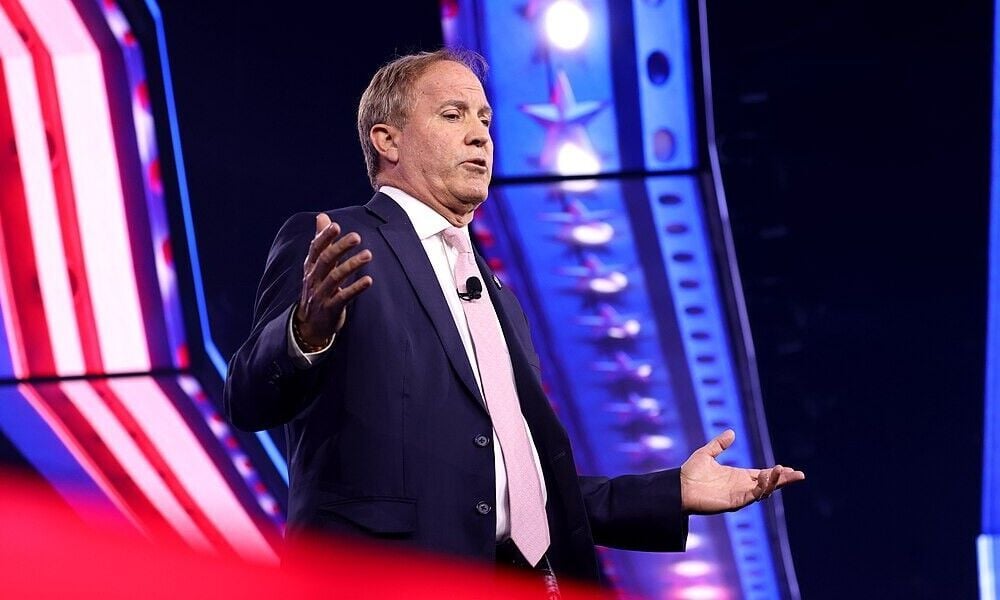
Texas Attorney General Ken Paxton
AUSTIN – Texas Attorney General Ken Paxton is withdrawing from a series of high-profile legal fights as he prepares to leave office in January, dropping lawsuits against civil rights organizations, immigrant-serving nonprofits and the NCAA while abandoning an appeal supporting a Houston doctor disciplined by state medical regulators.
The moves follow the Republican’s Nov. 3 loss to Democrat James Talarico in the U.S. Senate race and come ahead of a change in leadership at the attorney general’s office. Democrat Nathan Johnson defeated Republican Mayes Middleton to succeed Paxton and has said he intends to review litigation initiated under the outgoing attorney general, including cases he considers political.
The withdrawals have different legal consequences. The state dismissed its cases against two immigrant-serving organizations with prejudice, barring it from bringing the same claims again. Its lawsuits against the NCAA and the Council on American-Islamic Relations were dropped without prejudice, leaving open the possibility of refiling.
Medical board appeal abandoned
On November 13, Paxton dropped his appeal of a ruling disqualifying his office from intervening on behalf of Dr. Mary Talley Bowden in her lawsuit against the Texas Medical Board.
The board reprimanded Bowden after she prescribed ivermectin in 2021 to a COVID-19 patient at a Fort Worth hospital where she did not have privileges to practice. Bowden sued in January to overturn the reprimand, and Paxton’s office intervened in February to support her.
That intervention put the AG’s office at odds with a state agency it was already responsible for defending in the litigation. State District Judge Laurie Eiserloh disqualified the office after lawyers for the medical board argued it had “abandoned a client to switch sides in litigation,” the Texas Tribune reported.
Paxton had publicly defended his intervention, describing Bowden as a “champion for health freedom” in a previous news release.
The withdrawal ends Paxton’s challenge to the disqualification ruling. It does not itself resolve Bowden’s underlying lawsuit or overturn the board’s reprimand.
CAIR lawsuit dropped
On November 16, Paxton’s office filed a notice of nonsuit ending its effort to prevent the Council on American-Islamic Relations from operating in Texas.
The lawsuit, filed in February in Collin County, asked a judge to declare CAIR a foreign terrorist and transnational criminal organization. The state alleged the organization was working with the Muslim Brotherhood to establish control through Islamic law. CAIR disputed the state’s actions, saying it was being targeted for opposing Israel’s war in Gaza.
The case followed Gov. Greg Abbott’s designation of the organizations and his call for legal action against CAIR. Gov.-elect Gina Hinojosa has pledged to remove the designation, a separate step from the dismissal of Paxton’s lawsuit.
Shaimaa Zayan, the Austin director of CAIR-Texas, called the withdrawal a “huge relief,” according to the Texas Tribune.
“CAIR-Texas faced a huge injustice and continued to operate despite the threats,” Zayan said.
Houston and El Paso nonprofits get finality
The office’s retreat also reaches two organizations that faced efforts to end their operations in Texas.
On November 9, Paxton’s office withdrew its claims against FIEL, a Houston immigrant-rights organization, with prejudice in a Harris County court. The state had accused the nonprofit of violating restrictions on its activities through political advocacy, including criticism of President Donald Trump’s and Abbott’s immigration policies.
“This lawsuit has been very burdensome for us as an institution,” FIEL Executive Director Cesar Espinosa told the Texas Tribune. “Now that this is over, we can return to committing 100% of our time and energy to protecting, educating, and empowering our community.”
The same day, Paxton’s office filed a notice of nonsuit with prejudice in its effort to shut down Annunciation House, an El Paso network of migrant shelters.
That dispute began in February 2024 with a demand for the organization’s records. Paxton subsequently sought to revoke its nonprofit registration, alleging harboring, human smuggling and stash-house activity. Executive Director Ruben Garcia denied those allegations, saying the organization served migrants who had been processed and released by federal immigration authorities.
The withdrawal came after Paxton had won a significant procedural victory: The Texas Supreme Court reversed a lower court ruling blocking his effort in May 2025. The litigation had been moving toward another district court hearing when the state abandoned it.
NCAA and investment-related litigation
Paxton’s office also notified a Lubbock state district court November 12 that it would not proceed with its lawsuit accusing the NCAA of deceptive marketing of women’s sports, the Tribune reported.
Filed in December 2024 under the Texas Deceptive Trade Practices Act, the lawsuit alleged the NCAA misled consumers by allowing transgender athletes to participate in competitions marketed as women’s events.
The withdrawals extend beyond disputes over immigration, religion and athletics. Pensions & Investments reported Nov. 11 that Paxton dismissed with prejudice a lawsuit accusing proxy advisory firm Glass Lewis of putting an environmental, social and governance agenda ahead of clients’ interests. The Texas Lawbook also reported the end of that case.
Transition brings scrutiny of remaining cases
Brandon Rottinghaus, a University of Houston political science professor, told KERA that withdrawing cases before Johnson takes office allows Paxton to act before his successor can publicly announce their dismissal.
“Instead of having Nathan Johnson make a big splash about the cases he’s no longer pursuing, this pre-removal from the cases gives the outgoing attorney general a chance to be able to make the first move,” Rottinghaus said.