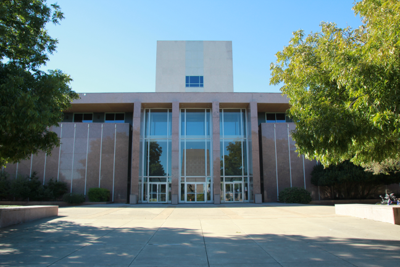


Texas Supreme Court
AUSTIN — Companies that did not sign an arbitration agreement are still entitled to arbitration in a lawsuit brought against a trampoline park, according to a Texas Supreme Court opinion.
On behalf of her minor daughter, K.G., Chiniqua Geter filed suit after her child was injured while playing at an Urban Air trampoline park in Beaumont. The defendants included Beaumont Urban Air, UATP Management, UATP IP, UA Attractions, Rachelle Nurse-Goodly and Joseph Goodly.
Before entering the play area of the park, Geter signed a release and indemnification agreement in favor of Beaumont Urban Air on behalf of K.G., which identifies the non-signatory petitioners as “protected parties” that Geter, in signing the agreement, “releases, agrees not to sue, and shall indemnify.”
The agreement further contained an arbitration provision.
In their answer, Beaumont Urban Air and the protected parties included a notice of their right to arbitrate the parties’ dispute pursuant to the release and moved to compel arbitration, but the trial court denied the motion.
An appellate court reversed and remanded with instructions to compel arbitration as to Beaumont Urban Air, holding that a valid arbitration agreement exists between K.G. and Beaumont Urban Air under the direct-benefits estoppel doctrine.
The court further held, however, that the protected parties had no contractual right to compel arbitration because they did not sign the agreement and direct-benefits estoppel does not apply to claims that “exist independently of the contract.”
On October 16, the Supreme Court confirmed that an arbitration agreement exists and binds K.G. Justices held that the protected parties, who did not sign the agreement, may nonetheless compel arbitration as beneficiaries of that agreement.
“The release and indemnity provision expressly identifying the non-signatory entities as ‘protected parties’ demonstrates the parties’ intent to benefit these entities,” the opinion states. “(We) grant the petition for review and reverse the portion of the court of appeals’ judgment affirming the trial court’s denial of the motion to compel arbitration as to the protected parties.”
Supreme Court case No. 24-0905