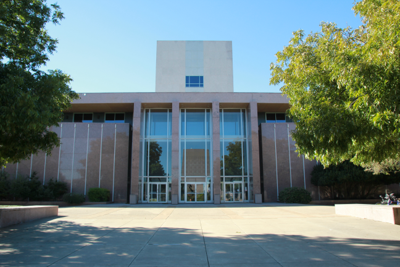


Texas Supreme Court
AUSTIN - The Texas Supreme Court has declined to clarify its answer on whether Texas Code prohibits judges from refusing to perform same-sex weddings, treating the State Commission on Judicial Conduct’s request as a motion for rehearing.
Back in April, the U.S. Court of Appeals for the Fifth Circuit certified the following question: “Does Canon 4A(1) of the Texas Code of Judicial Conduct (which concerns a judge’s extra-judicial activities) prohibit judges from publicly refusing, for moral or religious reasons, to perform same-sex weddings while continuing to perform opposite-sex weddings?”
Last month the Texas Supreme Court said, “no,” an answer stemming from a lawsuit brought by Brian Keith Umphress, who serves as a county judge in Jack County.
In an order issued on Oct. 24, 2025, the high court adopted a comment to Canon 4, which clarifies that ‘[i]t is not a violation of these canons for a judge to publicly refrain from performing a wedding ceremony based upon a sincerely held religious belief.”
In his suit, Umphress asserts the State Commission on Judicial Conduct is threatening judges and justices of the peace with discipline if they refuse to perform same-sex weddings while continuing to officiate at opposite-sex marriage ceremonies.
In November of 2019, the commission issued a “public warning” to Dianne Hensley, a justice of the peace in McLennan County, who recused herself when asked to perform same-sex weddings.
Court records show that on Jan. 21 the Commission filed a motion for clarification, stating that the high court’s comment and answer leave the public without guidance.
“Hensley and Umphress denied their actions demonstrate any bias in particular when they publicly proclaim their opposition to gay marriage and flatly refuse to conduct gay wedding ceremonies, yet loudly and publicly welcome all heterosexual couples,” the motion states. “The bias issue is left untouched by the Comment.”
Chief Justice Blacklock issued a concurring opinion along with the denial to clarify, writing that the “Commission must believe the Court did not carefully read and understand the question certified by the Fifth Circuit.”
“Rest assured, we did,” the opinion states. “Of course, the insufficiency of a court’s explanation of its answer in the mind of the losing party has nothing to do with the clarity of the court’s answer. There is no clearer answer than ‘no.’”
Supreme Court case No. 25-0288