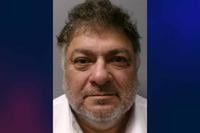
Seitz Jr.
DOVER, Del. - A Delaware court has for the second time slashed fees for plaintiff lawyers involved in litigation over Tesla’s pay practices, cutting a $176 million fee award down to $71 million after Tesla challenged the value of a settlement with its directors.
The Delaware Supreme Court agreed with Tesla that 3.1 million options outside directors returned to the company were worth far less to Tesla than the directors. The options were in the money, or eligible to be sold at a large profit at market price, but Tesla canceled them upon return and placed the underlying shares in its employee stock compensation fund.
“As we measure it, $71 million reflects a reasonable fee for counsel’s efforts and does not result in a windfall,” the court said in a Jan. 30 decision. The lead plaintiff, Police and Fire Retirement System of the City of Detroit, argued for a higher fee for attorneys McCarter & English, Fields Kupka & Shukurov and Bleichmar Fonti & Auld.
The fee cut came a month after the Delaware Supreme Court slashed fees in another lawsuit over Elon Musk’s multibillion-dollar pay package, where plaintiff attorneys sought as much as $7 billion in stock. The lawyers succeeded in blocking Musk’s $100 billion-plus compensation deal in Chancery Court, possibly the largest in U.S. history, but the Supreme Court reversed and awarded plaintiff lawyers led by Bernstein Litowitz only $54 million in fees.
The court’s clampdown on fees could reflect pressure by companies that fear Delaware’s courts have swung too far in favor of plaintiff lawyers and shareholder litigants. Musk moved Tesla’s headquarters to Texas in 2024 in a slap at Delaware’s court system.
The director compensation case was a derivative lawsuit, where shareholders sue on behalf of the corporation. The argued outside directors including James Murdoch and Larry Ellison awarded themselves excess pay and stock options.
The parties settled in July 2023 by agreeing to return to the company 3.1 million options, then valued $459 million, and $277 million in cash. The settling directors also agreed to skip three years of compensation they said was worth $184 million to them.
Tesla agreed any legal fees would come out of the money returned to the company and the plaintiff lawyers asked for $230 million, or 25% of the $918 million estimated value of the settlement. Tesla opposed the fee request, saying the canceled options were worth far less to the company than directors and there was no certainty directors would have awarded themselves the compensation they gave up for 2021-23. The total value to Tesla of the settlement was only $296 million, Tesla argued.
The Chancery Court accepted the estimated values specified in the settlement, although Tesla argued those values were for the directors to calculate how many options to return, not the value of the options to Tesla. The judge awarded the plaintiff lawyers $176 million in fees, or 24% of $734 million.
On appeal, the Delaware Supreme Court agreed Tesla got $296 million worth of cash and stock, with the dispute only being over the value of the returned options. The Supreme Court disagreed with the lower court over that value, saying the settlement agreement required Tesla to cancel the options and put the underlying stock in its executive compensation program, not sell the shares for cash. Therefore the options didn’t represent money “paid to Tesla” that could be used to pay plaintiff lawyer fees, the court ruled.
The Detroit pension fund and its lawyers argued the lower fee, based on a lack of quantifiable benefits for shareholders, as opposed to the corporation, would discourage similar litigation.
“We are not so sure,” Chief Justice Collins J. Seitz wrote. “Counsel continue to file and have recovered fees in derivative cases for nonquantifiable benefits to the corporation and its stockholders. Counsel has in the past and can continue to secure a fee for non-quantifiable benefits in a derivative settlement or judgment.”