
U.S. Supreme Court
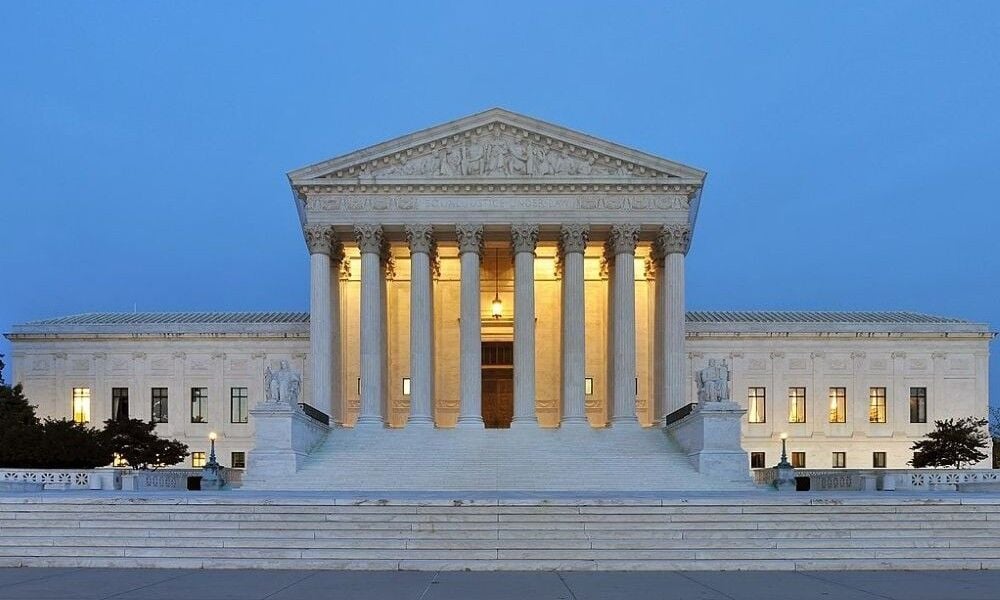
WASHINGTON – The U.S. Supreme Court will decide if government officials who partnered with private lawyers can sue the energy industry for climate change.
The court revealed Monday that it will take up one of the dozens of cases targeting companies like Chevron and Exxon. It will review the Colorado Supreme Court’s green light to Boulder’s lawsuit against Suncor and others.
The high courts of Colorado and Hawaii have allowed these cases to progress by denying defendants’ motions to dismiss. But many other state-court judges have tossed them at that stage, leaving confusion on whether the claims being made are viable.
“Courts across the country have responded to these cases in divergent ways, with many dismissing them for lack of legal and practical foundation,” said Phil Goldberg of Shook, Hardy & Bacon, who is also special counsel for the Manufacturers’ Accountability Project.
“Supreme Court review will bring much-needed clarity and uniformity to this issue and help ensure that fundamental policy decisions about energy and climate are made by the appropriate branches of government.”
The Supreme Court previously decided against taking up the Hawaii case but apparently changed its mind now that a pile of decisions have dismissed other lawsuits.
State and federal judges in Pennsylvania, South Carolina, New York, California, Maryland, New Jersey and Puerto Rico have thrown out climate cases seeking money from oil companies to pay for the effects of global warming, seeing them as an improper attempt to regulate emissions. That is the job of regulators and not judges, they say.
After a round of early defeats in federal courts, private lawyers who scored contingency-fee contracts from government officials retooled their strategy to focus on state-law nuisance and consumer-protection claims.
Bucks County, Pa., judge Stephen Corr noted that the county's complaint used the word "emissions" more than 100 times, while "deceptive" and "deception" were used only 39 times combined. He threw out the case as an attempt to regulate the international emissions market masked in consumer protection.
Judge Videtta Brown, in Baltimore's case, said the litigation goes beyond the limits of Maryland law, or whatever states other cases are filed in.
"This Court holds that the U.S. Constitution's federal structure does not allow the application of state court claims like those presented in the instant cases," Judge Steven Platt wrote in tossing Annapolis' case.
Amicus briefs in Boulder’s case poured in, urging the justices to rule on key issues persisting in the more than 30 climate lawsuits. Alabama Attorney General Steve Marshall led a group of 26 states that said Boulder is trying to “assert a power with no analogue in our Nation’s history and no place in our federalism.”
Republicans in Congress also filed a brief, complaining the Colorado Supreme Cout’s ruling created a patchwork of state and local regulations for a market that is supposed to be overseen by federal authorities.
And the Trump administration, which has issued an executive order forbidding any new cases and is battling the attorneys general of Michigan and Hawaii in court, submitted its thoughts last year, saying Boulder is attempting to impose new rules that would go far beyond the borders of Colorado.
“The need for this Court’s review is especially pronounced because respondents’ suit is just one of many that have been filed by States and local governments across the country, each proceeding on similar theories of state-law liability,” that brief says.
“If, as the Colorado Supreme Court held, those theories are consistent with federal law, then every locality in the country could sue essentially anyone in the world for contributing to global climate change.”