


JEFFERSON CITY — Missouri Attorney General Catherine Hanaway is leading a 15-state coalition urging the U.S. Supreme Court to uphold uniform federal labeling requirements for herbicides used in farming, according to an amicus brief filed in the case.
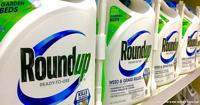
The brief, filed in support of nationwide labeling standards under the Federal Insecticide, Fungicide and Rodenticide Act (FIFRA), argues that consistent federal rules are necessary to protect farmers’ access to glyphosate, a widely used herbicide.
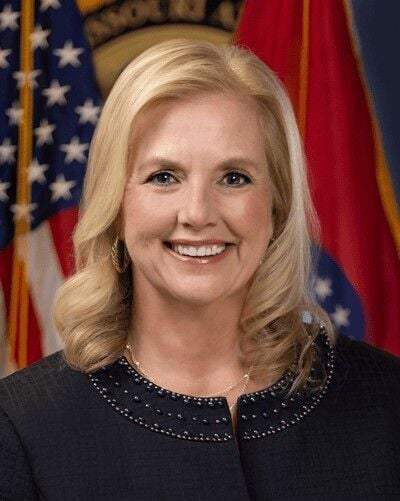
Hanaway
According to the filing, glyphosate has been used by farmers for decades to protect crops and maintain the nation’s food supply.
“For decades, Missouri’s farmers have used glyphosate to protect our crops and food supply,” Hanaway said in a statement announcing the filing.
She added that federal law already establishes strict labeling guidelines for products containing glyphosate and argued that states should not impose their own requirements that extend beyond those federal standards.
The case before the Supreme Court centers on whether manufacturers of glyphosate-based herbicides can be required to add warning labels suggesting the product may cause cancer, even when federal regulators have not mandated such warnings.
The coalition’s brief argues that allowing individual states or courts to impose additional labeling requirements would undermine the uniform regulatory framework created by Congress through FIFRA.
Under the federal law, labeling instructions for pesticides and herbicides are set at the national level and are intended to be consistent across all states.
The coalition argues that this nationwide framework ensures that labeling decisions are based on scientific review rather than varying state-level standards.
According to the states’ filing, recent court decisions have created uncertainty by requiring manufacturers to add warnings that glyphosate-containing products may be carcinogenic or risk facing significant legal liability.
The brief states that these rulings could expose manufacturers to litigation risks that conflict with federal labeling requirements.
The coalition argues that the threat of such liability could lead manufacturers to withdraw glyphosate products from the market.
If that occurs, the states say farmers could lose access to a tool they rely on to control weeds and maintain crop yields.
The brief further contends that allowing states to impose different labeling standards would create a patchwork regulatory system that could disrupt agricultural supply chains.
Without a single nationwide rule, manufacturers could be forced to produce different labels for different states, which the filing says would increase costs and complicate distribution.
The coalition’s filing also highlights the role agriculture plays in Missouri’s economy.
The brief states that if glyphosate were removed from the market or restricted by inconsistent labeling requirements, farmers could be forced to switch to alternative herbicides that may be less effective or more toxic.
In addition to Missouri, the attorneys general of Iowa and Nebraska joined in filing the brief, along with attorneys general from 12 other states. Those states include Alabama, Georgia, Kansas, Kentucky, Louisiana, Montana, North Dakota, Oklahoma, Pennsylvania, South Carolina, South Dakota and Utah.
The coalition argues that the Supreme Court’s decision could have nationwide consequences for how herbicide labels are regulated and enforced.
According to the brief, maintaining a uniform federal standard is essential to ensuring that agricultural producers across the country continue to have reliable access to herbicides approved under federal law.
The states’ filing asks the Supreme Court to reaffirm the role of federal law in establishing consistent pesticide labeling requirements and to prevent individual states or courts from imposing conflicting obligations on manufacturers.
U.S. Supreme Court case number: 24-1068