


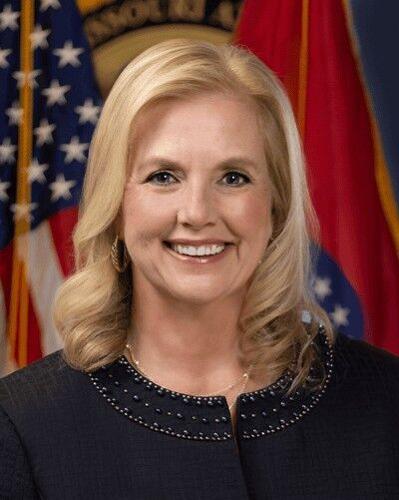



JEFFERSON CITY, Mo. — Missouri Attorney General Catherine Hanaway announced that Missouri and Louisiana have secured a federal consent decree with the Trump Administration to resolve the case of Murthy vs. Missouri, an agreement she said will prohibit the federal government from pressuring social media companies to censor Americans’ speech.
According to the announcement, the consent decree ends the litigation and grants Missouri authority to enforce the agreement against the federal government.
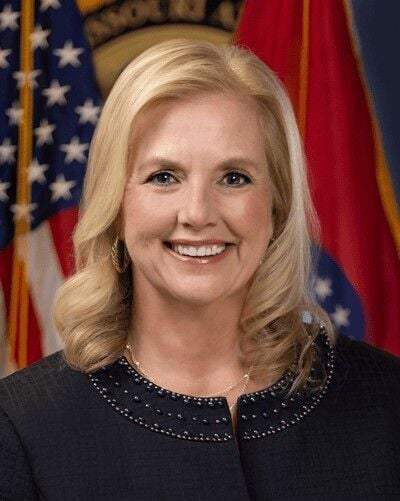
Hanaway
Hanaway described the outcome as a significant First Amendment victory, stating that it “finally ends the biggest violation of the First Amendment in our nation’s history” and establishes a separation between government and technology companies to preserve free expression.
The lawsuit was originally filed on May 5, 2022, by the attorneys general of Missouri and Louisiana.
A federal court previously ruled in favor of the states, finding what it described as substantial evidence of federal censorship activities.
The court stated that “[v]irtually all of the free speech suppressed was conservative free speech,” and found that the White House had engaged in “unrelenting pressure” on social media companies, including coercive actions intended to induce suppression of speech.
Court findings cited in the announcement allege that White House officials made clear to social media companies what content they wanted suppressed or amplified, and that companies complied under pressure.
The findings also state that Facebook suppressed content at the request of the White House, the FBI, and other federal entities, including information that did not violate the platform’s policies.
The announcement references the handling of the Hunter Biden laptop story, stating that the FBI possessed the laptop as early as December 2019 but did not confirm its authenticity when asked by Facebook after the story became public in October 2020.
The court described the FBI’s actions as “particularly troubling,” noting prior suggestions from federal officials that the story could be disinformation.
Additional findings cited include actions by former White House Press Secretary Jen Psaki, who allegedly warned social media companies of potential “legal consequences” if they did not increase censorship of misinformation.
It also references statements by President Joe Biden accusing social media companies of “killing people,” after which platforms communicated with the Surgeon General and adjusted their policies following meetings with federal officials.
The announcement further cites findings that Anthony Fauci and others were motivated to pursue a “take down” of protected speech, and that the Department of Homeland Security engaged with social media companies to monitor and suppress content, including expanding its definition of “infrastructure” to include “cognitive” infrastructure.
According to the document, federal officials also worked through a “pseudo-private organization” to address legal concerns surrounding First Amendment protections and used various forms of communication to influence social media companies’ policies and moderation practices.
The U.S. Supreme Court previously addressed a narrow standing issue in the case and remanded it for further proceedings, leaving broader constitutional questions unresolved.
The consent decree, according to the announcement, avoids the need for continued litigation.
The agreement includes provisions barring the federal government from pressuring social media companies to remove or suppress content deemed “misinformation.”
It also prohibits the government from threatening companies with legal, regulatory, or economic consequences to influence content moderation decisions, whether directly or indirectly.
Specifically, the decree applies to major platforms including Facebook, Instagram, Twitter or X, LinkedIn and YouTube, preventing federal officials from urging those companies to remove or reduce the visibility of protected speech.
The agreement also requires the federal government to pay the plaintiffs’ attorney’s fees.
The consent decree acknowledges that the Biden Administration censored social media posts related to COVID-19, the Hunter Biden laptop report and the 2020 presidential election and that it exerted pressure on third parties to moderate or suppress speech it did not approve.
Hanaway said her office will continue efforts to defend First Amendment rights, calling the agreement a long-term safeguard for “free, fair, and open debate” in the United States.