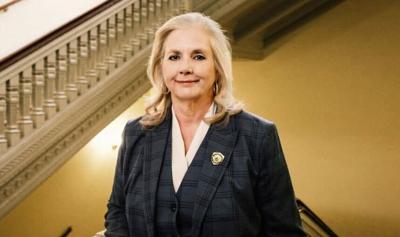



Missouri Attorney General Catherine Hanaway
SPRINGFIELD – Missouri has reached a $13.5 million agreement with Torch Electronics to resolve investigations into its gambling machines, keeping the devices out of for-profit businesses while temporarily allowing them at qualifying nonprofit organizations.
Attorney General Catherine Hanaway announced the agreement November 16 following a joint investigation involving her office and federal prosecutors in Missouri’s Eastern and Western districts. The settlement resolves ongoing civil and criminal investigations into the company without an admission of liability.
The Wildwood-based company’s machines must remain shut down in retail locations. Qualifying nonprofits, including veteran’s halls and fraternal organizations, may continue operating the devices through May 31, 2027, but Torch cannot install new machines after January 1, 2027, officials said.
Torch will pay $4.5 million this week and another $4.5 million in each of the next two years. Violating the agreement would trigger an additional $6.5 million payment. The settlement money will go to Missouri’s Gaming Proceeds for Education Fund, which distributes revenue to eligible school districts through the Classroom Trust Fund.
The agreement protects Torch, owner Steven Miltenberger, employees, vendors and retailers from state prosecution for their involvement with the company as long as they comply with its terms, according to the Missouri Independent. It also binds potential successor companies, Hanaway’s office said.
Torch has maintained that its devices comply with state law. The settlement does not require the company to concede otherwise.
“Based on current and future ongoing litigation risk, Torch is willing to resolve the claims with the state without making an admission of liability,” the agreement states.
The deal follows years of disputes over cash-prize machines that spread through Missouri convenience stores, gas stations and bars. A federal judge ruled in February that the unlicensed machines were illegal gambling devices. Torch halted its retail operations in April amid the threat of state and federal prosecution.
Hanaway described the nonprofit exception as an exercise of prosecutorial discretion, distinguishing organizations that use machine revenue to support community activities from businesses that retain the proceeds. She said businesses cannot qualify simply by creating nonprofit affiliates or reorganizing themselves as nonprofits.
The settlement does not necessarily bar Torch’s machines from returning to stores permanently. Under the agreement, retail operations could resume if the company obtains a court ruling, upheld on appeal, that the devices are lawful, or if lawmakers legalize the games. A separate provision would allow operations during a transition to a state-regulated video lottery system if the Legislature authorizes one.
Hanaway said her office also is pursuing other machine vendors and has begun negotiations with some of them.