
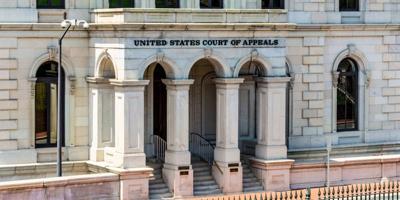


RICHMOND, Virginia – A federal appeals court panel says West Virginia’s mandatory school vaccination law is constitutional.
In an April 8 ruling, a three-member panel of the U.S. Fourth Circuit Court of Appeals said the law “is a legitimate exercise of the state’s power to protect the health and wellbeing of school children.”
Krystle and Anthony Perry had challenged the law after seeking a religious exemption for their daughter to attend public school in Upshur County. They said the law violates their First Amendment right to free exercise of religion.
“West Virginia has a legitimate — indeed, compelling — interest in reducing the spread and severity of infectious diseases,” Judge Harvie Wilkinson wrote in Wednesday’s majority ruling. “The diseases covered by the law are serious and can lead to debilitating, life-threatening complications,” and then the appeals judge listed the risks.
“For these reasons, a state’s interest in vaccinating its citizens and protecting its school children has long been recognized as of the utmost importance. This is not just some ho-hum, every day ‘compelling interest.’”
West Virginia is one of five states that prohibit religious exemptions for school vaccine mandates. State policy requires students to receive vaccinations for chickenpox, hepatitis B, measles, meningitis, mumps, diphtheria, polio, rubella, tetanus and whooping cough.
Several similar lawsuits have been heard in the last few years by state courts in West Virginia. Wednesday’s Fourth Circuit opinion reverses a preliminary injunction from U.S. District Judge Tom Kleeh in the Northern District of West Virginia, who had ruled the Perrys were likely to succeed on the merits of their case.
“Rights, as important as they are, do not swing free and clear of the larger social compact,” Wilkinson wrote. “We live in a society that accords its citizens enormous benefits. In return, states can, in a measured way, require certain exactions and accommodations to the broader social interest. West Virginia’s compulsory vaccination law does exactly that. …
“The law is a public health measure, not an instrument of ideological indoctrination. It does not expose children to values or beliefs that might be hostile to their parents’ religious beliefs.”
The majority opinion – Wilkinson was joined by Judge Steven Agee – also said a lower court ruling was wrong to granting the couple a preliminary injunction allowing their daughter to reenroll in Virtual Academy, an online public school.
States have required mandatory vaccinations for students to attend public schools for more than 170 years, dating back to Massachusetts in 1855.
“This unbroken line of decisions resolves the case before us,” Wilkinson wrote. “Because the law is neutral and generally applicable, the Perrys’ free exercise rights do not relieve them of their obligation to comply with it. …
“Plaintiffs’ rights are not the only things at issue here. Parents and grandparents have their own interest in not seeing their children and grandchildren in school environments with significant numbers of unvaccinated peers. …
“Rights, as important as they are, do not swing free and clear of the larger social compact. We live in a society that accords its citizens enormous benefits. In return, states can, in a measured way, require certain exactions and accommodations to the broader social interest,” wrote the m
The majority also dismissed the idea that the law is not generally applicable because it doesn’t account for homeschooled students, adults working in schools and students with medical exemptions.
“West Virginia requires school children to get vaccinated because vaccination generally promotes their health and well-being,” Wilkinson wrote. “Nothing about that health decision disfavors religious beliefs.
“Medical exemptions are thus categorically incomparable to conscientious exemptions of all stripes in terms of how they affect West Virginia’s health interests.”
Judge Paul Niemeyer dissented, saying the majority focused broadly on the policy and didn’t analyze the specifics of the case.
“In this case, the mandatory vaccination law is not generally applicable as it does not apply to children who receive home instruction, to children who are educated in learning pods and to children who attend microschools," Niemeyer wrote. “These exceptions are presumably made because the children’s learning environment in those circumstances is remote and their exposure to other children is minimal.”
Niemeyer also noted recent U.S. Supreme Court rulings he says favor the Perrys.
In a 2025 case style Mahmoud v. Taylor, the court said laws requiring parents to choose between participating in public education or raising their children in accordance with their faith must survive strict scrutiny.
“West Virginia absolutely has a compelling state interest to prevent the spread of infectious disease in order to protect the health and safety of the public, as the district court acknowledged and the majority emphasizes,” Niemeyer said. “But the school officials have failed to show that the law’s failure to make an exception for virtual students with a sincere religious objection to complying with the mandatory vaccination law is consistent with narrow tailoring when students similarly situated with regard to the risk addressed need not comply at all.”
In the majority ruling, Wilkinson also noted the Trump administration’s stance on vaccines.
“The fact that the executive branch of the federal government may be evincing skepticism to vaccinations does not require the enlistment of the judicial branch in an assault upon state vaccination requirements,” Wilkinson wrote. “States remain free to recognize the weighty medical evidence supporting the value of vaccinations in safeguarding public health. Such determinations lie at the very heart of the states’ police power. …
“It is possible we take the benefits of vaccination so much for granted that we regard too casually the opening of a second front. States remain free to recognize the weighty medical evidence supporting the value of vaccinations in safeguarding public health.”
The three Fourth Circuit judges on the panel all are Republican appointees. Wilkson was appointed by President Ronald Reagan, Agee was appointed by President George W. Bush and Niemeyer was appointed by President George H.W. Bush.
U.S. Court of Appeals for the Fourth Circuit case number 24-2132 (U.S. District Court for the Northern District of West Virginia case number 2:24-cv-00018)