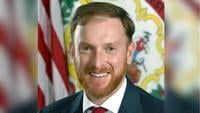


West Virginia Attorney General J.B. McCuskey
CHARLESTON – Two environmental organizations have sued West Virginia Attorney General J.B. McCuskey, accusing him of using the state’s consumer protection law to investigate their climate advocacy, expose their funding networks and silence criticism of the fossil fuel industry.
The West Virginia Rivers Coalition and 350.org asked a federal judge to block subpoenas demanding nearly 10 years of records and halt the underlying investigations. Their 46-page complaint alleges violations of constitutional protections for speech, association, petitioning the government and freedom from unreasonable searches.
The AG’s office did not return messages seeking comment on the lawsuit. But the president of the West Virginia Manufacturers Association defended McCuskey’s actions.

Bissett
“It is important to remember that WV Rivers is an environmental activist group that works against economic development and jobs here at home,” Bill Bissett told The West Virginia Record. “When their anti-growth activities are successful, job creators and the people who depend upon them for their livelihoods suffer.
“We appreciate AG McCuskey’s efforts in looking into the activities of WV Rivers and their coordination with other environmental groups.”
The subpoenas, dated September 16, require the organizations to produce records by November 2. The groups requested a hearing on a preliminary injunction before that deadline.
“Each subpoena purports to invoke the Attorney General’s authority under the West Virginia Consumer Credit and Protection Act,” the complaint states. “It identifies no consumer, no transaction, no complaint, and no act by either recipient that the Act regulates. None of its demands concern the sale of any goods or services.”
The subpoenas describe investigations into “alleged unfair or deceptive acts or practices and other possible violations” of the consumer protection law, according to language reproduced in the complaint. They seek records about climate statements, scientific models, fundraising appeals, relationships with renewable energy businesses and coordination with other advocacy organizations.
The organizations contend the investigations are retaliation for their public advocacy and legal challenges involving energy development. The Rivers Coalition has challenged permits for the Mountain Valley and Atlantic Coast pipelines and is a petitioner in a pending federal appeals court challenge to the Environmental Protection Agency’s approval of West Virginia’s program for permitting underground carbon dioxide injection wells. McCuskey’s office represents the state, which intervened in that case.
The complaint says McCuskey’s office accused the petitioners in the injection-well case of relying on “stale, slanted data” and urged the court not to allow them to “meddle” with the state’s program. The groups argue that the subpoenas’ demands mirror those accusations and McCuskey’s broader criticism of climate advocacy organizations.
The lawsuit also cites a February letter McCuskey signed with other state attorneys general asking the Justice Department to investigate more than 150 organizations over foreign funding of climate advocacy. That letter identified 350.org by name and cited a grant supporting fossil fuel divestment campaigns, according to the complaint.
McCuskey issued substantially identical subpoenas to at least four other nonprofit environmental organizations around the same time, the lawsuit alleges.
The subpoenas contain 16 document demands covering records from Jan. 1, 2017, through the date of full compliance, according to the complaint. They seek information about how the organizations developed climate statements, selected emissions scenarios, handled scientific uncertainty and coordinated campaigns involving West Virginia energy businesses.
The definition of a published statement extends beyond public reports and social media posts to communications with a single person outside an organization. Requests for published materials also encompass unreleased drafts, editing comments and approval communications, the complaint says.
Other demands seek grant agreements, organizational funding sources and amounts, payments to other organizations, shared personnel with renewable energy entities and records of coalition work on energy permitting and regulation.
The subpoenas include limits on those requests. They exclude lists identifying individual donors, members, subscribers and volunteers in those capacities, according to the complaint. They also state that attorney-client communications, attorney work product and material protected by a First Amendment associational privilege need not be produced.
But the organizations argue those protections are insufficient. Organizational funders and coalition relationships remain subject to disclosure, they say, and recipients withholding privileged records must provide a log identifying the documents or categories withheld and the factual basis for the claim. The groups contend that explaining an associational privilege could itself reveal the relationship they are trying to protect.
The subpoenas also exclude statements expressed as personal or political opinion, statements made exclusively as courtroom advocacy and peer-reviewed scientific research absent evidence of knowing misrepresentation. The complaint argues those exclusions leave regulatory comments, legislative testimony and other advocacy outside court within the demands’ reach.
The Rivers Coalition says the investigation has already caused staff members to censor internal communications and question whether to proceed with a webinar, revise a public presentation about petrochemical development or continue commenting on water discharge permits.
The organization says it paused a community mini-grant program to avoid exposing additional groups and individuals to the investigation. It also held back promotion of a recently completed online presentation about the petrochemical industry.
The coalition has 15 staff members and an annual budget of about $2 million, more than 80% of which comes from foundations and other organizational funders, according to the complaint. It says the subpoena threatens those relationships because it can no longer assure funders that their support will remain confidential.
Collecting and reviewing the requested records would require months of work by an outside vendor charging $150 an hour, the organization estimates in the complaint.
“In the Executive Director’s assessment, compliance would completely overwhelm the organization,” the lawsuit states.
350.org says the investigation has deepened its caution about criticizing fossil fuel companies and prompted it to extend indefinitely a special review process for public communications from its U.S. program team. That process began after a separate congressional inquiry in September, according to the complaint.
The organization says its executive director has altered or withheld content because of the investigation and that it will undertake no new work in West Virginia while the inquiry remains pending.
The groups argue McCuskey lacks authority to investigate the activities covered by the subpoenas under the Consumer Credit and Protection Act. Their complaint says the law addresses trade or commerce involving goods and services, while the demands concern advocacy and charitable donations.
Both organizations acknowledge incidental merchandise sales but say none of the subpoena demands concerns those transactions. The complaint also notes that West Virginia regulates charitable solicitation under a separate law administered by the Secretary of State.
The lawsuit does not argue that charitable organizations are immune from fraud investigations. It acknowledges that states may act against knowingly false statements of material fact intended to mislead donors, but alleges McCuskey has identified no such statement by either plaintiff.
The organizations also accuse McCuskey of targeting their viewpoint. The subpoenas define a “Climate Claim” as a statement asserting a connection between fossil fuel emissions and climate or weather changes and resulting harms. Statements denying such a connection fall outside that definition, the complaint says.
The groups seek preliminary and permanent injunctions stopping the investigations, enforcement of the subpoenas and substantially similar demands based on the activities described in the lawsuit. Alternatively, they ask the court to block demands for sensitive funding, coalition, internal communication and advocacy records. They also seek attorney fees and costs.
“Narrowing the subpoenas would not cure the defect,” the complaint states. “The defect is not only that the demands are too broad, though they are. It is that the investigation has no lawful subject.”
Appalachian Mountain Advocates attorneys Derek Teaney and Amanda Demmerle represent both organizations.
U.S. District Court for the Southern District of West Virginia case number 2:26-cv-00679