
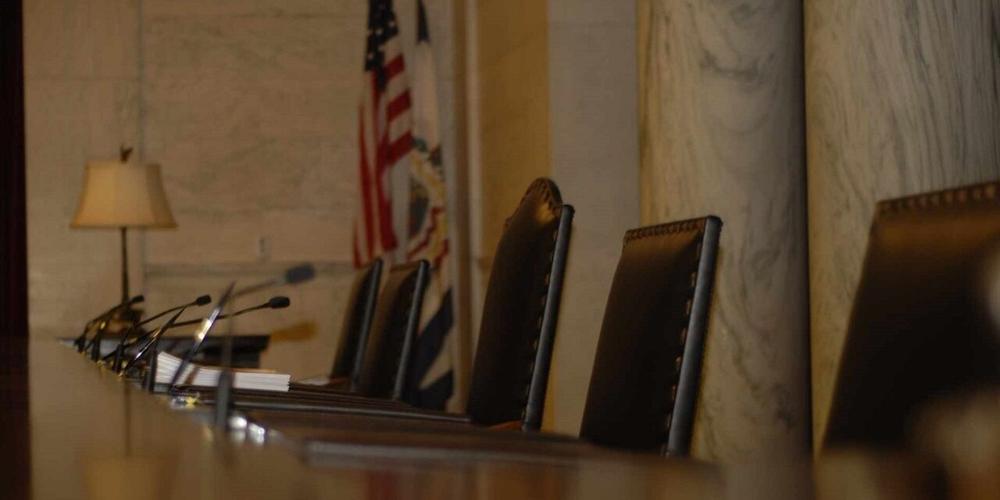


The chambers of the West Virginia Supreme Court of Appeals
CHARLESTON – The West Virginia Board of Education has asked the state Supreme Court to reverse a circuit court ruling that allows students from families with religious objections to school vaccination requirements still to attend school.

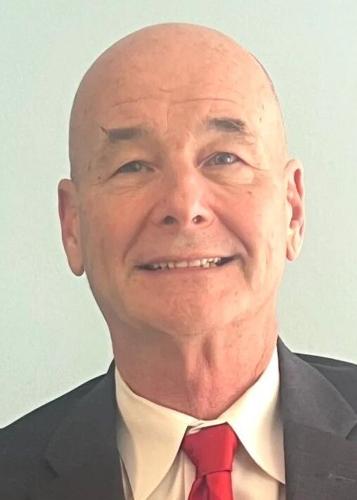
Froble
In a March 26 filing, the state board and other defendants in the underlying case say Raleigh Circuit Court Judge Michael Froble erred in November when he “grafted an extratextual religious exemption” to the state vaccine law, and they say Froble made other errors.
Froble’s ruling is stayed until the state Supreme Court rules in the case. The appellants who filed Thursday’s brief are the defendants in the Raleigh County case. They include the state BOE, its members, state Superintendent Michele Blatt, the Raleigh County Board of Education, its members, Raleigh Superintendent Serena L. Starcher and a Jane Doe defendant. The original case was filed by two Raleigh County families who opposed the state and county boards’ refusal to allow the religious exemption.
The state’s Vaccine Law requires all students attending public school, except those to whom vaccination presents medical risk, to receive certain vaccines.
“The Vaccine Law works,” the 51-page filing states. “West Virginia’s school children have the highest vaccination rate in the country, and the state experiences few outbreaks of vaccine-preventable diseases as a result.
“The Legislature has repeatedly considered adding religious exemptions to the Vaccine Law. It hasn’t.”
The filing mentions recent outbreaks of measles in other states.
“A disease once deemed eliminated in the United States has reawakened,” the board states. “But not in the Mountain State. This case threatens to change that.”
The board says Froble “rewrote the Vaccine Law and added the religious exemptions the Legislature rejected.” It says he also erroneously read the state’s Equal Protection for Religion Act of 2023 “to apply universally such that it grafts religious exemptions onto all statutes.”
“But the Legislature considered a broader version of EPRA that supported the circuit court’s reading and rejected it, instead adopting narrower statutory language,” the brief states. “The circuit court erred by expanding EPRA. The effect of that error is drastic.
“Litigants could weaponize EPRA against the state, using it as a tool to legislate through litigation. The circuit court’s error does not stop at the Vaccine Law. Any number of statutes, from tax laws to seatbelt laws, face existential threats under the circuit court’s reading. This court should reject that broad reading and apply EPRA as written.
The board also notes the state Supreme Court and the U.S. Fourth Circuit Court of Appeals have ruled the Vaccine Law survives strict scrutiny.
“The circuit court not only diverged from this authority, but it also misapplied the law and facts along the way,” the board filing states. “It determined West Virginia’s interest in public health was not sufficiently compelling to survive strict scrutiny. It held that the Vaccine Law was not the least restrictive means of achieving West Virginia’s public health goals because the Vaccine Law doesn’t regulate more conduct.
“It cast aside the testimony of nationally recognized health experts in favor of testimony from an anti-vaccination advocate. It systemically denied appellants (the state BOE and other defendants) the opportunity to develop their case. Those errors demand correction.
“This court should reverse the circuit court, uphold the Vaccine Law and preserve the Legislature’s goal of protecting public health.”
Gov. Patrick Morrisey signed an executive order the day after he took office in January 2025 requiring the state to offer the religious exemption based on the EPRA. Bills to codify that have failed in the state Legislature as recently as 2025. Lawmakers did not take up any such measures in this year’s session.
The plaintiffs in the underlying case – the two Raleigh County families – must file their brief in the case by May 11, and the defendants will have until June 1 to file a reply. After that, the Supreme Court could rule on the case based on its merits or schedule oral arguments.
Thursday’s brief was filed by Benjamin Bailey, Christopher Smith and Denali Hedrick of Bailey Glasser; Leigh Anne Wilson, Corey Palumbo and William Lorensen of Bowles Rice; Thomas Hurney Jr. and Parker Zopp of Jackson Kelly; and Marc Williams and Anna Williams of Nelson Mullins. Attorneys representing the Raleigh County families are John Bryan of Union, Aaron Siri and Walker Moller of Siri & Glimstad and Chris Weist of Covington, Ky.
West Virginia Supreme Court of Appeals case number 25-836 (Raleigh County Circuit Court case number 25-C-230)