
CHARLESTON — The West Virginia Supreme Court says West Virginia University’s Board of Governors illegally discussed concerns about racism behind closed doors in 2020, but upheld the board’s decision to exclude the public from discussions of seven other topics under the state’s commercial competition exception.
The ruling gives HD Media, which publishes the Charleston Gazette-Mail, a partial victory in its six-year challenge to the university’s closed-door deliberations. The court sent the case back to Monongalia Circuit Court to consider awarding attorney fees for the unlawful discussion of social justice issues.

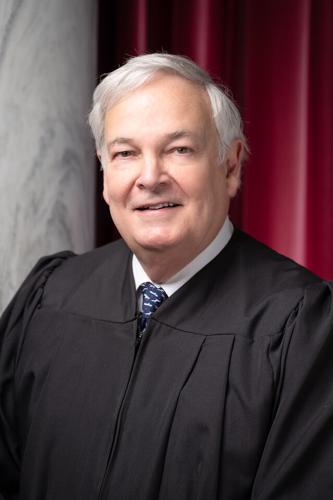
Kirkpatrick
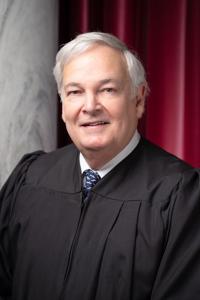
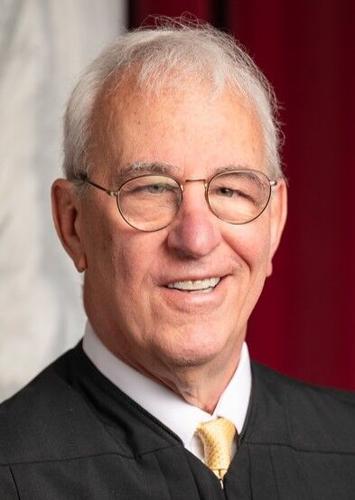
Justice H.L. “Kirk” Kirkpatrick wrote the majority opinion. Justice Charles Trump, joined by Justice Bill Flanigan, agreed the racism discussion violated the law but dissented from the majority’s approval of the other sessions under the commercial competition exception.
The dispute concerns portions of five board meetings held between June 19 and Sept. 18, 2020, as WVU grappled with the COVID-19 pandemic, budget uncertainty and calls to address racism on campus. HD Media sued in October 2020, alleging the board violated the West Virginia Open Governmental Proceedings Act by discussing nine subjects in executive sessions, which are closed to the public.
The justices upheld the board’s use of the commercial competition exception for discussions about the pandemic response, university budgets, the upcoming athletic season, the business college, capital projects, an emergency pay policy and tuition and fees. They also upheld the handling of a separate closed-door discussion of federal Title IX regulations under attorney-client privilege.
The court left intact the denial of attorney fees for a previously established violation involving an inadequate meeting agenda.
The social justice discussion followed a petition WVU received June 17, 2020, calling for changes in campus diversity and inclusion. According to HD Media’s amended complaint, more than 800 people signed the petition accusing the university of being anti-Black. The petition arrived amid protests following George Floyd’s murder.
The board defended the closed discussion in part through testimony from university administrator Rob Alsop, who described it as a brief update on a petition received two days before the June 19 meeting. The lower court also noted current and prospective students, faculty and staff cared deeply about WVU’s response to concerns about racism and diversity.
The Supreme Court said those circumstances did not establish a lawful basis for excluding the public.
“We find no support for the circuit court’s conclusion that a response to these concerns necessarily involves commercial competition,” Kirkpatrick wrote.
That violation requires the circuit court to consider fees under a statute allowing a prevailing party to recover litigation expenses unless the public agency’s position was substantially justified or special circumstances would make an award unjust.
For the other commercially related discussions, the majority repeatedly emphasized that HD Media did not rebut the university’s affidavit evidence describing the subjects discussed and the potential harm from premature disclosure.
Alsop said the pandemic forced instruction online, disrupted contracts and delayed construction and research. Decisions about bringing students back to campus affected WVU’s financial health, and anticipated shortfalls prompted consideration of furloughs, changes to paid leave and debt restructuring.
HD Media argued that neither a pandemic response nor ordinary budget discussions constituted a clearly defined exception to the open meetings law. The majority said that argument did not overcome the university’s evidence supporting its request for summary judgment, a ruling without trial.
The athletic discussion concerned uncertainty about whether the football season could proceed. According to the university’s evidence, home football games generated $3 million to $6 million apiece for the athletic department, and premature disclosure could have affected media and stadium vendor contracts, ticket sales and athlete retention.
Discussions of the business college and capital projects included whether WVU could afford to continue construction of Reynolds Hall, the new home of the John Chambers College of Business and Economics, and other projects during the pandemic. The emergency pay discussion concerned extending special paid leave into fall 2020. Tuition and fee discussions involved enrollment and retention strategies amid anticipated budget shortfalls.
The majority also noted that the university’s budget and tuition and fee schedules were subsequently discussed and approved in public.
In their dissent, Trump and Flanigan warned the ruling allows public institutions to shield ordinary government business merely because it has financial consequences.

Trump
“The majority’s approach effectively equates matters that may affect a public institution’s finances with matters ‘involving commercial competition,’” Trump wrote. “Those are not interchangeable concepts.”
Trump argued that the university needed to identify specific competitive transactions or undertakings, rather than describe the general financial importance of its operations. Otherwise, he wrote, the exception could encompass much of the routine business of every public college or university.
He disputed the majority’s reliance on the absence of competing affidavits from HD Media, saying the central question was legal: whether the university’s evidence, even accepted as true, satisfied the statute.
“An affidavit may establish the facts it recounts; it does not relieve the court of deciding the legal issue of whether those facts satisfy the statute,” Trump wrote.
He also said later public discussion and approval of tuition and fees could not substitute for allowing the public to observe deliberations that should have been open.
“The Act protects the public’s opportunity to observe the deliberative process, not merely the final vote,” he wrote.
The disagreement echoed arguments presented during the court’s October 14 hearing when HD Media attorney Lonnie Simmons urged the justices to protect the public’s ability to witness government discussions, while WVU defended the sessions as necessary to address sensitive financial and operational questions during the pandemic.
The court rejected HD Media’s argument that the trial court needed live, in-person testimony to evaluate the board’s assertion of attorney-client privilege over its Title IX discussion.
WVU General Counsel Stephanie D. Taylor had briefed the board on new federal regulations governing responses to sexual harassment. The circuit court reviewed materials privately and found the communications privileged.
The Supreme Court said its precedent did not require live testimony and that affidavits were acceptable evidence in summary judgment proceedings. Trump and Flanigan agreed that live testimony was unnecessary.
The justices also upheld the denial of attorney fees for the inadequate June 19 agenda. The circuit court had found its generic descriptions insufficient to notify the public of the particular subjects the board intended to discuss.
The majority concluded that the circuit court acted within its discretion because the board believed it had adequately identified the subjects and could connect them to the agenda’s broader categories. Trump disagreed, saying a subjective belief in an agenda’s adequacy was not equivalent to an objectively reasonable, substantially justified position.
The decision partly reverses a June 14, 2024, Intermediate Court of Appeals ruling that upheld the circuit court’s decisions. The Supreme Court declined to decide whether a separate exception for confidential internal memoranda also justified the discussions it upheld under the commercial competition exception.
HD Media was represented by Simmons and Robert M. Bastress III of DiPiero Simmons McGinley & Bastress in Charleston. The board was represented by Natalie Atkinson, Philip J. Combs and Bryant J. Spann of Thomas Combs & Spann.
West Virginia Supreme Court of Appeals case number 24-412