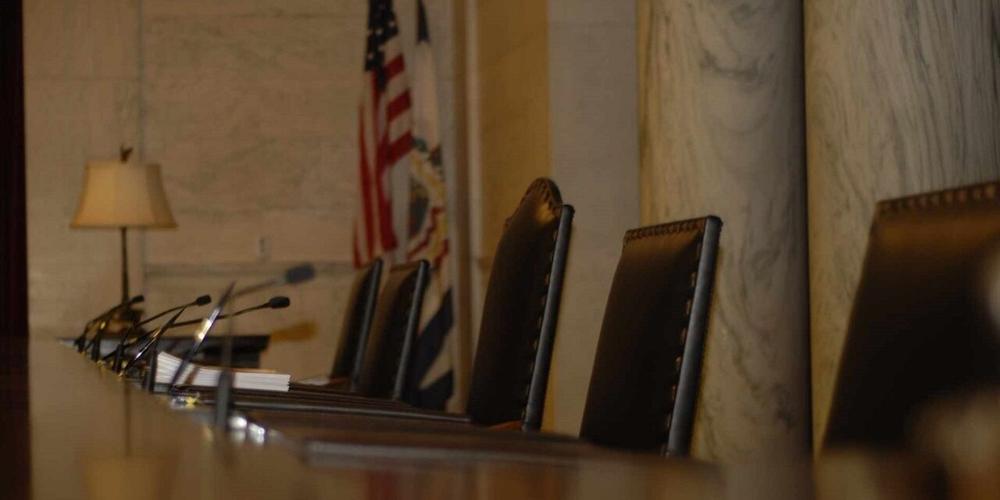




The chambers of the West Virginia Supreme Court of Appeals
CHARLESTON – The West Virginia Supreme Court of Appeals has struck down a 2025 law requiring the state Board of Education to submit its rules for legislative approval, ruling that the review process unconstitutionally interfered with the board’s authority to supervise public schools.
In its November 13 ruling, the court ordered Secretary of State Kris Warner to accept and publish a school transportation policy his office rejected after the board declined to follow the new law. The decision preserves the board’s authority to adopt rules without first securing lawmakers’ approval.

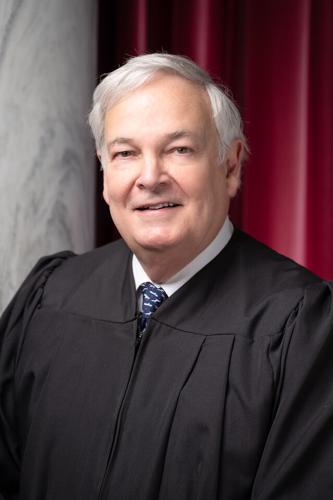
Kirkpatrick
Justice H.L. “Kirk” Kirkpatrick wrote the majority opinion, which reaffirmed a 1988 ruling that placed the board’s rulemaking authority within its constitutional responsibility for the “general supervision” of public schools. Justice Charles S. Trump IV dissented, arguing the majority had confused the board’s supervisory responsibilities with lawmaking power reserved to the Legislature.
In a statement on social media, the board thanked the court for upholding the will of voters and the state Constitution “which grants the State Board of Education authority over the rulemaking and oversight of education policy.”
“The WVBE will continue its important work of providing leadership, oversight and support to the education system and children of West Virginia,” the board said.
The dispute centered on House Bill 2755, which took effect July 11, 2025. It required new board rules to undergo review by the Legislative Oversight Commission on Education Accountability and the full Legislature, giving lawmakers authority to approve, amend or reject them.
The board and state Superintendent Michele Blatt challenged the law after Warner refused to accept Policy 4334, which establishes design and equipment requirements for school transportation vehicles. The board submitted the policy July 14, 2025, without first sending it through the legislative review process.
The board filed its petition directly with the Supreme Court on Oct. 3, 2025, seeking to have the law declared unconstitutional and to compel Warner to publish the policy in the State Register.
The majority found the dispute was controlled by West Virginia Board of Education v. Hechler, a 1988 case that also involved a school bus rule rejected by the secretary of state because the board had bypassed legislative review. In that decision, the court held that statutes interfering with the board’s constitutionally protected rulemaking authority were unconstitutional.
“The practical effect of the laws enacted pursuant to HB 2755 is the same as the statutes at issue in Hechler – the Board must submit its rules to the Legislature for approval prior to enactment,” Kirkpatrick wrote.
Warner argued the newer law differed in important ways. Unlike the 1988 legislation, it allowed a rule to take effect as initially adopted if lawmakers failed to act within 15 months. It also allowed the board to issue emergency rules without first obtaining the secretary of state’s agreement that an emergency existed, according to the majority opinion.
The court concluded those differences did not resolve the constitutional problem: New board rules remained subject to legislative approval, amendment or rejection.
The majority also rejected Warner’s request to overturn Hechler, relying on stare decisis, the principle that courts generally follow their prior decisions to promote stability and consistency in the law. Kirkpatrick wrote that the court had repeatedly relied on Hechler in the nearly four decades since it was decided and found no sufficient reason to abandon it.
The ruling follows earlier unsuccessful efforts to change the constitutional structure of public education governance. Voters in 1989 rejected a proposal to eliminate the constitutional board and superintendent’s office and transfer their powers to an executive department established by law. In 2022, voters rejected an amendment expressly authorizing legislative review, approval, amendment or rejection of board rules.
Trump, in a 28-page dissent, said the Legislature could regulate the board’s rulemaking procedures without displacing its constitutional responsibility to supervise schools.

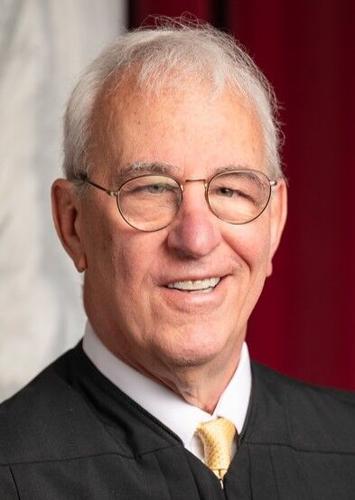
Trump
He said the Constitution assigns complementary responsibilities: Lawmakers must provide for a thorough and efficient public school system by general law, while the board supervises that system and performs duties prescribed by law. The board’s rulemaking authority, he wrote, originated in statutes rather than an independent constitutional grant.
“Hechler erroneously transformed a statutory grant of rulemaking authority into a constitutional exemption from legislative oversight, an error that the majority perpetuates here,” Trump wrote.
Trump would have overruled Hechler to the extent it prohibited lawmakers from establishing procedures governing the adoption and effectiveness of board rules. He also argued that unsuccessful constitutional amendments should not determine whether subsequent legislation is constitutional.
The majority granted a writ of mandamus compelling Warner to perform a legal duty after finding the board had a right to file its policy, Warner had a nondiscretionary duty to maintain the State Register and no other adequate remedy was available.
Justice Bill Flanigan did not participate after deeming himself disqualified. Senior Status Justice Beth Walker sat by temporary assignment.
West Virginia Supreme Court of Appeals case number 25-642