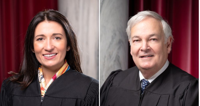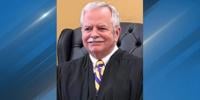
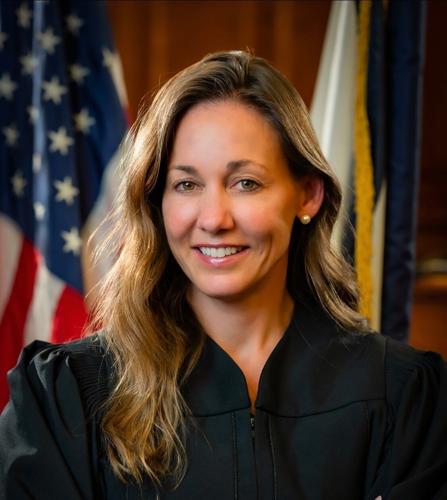


Judge Tim Sweeney
CHARLESTON – A circuit court judge is asking the state Supreme Court to erase a disciplinary admonishment and related ethics charges, arguing his public campaign to fix a Child Protective Services staffing crisis was an ethical duty, not misconduct.
In his response filed June 25, Third Circuit Judge Tim Sweeney urges the justices to dismiss with prejudice two sets of charges recommended by the state Judicial Hearing Board. One is tied to a 2025 administrative order and media interviews about CPS understaffing, and the other is tied to his use of Facebook to promote law enforcement job postings, community fundraisers and human trafficking awareness.
Sweeney is a judge in the state’s third judicial circuit, which includes Doddridge, Pleasants, Ritchie and Wirt counties.
The Judicial Investigation Commission admonished Sweeney in June 2025 after he ordered top Department of Human Services officials into temporary CPS roles in five counties and spoke publicly about what he called “critical understaffing.”
“Judicial decisions made in good faith to support the well-being of abused and neglected children deserve the unqualified respect and support of this court,” wrote J.H. Mahaney, who is representing Sweeney. “Even if this court disagrees with substance of the decisions or the procedures employed to make them, a judge should never be punished for having the courage to do so. …
“Without this court’s unwavering support in such circumstances, circuit judges will be forced to do their job with only one eye on the case before them and the other looking over their back. If this happens, the public will rightfully lose confidence in the judiciary. More importantly, children deserving of the best the judiciary has to give will be harmed.”
Sweeney’s filing centers on an abuse and neglect case involving a child identified as L.S., who had been repeatedly abused and was supposed to be sent to an out-of-state treatment facility following an October 2024 hearing. By February 3, 2025, the child had not been placed, and CPS workers testified in a sealed hearing that they were overwhelmed by vacancies and caseloads. One worker reported having about 100 families when best practice is about 10, and managers said they were performing front-line CPS work themselves because there were so few staff.
DHS’s own Child Welfare Dashboard showed Ritchie County had filled only about a third of CPS positions and no supervisory positions as of January 2025, and Sweeney’s brief cites testimony that children were languishing in state custody and sometimes ending up in juvenile detention or unsafe placements because of delays.
After hearing one worker “beg” for more manpower and for the judge’s help getting Charleston’s attention, Sweeney concluded he had a duty to act, the brief says. That afternoon he entered an administrative order titled “In re: Critical Understaffing of the Department of Human Services,” appointing then-DHS Cabinet Secretary Alex Mayer, the agency’s general counsel and other central office leaders as CPS workers and ordering them to appear in Ritchie County on February 20 under penalty of contempt to receive case assignments in the five-county region.
“Having exhausted their internal remedies at DHS, the manager begged Judge Sweeney for help: ‘I’m asking and they don’t hear me,’” Mahaney wrote. “‘Maybe they will hear you in Charleston. I don’t know, but I need help.’
“Neither Judge Sweeney, nor any other West Virginia circuit judge worthy of their judicial robes, could ignore these pleas.”
Sweeney’s order, which did not list a case number and did not identify L.S. or other specific children, described the staffing crisis as “an immediate and critical threat to at-risk children” and said juvenile cases were the judiciary’s highest priority.
The next day, Sweeney called reporter Steven Allen Adams at the Parkersburg News and Sentinel, gave him a copy of the order and sat for an interview in which he said “the buck stops here” and argued that “somebody needs to stand up for the public, particularly the most vulnerable members of our community – the children”. He followed up with interviews with MetroNews as well as The West Virginia Record.
“My concern is this: If I just sit around and these things are happening and I don’t do anything, am I doing my job?” Mahaney wrote, citing earlier testimony by Sweeney. “Am I part of the solution or part of the problem? As I indicated earlier, the buck kind of stops here.”
The JIC later said talking to the media about pending matters is not part of a judge’s official duties and alleged Sweeney violated rules on compliance with the law, public confidence in the judiciary, statements on pending or impending cases and extrajudicial activities. In its admonishment, the JIC said his order exceeded his authority over an executive-branch agency and that his public comments about CPS and DHS “could undermine public confidence in his impartiality.”
Sweeney’s response brief counters that DHS’s decision to meet with him and fix staffing came in direct response to the order, not the interviews, and that he did not say anything that could reasonably be expected to affect the outcome or fairness of any case.
The filing notes DHS officials contacted him within hours of receiving the order, proposed a revised staffing plan after a February 10 meeting and had reduced vacancy rates in his circuit by roughly two-thirds and statewide CPS vacancies by about 30 percent by June 2025. Those figures are ones DHS itself later touted in public reports.
Sweeney’s lawyers call that a “win-win” that improved services for children and eased burdens on frontline workers, arguing any disciplinary sanction “would be unjust” in light of those results.
“When the CPS worker assigned to her case begged Judge Sweeney for additional manpower to help the children in his circuit, he did not turn his back and ignore the problem,” Mahaney wrote. “He did what every West Virginia circuit judge should do: he tried to find a way to help. He entered an order requiring (DoHS) workers to staff unstaffed positions and took steps to increase the public’s awareness of the problem.”
The second set of charges stems from about two dozen posts on Sweeney’s Facebook page between 2019 and early 2025, where his profile photo showed him in a judge’s robe in a courtroom with an American flag behind him. JIC investigators flagged fundraising posts for a fire department ice cream social and cancer benefit for a sheriff’s deputy, reposted law enforcement and assistant prosecutor job announcements, a satirical “Attention Drug Dealers” meme, human-trafficking news stories and public-safety alerts about a wanted man and questions about medication at a local clinic.
The JHB ultimately found the individual posts were not per se violations, but that the “aggregate effect” of Sweeney’s law-enforcement job postings, fundraiser shares and his robe-clad profile picture created an impression incompatible with judicial neutrality.
Sweeney’s brief discounts the “aggregation” theory.
“Perhaps Judge Sweeney’s page was so flooded with cat videos and posts about his grandchildren such that his 10 arguably ‘pro-law-enforcement’ posts were, in the ‘aggregate,’ immaterial,” the brief states.

Akers
Sweeney also argues his case can’t be treated differently that one involving Kanawha Circuit Judge Maryclaire Akers, which also involves public comments about DHS handling of foster care and CPS staffing.
Special Judicial Disciplinary Counsel ultimately recommended dismissal in Akers, and the JHB agreed charges there could not be proven by clear and convincing evidence even though Akers, like Sweeney, spoke to MetroNews about understaffing and child welfare.
Sweeney’s counsel says the reasoning the board used to find insufficient evidence in Akers applies equally here, and warns that disciplining one judge but not the other for similar child-protection advocacy would look arbitrary and erode confidence in the disciplinary system.
“As a matter of fundamental fairness, this court cannot reach a different decision in this case than it reaches with respect to Judge Akers,” Mahaney wrote. “The optics will denigrate the public’s confidence in the judiciary and the judiciary’s confidence in our system of judicial discipline. …
“Both acted solely to help children, and because of their efforts, West Virginia’s abused and neglected children are safer and are receiving services they would not have received had they declined to act. …
“Discipling one judge but not the other under the circumstances of this case will simply raise more questions than it can ever hope to answer. Discipling neither is clearly the correct outcome.”