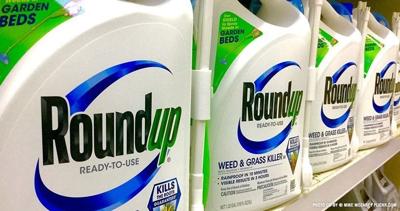


Two men have filed separate lawsuits accusing Monsanto of knowingly selling a popular weed killer that they say caused their cancer, adding to a growing wave of litigation over the company’s Roundup herbicide.
The complaints, filed last week in Wayne and Mercer circuit courts, each name Monsanto Company as the defendant and focus on the glyphosate-based herbicide Roundup.
Both plaintiffs allege they purchased and regularly used Roundup or other Monsanto glyphosate-containing products for many years before being diagnosed with non‑Hodgkin lymphoma. William Hay of Wayne County says he was diagnosed in May 2024, while Brian Butt of Mercer County says his diagnosis came in January 2024.
In both suits, the men contend Monsanto failed to adequately warn consumers about alleged cancer risks associated with glyphosate and Roundup formulations. The complaints say Roundup products were “inherently dangerous” and defective and that Monsanto engaged in fraud, fraudulent concealment and negligent misrepresentation in marketing and advertising the herbicide.
The filings say the plaintiffs have incurred and will continue to incur medical expenses and have suffered pain, suffering and loss of enjoyment of life as a result of their diagnoses.
As with most previous Roundup litigation, both complaints describe glyphosate as a broad‑spectrum herbicide first marketed under the Roundup brand in the 1970s and now widely used in agriculture and residential weed control.
They cite the International Agency for Research on Cancer’s 2015 classification of glyphosate as a Group 2A “probable carcinogen,” particularly linked to non‑Hodgkin lymphoma and other hematopoietic cancers. The suits also allege Roundup formulations containing surfactants and other ingredients are more toxic than glyphosate alone and that Monsanto has promoted the product as safe despite scientific evidence to the contrary.
The complaints point to historical regulatory reviews and litigation, including U.S. Environmental Protection Agency assessments of glyphosate and disputes over laboratory testing used to support Roundup’s registration. They recount allegations of fraud at two independent laboratories that conducted toxicology studies for Monsanto, as well as a 1996 action by the New York Attorney General challenging Monsanto’s advertising claims that Roundup was biodegradable, “practically non‑toxic” and safer than table salt. The suits also reference a 2009 French court ruling that found Monsanto had falsely advertised Roundup’s safety.
Each plaintiff seeks compensatory damages for personal injury, medical costs and other economic and non‑economic losses and claims Monsanto’s conduct directly and proximately caused their non‑Hodgkin lymphoma. The complaints accuse Monsanto of strict products liability, negligence and failure to warn, and they describe Monsanto’s alleged conduct as ongoing tortious activity that continues to pose risks to consumers.
Both plaintiffs are being represented by Duane J. Ruggier II of Stephen New & Associates in Beckley.
Last week, the U.S. Supreme Court reversed a decision by the Missouri Court of Appeals that allowed state-law liability claims against Monsanto for failing to include a cancer warning on the label of Roundup, ruling that federal pesticide-labeling requirements preempt the state-law claim at issue.
Wayne Circuit Court case number 26-C-344 (Hay) and Mercer Circuit Court case number 26-C-134 (Butt)