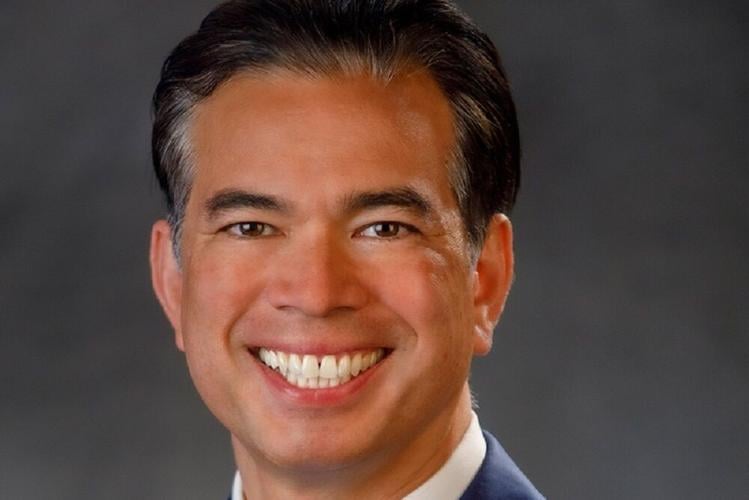



California Attorney General Rob Bonta
CHICAGO — As Florida's Republican Attorney General moves ahead with his legal action accusing the American Association of Pediatrics of violating Florida state law by misleading the public over child gender transitions, his Democratic counterparts in California, Illinois and other left-leaning states are urging a federal appeals court to allow federal courts in Chicago to interfere in the Florida legal action.
On Aug. 25, California Attorney General Rob Bonta and Illinois Attorney General Kwame Raoul filed a so-called amicus brief, or "friend of the court" brief, with the U.S. Seventh Circuit Court of Appeals, in support of the AAP.
They were joined in the brief by the Democratic attorneys general of the states of New York, Colorado, Delaware, Massachusetts, Michigan, Minnesota, Nevada, New Jersey, Rhode Island, Oregon and Virginia and the District of Columbia.
In the filing, the Democratic attorneys general argued that federal judges should shut down the Florida state court action brought by Florida Attorney General James Uthmeier against the AAP, which is based in Chicago's suburbs.
In the brief, the Democratic attorneys general assert the action is politically motivated and threatens the free speech rights of both medical practitioners and the AAP organization, arguing the Florida attorney general is attempting to improperly influence the ability of doctors and others to discuss their evidence-based opinions on medical science with their patients and the public.
"... If Uthmeier’s actions are approved by this court — and, as he hopes to accomplish, he succeeds in using the burden of being subject to an enforcement action to shape the decision making of medical organizations like AAP—there would be little to stop Uthmeier or other similarly situated actors from misusing their authority to influence the content of other guidance and recommendations issued by AAP and other organizations," the Democratic attorneys general claimed in their filing.
The brief from the Democrats comes as an unusual entry in an already extraordinary case, rife with not only culture war implications, but also heated legal controversies over the limits of federal judge's authority and of the powers wielded by state attorneys general.
For their parts, the Democratic attorneys general have consistently resisted efforts by their targets to use federal courts to shut down investigations or otherwise thwart their enforcement actions under their respective state laws.
The Democratic attorneys general have also defended their own states' laws and rules that critics say were designed to retaliate against disfavored political speech, even in instances in which the controversies involved the free speech rights of doctors and other medical practitioners.
In California, for instance, Bonta defended a California state law that empowered his state's medical board to punish doctors who discussed Covid treatment options with patients that differed from the official opinions endorsed by the state.
Specifically, California Democrats in that instance argued the law was needed to defeat "misinformation" from doctors whose medical or scientific opinions differed from the “current scientific consensus."
California ultimately repealed the law after a federal judge indicated the state had significantly overstepped and trampled the free speech rights of doctors.
And in Illinois, Raoul is currently defending Illinois state laws that attempt to force doctors and other medical practitioners who may object to abortion on the basis of religious faith or conscience to discuss the "benefits" of abortion with their patients, or to force doctors and Christian hospitals which object to physician assisted suicide to refer patients or carry out so-called “medical assistance in dying.”
However, in the Florida case, both Bonta and Raoul and their fellow Democrats argue Uthmeier should be blocked by federal judges from using Florida state courts to enforce Florida state law that touches on the subject of child gender transitions. The Democratic attorneys general have joined with other left-wing politicians in their states and nationwide in criticizing efforts by Republican-led jurisdictions to restrict doctors from performing surgeries, hormonal treatments and other medical interventions to assist children and teens in altering their bodies in pursuit of changing their genders.
The Democratic attorneys general assert in their filing that the AAP must remain free of the threat of regulatory action to create medical and scientific guidelines that states and other governments can rely on to set acceptable practice standards.

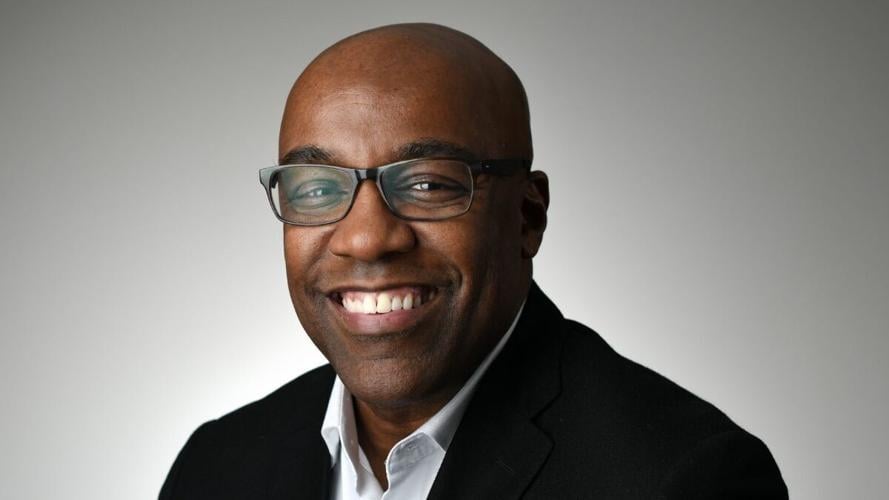
Illinois Attorney General Kwame Raoul
However, in his filings, Uthmeier has argued it is precisely the willingness of state governmetns and others to adopt such standards that has motivated his efforts to hold the AAP to account for what the state of Florida believes to have been efforts by the AAP and others to deceive doctors, governments and the public about the truth concerning child gender transitions.
Uthmeier first filed suit in December 2025 in Florida's 19th Judicial Circuit Court in St. Lucie County, against the AAP, the World Professional Association for Transgender Health, and the Endocrine Society.
In that lawsuit, Uthmeier accused the organizations of violating the Florida Deceptive and Unfair Trade Practices Act and the state's Racketeer Influence and (RICO) Act.
The Florida lawsuit accused the groups of deceiving the public by allegedly knowingly lying about "credible evidence" backing their recommendations supporting the use of puberty blocking drugs, cross-sex hormones and gender transition surgeries for children.
In his filings, Uthmeier has particularly assailed the AAP for issuing a "policy statement" that concluded that "puberty blockers are 'reversible' and that gender-affirming care results in minors having fewer mental health concerns." Uthmeier asserts those claims are not backed by scientific evidence and the policy statement was allegedly drafted and advanced by one person, a doctor who was not considered a medical authority, but was still undergoing his residency at the time and was launching a practice that "consisted largely of prescribing puberty blockers and cross-sex hormones to minors."
As the case moved forward in Florida, however, the AAP responded with a countersuit in Chicago federal court, asserting Uthmeier's action is an unconstitutional attempt to suppress their speech concerning the controversy surrounding child gender transitions.
And there, U.S. District Judge Matthew F. Kennelly sided with the AAP, saying he agreed that Uthmeier's action was brought in "bad faith" and the effects of the Florida action would be felt in Illinois and anywhere else the AAP's opinions carry weight.
So, Kennelly rejected Uthmeier's contention that the AAP's suit marked an unprecedented and unconstitutional extra-jurisdictional attempt to use a federal court in one state to block a state attorney general from attempting to enforce his state's laws in that state's courts, as well as a breach of generally accepted legal doctrine prohibiting federal judges from interfering in state court proceedings.
Uthmeier swiftly appealed what he called the "lawless" ruling.
Initially, a divided three-judge panel at the Seventh Circuit, with the majority including appointees of former Democratic presidents Barack Obama and Joe Biden, sided with Kennelly.
In dissent, the third member of the panel, a first-term appointee of President Donald Trump, warned his colleagues that their decision dealt "a grievous blow to federalism" that would have "grave" implications, if allowed to stand.
Federalism is the central principle of the U.S. constitutional system, which balances the powers of the central federal government against those of the 50 sovereign U.S. states, permitting states to make and enforce their own unique laws.
But the full Seventh Circuit swiftly undid the ruling, and then took the unusual and extraordinary step of refusing to return the case. Instead, they invoked their authority to take up the matter as a so-called "initial en banc proceeding," meaning any new arguments would come before a full 11-judge panel as if the case had originated before them.
The decision sets up the potential for a decision that could deal a strong rebuke to the AAP and others who may attempt to use friendly federal district courts to thwart enforcement actions by state attorneys general.
With that potential on the table, the AAP asked Kennelly to dismiss their lawsuit, in an apparent bid to end the dispute without a contrary decision from the Seventh Circuit.
Kennelly granted that request, though he did so "without prejudice," meaning he did not foreclose the AAP from trying again, should their case yet survive the Seventh Circuit on appeal.
But it remains unclear what impact that maneuver will have on the proceedings.
For his part, Uthmeier has requested the Seventh Circuit not abandon the case.
In a brief filed Aug. 27, Uthmeier asserted Kennelly's decision amounts to the judge attempting to "sweep this matter under the rug," rather than face continued scrutiny for his decision, which Uthmeier said was "inexcusably wrong."
"... And it will happen again unless this Court definitively puts a stop to it," Uthmeier wrote.
The Florida attorney general further noted that after the Seventh Circuit tossed Kennelly's injunction purporting to stop the Florida state courts from hearing the case, a Florida state court judge refused the AAP's efforts to dismiss the case there.
In that ruling, the Florida state court judge found Uthmeier's case "targets unprotected conduct and false and misleading commercial speech," which is afforded lesser protection under the First Amendment.
Uthmeier said that shows Kennelly was wrong to rule that his case against the AAP was "objectively weak" and had little chance of success.
In their brief, however, the Democratic state attorneys general yet urged the Seventh Circuit to affirm Kennelly's injunction and block the Florida courts from hearing the case, regardless of the potential implications such a decision could hold for their own attempts to use their own states' courts against out-of-state entities they believe have violated their own states' laws.
In the filing, the Democratic attorneys genera assert Uthmeier's actions should be blocked because they are "inappropriate" and motivated by his disapproval of transgender youth healthcare."
"... The powers he invokes here are not so cabined and could lead to a misuse of authority and threaten the evidence-based development of healthcare guidelines and policies in a broad array of fields," the Democratic attorneys general wrote.
The Seventh Circuit has not yet indicated when it might decide the controversy or hold arguments in the case.