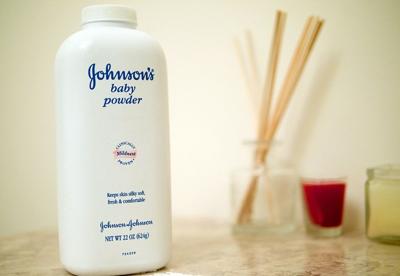


Johnson & Johnson Baby Powder no longer contains talc powder.
NEWPORT NEWS, Va. – A researcher accused of peddling “junk science” in court now faces a light penalty for deleting emails that the company suing him believed could have proven he knowingly published false results in an asbestos study.
Dr. Richard Kradin said he had a habit of frequently cleaning out his inbox, but Virginia federal magistrate judge Robert Krask ruled yesterday that he had a legal obligation to preserve them. The result is if Pecos River Talc – a wing of Johnson & Johnson – gets its case against three experts to trial, jurors will hear what Kradin did.
However, the court did not issue an adverse-influence instruction, which means jurors can’t presume there was something damaging to Kradin’s defense in the deleted emails.
“Though Dr. Kradin should have been aware that the emails would be relevant to some future litigation,” Krask wrote, “the evidence tends to show that this particular litigation was unexpected.”
This particular litigation accuses Kradin and doctors Theresa Emory and John Maddox with linking cosmetic talc like Baby Powder to mesothelioma – a fatal cancer in the lungs caused by asbestos.
The tens of thousands of lawsuits against J&J and others rely on experts who testify asbestos is in talc, the plaintiff used the product, the talc entered their body and the asbestos in it caused conditions like mesothelioma and ovarian cancer.
J&J has not only denied these claims in cases against it, it has gone to court to sue over them. In addition to the lawsuit against Kradin and others, it is pursuing trade libel claims against Dr. Jacqueline Moline over a study she published.
The studies purported to look at individuals with no known exposures to asbestos other than talc products, but J&J says that’s not the case. At least 11 of the 33 cancer patients in Moline’s research were exposed to asbestos from other sources.
Kradin, Emory and Maddox studied 75 subjects and published their results in the American Journal of Industrial Medicine in March 2020. Four years later, J&J sued them, alleging the study was not only misleading but was published with actual malice.
At least six of the 75 have “documented alternative exposures to asbestos,” J&J wrote in its complaint. One of them had 60 feet of exposed asbestos pipe in his basement, which was a family room with a television in couches. In his elementary school, there was damage to asbestos pipe insulation and 64 bags of asbestos-containing material sitting around.
There were hundreds of similar bags at his high school, J&J says.
“Neither potential exposure is mentioned in the article,” the complaint says. Another plaintiff alleged she was exposed to asbestos fibers brought home on her dad’s clothes when he worked as a mechanic.
Some of Kradin’s emails were recovered from the accounts of his co-defendants but lost were communications with Moline. Kradin argued he had no reason to keep emails from 2019-2020 and that he is not sophisticated in the rules of preservation of evidence.
J&J is fighting to disqualify experts and recently called them an “echo chamber for weak science” as it faces more than 67,000 lawsuits.
“The Emory article demonstrates Plaintiffs’ experts’ tactics to pollute the scientific literature,” J&J wrote.
“They publish their junk litigation opinions in scientific journals. They use their credentials to instill their publications with false credibility. They then build from that fraudulent foundation by citing to each other’s work, which manufactures a ‘body of literature’ to present to judges and juries with the veneer of scientific legitimacy.
“And they actively resist attempts to make public the information that would reveal the deceit. In return, they are handsomely compensated for their disparagement of the products that are the target of the plaintiffs’ bar.”
The American Tort Reform Association called this the “Junk Science Playbook” in a recent report. Fighting it is part of the strategy of J&J after its $9-billion plan to settle ovarian cancer claims was defeated by plaintiffs firm Beasley Allen, which, for the time being, is lead counsel for a massive amount of those claims in New Jersey federal court.
The judge there has been asked to disqualify Beasley Allen after a state appellate court in New Jersey removed the firm from more than 3,000 talc cases for strategizing with a former lawyer for J&J on an alternative plan for settling the cases.
Beasley Allen is also locked in a fight with its former partner in talc lawsuits, the Smith Law Firm, which recently filed the complaint of a disgruntled Beasley Allen client in federal court to bolster calls for its removal from the multidistrict litigation.