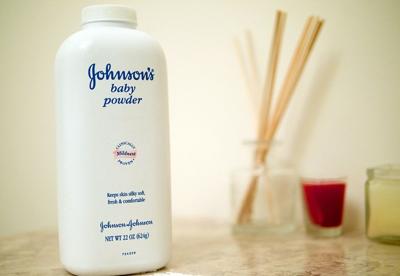


Johnson & Johnson Baby Powder no longer contains talc powder.
MIAMI - Johnson & Johnson has asked a Florida court to order a plaintiff law firm to turn over documents detailing its communications with government regulators including Robert F. Kennedy Jr.’s Health and Human Services Dept. as it seeks evidence trial lawyers are trying to bolster their cases that cosmetic talc causes cancer.
In a filing before a state court in Miami-Dade County, J&J said Dallas-based Dean Omar Branham Shirley has tried to influence regulators to declare J&J’s talc is carcinogenic and “to generate adverse regulatory findings that could be deployed at trial to benefit its litigation strategy.” Dean Omar removed the case to federal court in Florida, where it has asked the judge to dismiss J&J’s request as an “improper fishing expedition.”
Johnson & Johnson acted after a judge in South Carolina last month ordered it to turn over similar documents regarding its communications with the government and an industry group as legislators debated changes to cosmetics regulation including standardized tests for asbestos in talc. Those proposed regulations were never passed.
In the meantime, RFK Jr. convened an “Expert Panel on Talc” in May 2025 that included several plaintiff experts but no one from the talc industry. The HHS Secretary’s son Conor is an associate with Wisner Baum, a law firm that represents thousands of talc plaintiffs.
Dean Omar argues J&J is searching for evidence to back up its theory that the law firm has attempted to influence regulators, but that is impermissible under court rules. J&J responds that by seeking the exact same type of documents in South Carolina, Dean Omar itself “made the material relevant.”
Dean Omar’s “regulatory advocacy is not incidental to its litigation practice; rather it is a deliberate strategy to create a favorable regulatory environment that can be exploited in the courtroom.”
Immediately after RFK Jr. convened the expert panel in 2025, plaintiff firm Beasley Allen issued a news release congratulating the “distinguished panel” for concluding “there remains little doubt about the causal link between talc and cancer." Lawyers can use the findings of government agencies as evidence supporting the admission of their experts, who claim they can detect asbestos in cosmetic products or that talc itself causes cancer.
Beasley Allen suffered a major loss in New Jersey when judges threw it off talc cases due to a conflict of interest and then a judge rejected the opinions of plaintiff experts that talc can cause ovarian cancer, effectively ending almost 70,000 lawsuits. J&J has agreed to pay $5.5 billion to settle most of them.
Plaintiff lawyers are still pursuing lawsuits claiming talc was contaminated with asbestos and causes mesothelioma, a fatal cancer of the abdominal wall. Multiple cases are before South Carolina Judge Jean H. Toal, a retired chief justice of the South Carolina Supreme Court now in charge of the state’s consolidated asbestos docket.
In October, Judge Toal ordered J&J to turn over documents detailing its communications and lobbying efforts around the Modernization of Cosmetics Regulation Act passed in 2023, which mandated standardized testing for asbestos. Industry representatives supported standardized testing in part because plaintiff experts cite multiple different tests to convince jurors talc particles are actually asbestos, which J&J and others say is false.
After reviewing the documents, Judge Toal on Oct. 23 ordered J&J to turn over 40 of them, rejecting the company’s argument they were protected by the attorney-client privilege. J&J is now trying to keep those documents confined to the cases before Judge Toal, saying Dean Omar will otherwise use them in pending lawsuits elsewhere. The law firm has been taking mesothelioma cases to trial, apparently rejecting J&J’s efforts to settle them, with mixed results.
Toal’s asbestos court has become a source of controversy, as companies claim she routinely grants plaintiff lawyers’ wishes while denying defendants’. Her practice of appointing a Columbia lawyer power over asbestos defendants for the purpose of raiding their decades-old insurance policies could possibly be heard by the U.S. Supreme Court.