
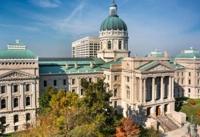


Indiana Statehouse
INDIANAPOLIS – Indiana lawmakers have narrowed a bill that was supposed to help ride-share companies in court into an opportunity to limit how local governments can file high-dollar lawsuits against companies.
The House Judiciary Committee today announced that much of HB 1417 has been erased, with only two goals remaining. One of those is reforming lawsuits filed under a theory of “public nuisance,” which has been used by cities, counties and states to score billions of dollars in settlements over products like cigarettes and opioids.
For years, critics have been concerned with how the legal claim has been expanded by government officials and the private lawyers they hire on contingency fees. Indiana could become the second state to declare a company can’t be sued by a government for public nuisance over lawful actions.
Private individuals seem likely to retain the right to file such suits, though, as the bill progresses. It was approved by the committee in a 9-4 vote.
“I think the key word is balance,” Rep. Matt Lehman said. “We want to make sure we’re not closing the courthouse door to those who are harmed and entitled to restitution.”
The effects of the opioid crisis were called a public nuisance in the countless lawsuits filed against manufacturers, distributors, pharmacies and pharmacy benefit managers. But the hearing repeatedly mentioned Indiana cities’ lawsuit against Kia and Hyundai that said their cars were too easy to steal, creating a public nuisance even though third-party criminals could be considered the real problem.
“It will limit you as a municipality to use the public nuisance statute to only go after those things of which are in your vein,” Lehman said. “It will take out your ability to use public nuisance to make public policy.”
The tort-reform effort was announced late last year and was supposed to change how lawsuits against companies like Uber and Lyft were handled, plus limiting how much a jury can award in non-economic damages. Those damages, like pain and suffering, drive blockbuster verdicts, often dwarfing how much a plaintiff recovers for actual monetary loss like medical bills and lost wages.
Instead, the chair of the committee, Chris Jeter, announced those plans “might be a little bit too big of a bite,” and it seems those measures will have to wait until 2027 to be considered.
The new version of the bill would keep public nuisance to actions concerning public air, land or water. Montana passed something similar last year, and other states are considering legislation this year, said Hunton attorney Roger Gibboni, who spoke on behalf of the U.S. Chamber Institute for Legal Reform.
“In short, this bill prevents this from being the tort of last resort,” he said.
Local governments would still be free to file claims for negligence or products liability. Plaintiff lawyer Scott Faultless expressed concern over whether the bill, if passed, will apply to causes of actions that started before it takes effect.
The second part of the new bill has a broader effect than how one legal claim is used by governments. It would increase a cap on penalties on litigants in certain situations.
When a plaintiff rejects a settlement offer, then proceeds to trial and either loses or is not awarded as much as the offer was, they would be on the hook for paying up to $100,000 of the other side’s legal bills. Currently, that cap is only $5,000.
The president of the Indiana Trial Lawyers Association, Bob Johnson, suggested a smaller raise or a tiered approach.
“A six-figure exposure for rejecting a settlement offer even if that offer turns out to be higher than the eventual judgment can place undue and disproportionate risk on plaintiffs and defendants who lack financial resources,” he told the committee.
“Many of these people who are coming to court have lost all their money due to the underlying incident. This change would discourage those individuals from seeking a trial or asserting their meritorious claims out of fear of catastrophic liability by losing by a dollar.
“It shifts from an incentive to settle reasonably into a tool that could be used as a punitive risk, and the only people who can bear that risk would be the wealthy and corporations.”