
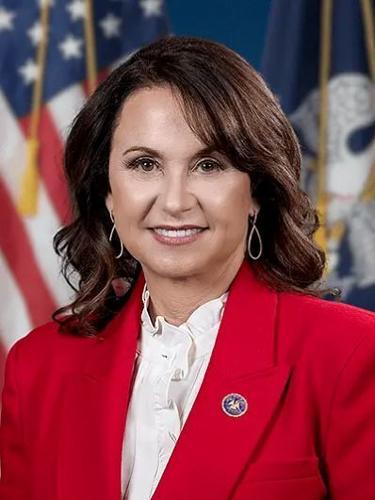


BATON ROUGE – Louisiana Attorney General Liz Murrill says she will not apologize after a federal judge rebuked lawyers representing LSU for suggesting the Southeastern Conference’s attorneys had “hallucinated” legal citations, adding a dispute over courtroom conduct to the ongoing fight over the league’s eligibility rules.
On November 18, U.S. District Judge Annemarie Carney Axon directed LSU’s lawyers to remove the disputed language, acknowledge “poor professional judgment” and publicly express regret. Murrill agreed to remove the wording but rejected the demand for an apology, arguing a federal judge could not compel Louisiana to speak.

Murrill
“I cannot and will not apologize for my lawyers doing their job, and it is improper for an Alabama federal judge to compel speech from the State of Louisiana,” Murrill said. “The SEC made an egregious citation error. Their inability to explain that error is their problem, not Louisiana’s.”
The confrontation did not resolve the underlying lawsuit. LSU’s motion to dismiss remained pending in the latest reporting, and no sanctions were imposed at Wednesday’s hearing.
The SEC filed the federal lawsuit September 3 after LSU sought to add former professional football players. The conference argues that its First Amendment right of expressive association protects its ability to enforce shared membership standards, potentially including ending its association with LSU.
LSU ultimately did not roster those players. The university argues that the conference faces no imminent, concrete injury and that the lawsuit should be dismissed. The SEC maintains that the dispute remains active because it concerns LSU’s adherence to conference rules and the league’s authority over its members.
Georgia Attorney General Christopher Carr also has entered the bigger federal court dispute, urging the SEC to consider penalties against LSU, potentially including suspension or expulsion, over what he described as a pattern of rule-breaking. His request does not constitute conference action against the university.
The legal fight has expanded amid a separate Louisiana state court case involving LSU basketball player RJ Luis Jr., who previously played professionally. A state judge issued a preliminary injunction barring the SEC from punishing LSU for playing Luis, and the university subsequently added him to its roster.
The SEC has said it will honor the injunction while continuing to oppose LSU’s decision. Luis’ attorney, meanwhile, has asked the state court to hold the conference and Commissioner Greg Sankey in contempt, arguing that the SEC’s public criticism amounted to a threat despite the injunction. The request has not resulted in a contempt finding.
Luis made his LSU debut Wednesday night, scoring 11 points and grabbing nine rebounds in 15 minutes off the bench in the No. 25 Tigers’ 79-67 victory over Louisiana-Monroe. He played under the protection of the Louisiana state court injunction despite objections from the NCAA and SEC.
Afterward, LSU coach Will Wade said, “he’s eligible and he played.”
The two cases address distinct questions.
The Louisiana proceeding concerns Luis’ ability to play without conference retaliation, while the federal lawsuit concerns the SEC’s broader authority to enforce membership standards.