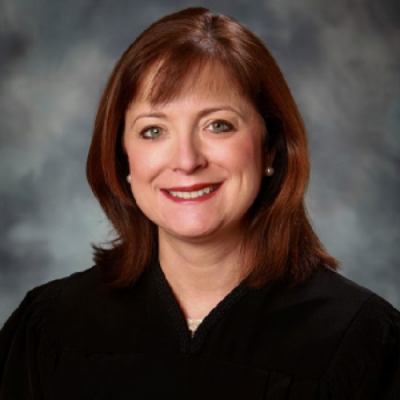


Illinois Southern District Judge Nancy Rosenstengel
EAST ST. LOUIS — One of the law firms behind an avalanche of lawsuits attempting to force the makers of commercial weed killer Paraquat to pay for allegedly not warning of a link between their product and Parkinson's disease, will need to reveal who else may be in control of the lawsuits they are attempting to exclude from a settlement, and who else could profit from those decisions, a judge has ordered.
On Oct. 15, U.S. District Judge Nancy Rosenstengel directed the Smith Law Firm, of Mississippi, to tell the court by Oct. 21 "the identity of individuals or entities with a financial interest – direct or indirect" in any of the cases the law firm is attempting to keep out of a global settlement.
The judge added the "disclosure shall include both the nature of the interest and the degree of that interest, including whether any such entity has any control ... over the content of any motions or briefs filed in this action or any input into the decision to accept a settlement offer."
Rosenstengel further said the disclosure "should include all law firms, litigation funders, lead generation agencies, banks, private equity, hedge funds, settlement administrators, and similar institutions that stand to benefit from a settlement or verdict in any given Smith Firm Plaintiff's favor."
The judge's order comes nearly four months after she ordered the Smith Firm, as well as the Chicago-based firm of DiCello Levitt, to explain why the firms had directed hundreds of their clients to refuse to agree to settlement offers from Paraquat makers Syngenta and Chevron.
In June, Rosenstengel had indicated the attempts to opt those lawsuits out of a global settlement was slowing the process of resolving the sprawling consolidated litigation, involving more than 6,600 individual lawsuits.
Earlier this spring, the parties had revealed in related proceedings in federal appeals court that they had reached a potential deal to draw the court battle to a close.
Terms of any potential settlement have remained secret to this point.
Settlement talks appeared to have gained traction after Rosenstengel delivered decisions harmful to plaintiffs' cases, including barring testimony from certain key experts plaintiffs had hoped to use to support their claims.
That decision was appealed in April 2024, and was the subject of the April 14, 2025, motion in which the possible settlement was first made public.
Since then, the U.S. Supreme Court also delivered a decision damaging to at least some of the claims in the plaintiffs' cases.
In that ruling, known as Durnell v Monsanto, the nation's highest court declared that plaintiffs cannot bring so-called failure to warn claims under state law against companies whose pesticide and herbicide product labels are regulated by federal agencies under federal law.
That decision had come amid the high stakes court fight waged by trial lawyers against agrichemicals giant Monsanto over their popular weed killer product, glyphosate, sold under the brand name of Roundup. In that action, plaintiffs had claimed Monsanto and its new corporate parent should pay because they didn't sufficiently warn Roundup users of the alleged risk of contracting cancer from exposure to the herbicide.
As in the Roundup litigation, the plaintiffs in the Paraquat litigation have similarly sought to use claims based in state law against defendants Syngenta and Chevron.
Following the Durnell decision, Syngenta and Chevron moved for summary judgment, or a final ruling from the court in their favor without trial, that would have pulled the plug on all state law claims in the lawsuits.
Plaintiffs have opposed that motion, asserting the Durnell reasoning should be applied more narrowly and should be read only to eliminate certain claims.
Rosenstengel has not yet ruled on that motion for summary judgment.
In the meantime, court documents indicate the parties are continuing to attempt to negotiate a settlement.
Earlier this spring, Rosenstengel agreed to order the establishment of a so-called "qualified settlement fund." As with other potential settlement terms, the potential amount of the settlement fund has remained under wraps.
The motion was presented by attorneys Rosenstengel had appointed to serve as lead counsel for the thousands of Paraquat plaintiffs. These included attorneys from the firms of Levin Papantonio Proctor Buchanan O'Brien Barr & Mougey, of Pensacola, Florida; Walkup Melodia Kelly & Schoenberger, of San Francisco; and Meyers & Flowers, of Chicago.
While they served as the lead counsel in the cases, thousands of plaintiffs continue to be represented by other firms from throughout the country, including the Smith Firm and DiCello Levitt.
In the time since the parties first indicated a mass settlement was in the works, the judge in her June order had indicated attorneys for the parties had worked "diligently to present settlement offers to individual plaintiffs."
Court documents indicate plaintiffs are being given the choice to opt out of the deal and continue to pursue their claims individually in the future.
While the judge indicated many plaintiffs are settling, in June, she indicated others continue to opt out.
And the judge said a "significant" share of those opt-outs appear to be centered in cases in which plaintiffs are represented by the Smith Law Firm and DiCello Levitt.
In June, the judge noted "100% of Plaintiffs represented by DiCello Levitt LLP refused to accept the settlement offer they received, while over 90% of Plaintiffs represented by The Smith Law FIrm PLLC did the same."
So, at that time, Rosenstengel ordered the two firms to explain to the court why this was happening.
In early October, after more than three months had elapsed from the June order, the judge followed up with a new order directing the Smith Firm to turn over the information previous required by the judge within 30 days.
In response, the Smith Firm filed a motion asking the judge to "clarify" her directive and put a temporary hold on enforcing the order.
Rosenstengel denied that motion the next day, and immediately followed with her Oct. 15 order, directing the firm to disclose the identities and level of involvement of any individual or company that could play a role in directing the Paraquat lawsuits that have opted out of settling.
As part of the new order, the judge further ordered the Smith Firm to produce all of their Paraquat settlement opt-out plaintiffs for possible deposition by February.
And she directed the Smith Firm to turn over all medical records for their "non-participating" plaintiffs to Syngenta and Chevron by Oct. 28.
Rosenstengel indicated she would provide "further guidance" on how the Smith Firm's "non-participating" client cases will proceed after the firm complies with her new and prior orders in the case.