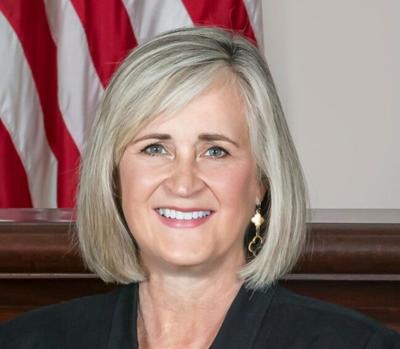



Alabama Supreme Court Chief Justice Sarah Stewart
MONTGOMERY, Ala. - A legal entity the University of South Alabama set up to manage its hospital can’t claim governmental immunity from lawsuits even though it doesn’t have officers or directors, owns no property and turns over any earnings to the state, the Alabama Supreme Court ruled.
The management company, USA Health Care Management, argued it was entitled to immunity because it is an “integral part” of the state’s healthcare system and was only set up as a limited liability corporation so the hospital could avail itself of state and federal tax benefits.
The legal structure matters, wrote Chief Justice Sarah Stewart in a Nov. 13 opinion reversing the dismissal of a medical malpractice suit over the death of Preston Marsh.
“In essence, HCM seeks simultaneously to claim the financial benefits of being a private LLC while also claiming the liability protection of being a State agency,” the justice wrote. “The law cannot support such a stark contradiction.”
The opinion echoes a U.S. Supreme Court decision earlier this year, Galette v. New Jersey Transit Corp., which held the state-financed rail operator was not entitled to governmental immunity because it was structured as a separate legal entity. The distinction allowed a man to sue the New Jersey agency in Pennsylvania over injuries from an accident in Philadelphia.
In the Alabama case, Carol Brown Marsh sued over the death of her husband Preston, who suffered a heart attack after waiting hours in the emergency room for a consultation with cardiologists. A trial court dismissed the case, finding HCM was an arm of the state with no separate finances. The Alabama Supreme Court had previously affirmed a similar judgment involving HCM, although it was an unsigned, non-precedential decision.
The articles of incorporation for HCM state USA is a governmental entity but it “shall not indemnify or hold harmless” the management entity. It was set up as a separate corporation in part to keep its employees off the state payroll and the Teachers Retirement System, HCM employees testified. The legal structure saved the state more than $100 million, a financial officer said.
“USA asserts that HCM is nothing more than a shell corporation, but a simple review of the MSA flatly contradicts that assertion, because HCM performs numerous services for USA by running its healthcare system,” the court concluded
Justices William Sellers, Kelli Wise and Will Parker dissented, saying the court had previously affirmed a judgment in favor of HCM on the question of immunity, so it “would not be unreasonable” for HCM’s lawyers to consider the matter settled.
“Most critically, as with all immunity cases, it should be determined who pays a legal judgment entered against HCM,” Sellers wrote. In Galette v. New Jersey Transit the U.S. Supreme Court said the New Jersey transit agency wasn’t an arm of the state but other entities might be if the state ultimately pays for any judgments against them.
The complete control exercised by USA demonstrate “that HCM is not an autonomous commercial actor but, rather, an agent executing and extending USA's specific governmental purpose,” he wrote.
Justice Parker said immunity was a “close call,” but he thought the plaintiffs made too much of the fact HCM’s employees weren’t included in the Teachers Retirement System, which is open only to “teachers.”
“In the present case, HCM appears to be in substance an ‘alter ego’ of the University of South Alabama, which is undisputedly an arm of the State,” he wrote, while observing the state’s jurisprudence in this area was more muddled than the rules set down by the U.S. Supreme Court in the New Jersey case.
“I am entirely sympathetic with the notion that any given entity must take the bitter aspects of state equivalence along with the sweet,” he wrote. Other questions to raise in a future case, he suggested, are whether the entity is subject to state open records and open meetings laws, is it prohibited from incurring debt, and is it subject to the agency that pays claims against the state?