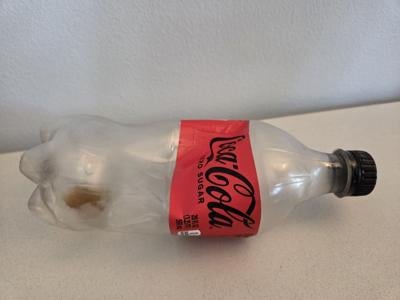


Coca-Cola and others have defeated a lawsuit that alleges empty plastic bottles discarded in Baltimore are a public nuisance
ANNAPOLIS, Md. - A Maryland court has refused to hold Pepsi, Coke and Frito-Lay responsible for the ills of single-use plastic bottles that litter the streets and waterways of Baltimore.
Circuit Court Judge Audrey J.S. Carrion issued a July 22 decision dismissing a public nuisance charge brought by the City of Baltimore against the companies, the last of eight defendants the City originally sued in June 2024 for alleged violations of state and city consumer protection laws as well as common law claims of negligence and public nuisance.
Last year, in July 2025, Judge Carrion dismissed the plastic and plastic bottle manufacturers, who also were sued, and narrowed the charges against the remaining food and beverage companies to the single count of public nuisance.
The City’s lawsuit came in June 2024 on the heels of a similar case brought by New York Attorney General Letitia James against Pepsi and Frito-Lay. That case met a similar fate and was dismissed the following fall.
According to the City, the lawsuit was aimed at recovering the costs associated with plastic bottles and packaging littering the City’s property and waterways.
A statement from Baltimore Mayor Brandon Scott issued at the time the complaint was filed made clear, however, that the City had broader intentions. “We are continuously working to make Baltimore a greener, more resilient city that is ready to take on the climate challenges facing the entire world and one that prioritizes the health of our residents,” Mayor Scott declared. “But when bad corporate actors have harmed our City’s land and water, they must be held accountable – and that’s what this suit is designed to do.”
The question before Judge Carrion was whether Pepsi, Coke and Frito-Lay could be held responsible for whatever costs the City may have incurred when people misuse their products by littering plastic bottles and packages in Baltimore.
“The Court concludes that [this] question as applied to the facts of this case must be answered in the negative,” Carrion wrote. Manufacturers, distributors and retailers “conducting lawful activities… should not be held liable under public nuisance claims because others are misusing the products in an unlawful manner,” she held.
Montana has passed legislation that forbids government officials from using public-nuisance claims to sue companies engaged in legal behavior, and Judge Carrion’s decision followed recent rulings of the Maryland Supreme Court involving attempts to hold producers of lawful products liable for costs associated with the products’ misuse.
In March, the Supreme Court upheld the dismissal of separate cases filed by the City of Baltimore and Anne Arundel County to hold oil and gas companies liable for the harms of global warming. That same month, the Court held that Anne Arundel County could not sustain a public nuisance suit against pharmacy benefit managers for the harms of the opioid epidemic.
“To recognize a general common law ‘public right’ to be free from any potentially injurious harm associated with a lawfully licensed product being diverted, abused, or misused,” Justice Brynja Booth wrote in the case against Express Scripts, “would permit nuisance liability to be imposed on an endless list of manufacturers, distributors, and retailers of manufactured products that are intended to be used lawfully, when such products are misused and cause injury.”
Following the logic of these precedents, Judge Carrion refused the City’s invitation to use public nuisance lawsuits as an alternative to dealing with a broader issue facing the community. “The General Assembly,” she found, “is better suited to address societal concerns related to single-use plastics disposal.”
Others agree that courts are no place to settle wide-ranging public policy issues. “Questions of public policy are properly addressed by legislatures and regulatory agencies, not the courts. This ruling makes that principle crystal clear,” said Stephen Waguespack, president of the U.S. Chamber Institute for Legal Reform.
This case was the latest in a losing streak for state and local governments looking to hold companies liable for the misuse of their otherwise lawful products. Besides the climate and opioid lawsuits in Maryland, the state of New York also lost its bid to declare plastic bottles a public nuisance. And last month, the Massachusetts Supreme Judicial Court dismissed a claim that radio frequency emissions from a cellular telephone tower are a public nuisance.