

Dollar General
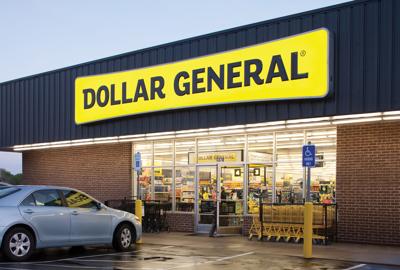
NASHVILLE, Tenn. – The federal government and 20 states are suing Dollar General, arguing the retailer has a long-running practice of charging more at the register than what was displayed on shelves.
The Federal Trade Commission filed suit in Tennessee federal court on Oct. 26 under a federal law barring unfair or deceptive acts against Dollar General, the popular chain of stores that targets rural areas. About 80% of stores are located in towns of fewer than 20,000 people.
Seventy-five percent of Americans live within five miles of a Dollar General, but those shopping there are being taken advantage of, the complaint says.
“Dollar General’s internal audits confirm what government inspection have repeatedly found,” the lawsuit says. “Dollar General’s own data shows that pricing discrepancies are known, recurring and observed across the company’s footprints.”
The FTC began its investigation in February with a civil investigative demand, causing Dollar General to produce more than 200,000 documents. Company representatives were made available to provide sworn testimony, and when that ended, the FTC served a draft complaint three days later on Sept. 23.
Dollar General complains that it was never invited to engage in settlement discussions before the draft complaint was sent and says in the month that followed, it tried to resolve the litigation.
But settlement demands were too high, Dollar General said. Its counter-offer was apparently not good enough, leading the FTC and the states to file the lawsuit.
“Although we respect the FTC’s role in protecting American consumers and the State representatives’ role in protecting the citizens of their respective states, we will defend this litigation vigorously,” the company said.
The lawsuit is also brought under the Gramm-Leach-Bliley Act, alleging Dollar General issued false statements to customers of financial institutions like credit-card companies. Dollar General says, “FTC’s theory of monetary recovery is premised on an incorrect interpretation of the GLB Act that will not survive a challenge in court.”
The state is also filed under the consumer-protection laws of various states. The co-plaintiffs are Alabama, Arizona, Arkansas, California, Connecticut, Florida, Illinois, Iowa, Kansas, Louisiana, Michigan, Mississippi, Nebraska, New Jersey, North Carolina, Ohio, Oklahoma, Tennessee, Utah and Wisconsin.