
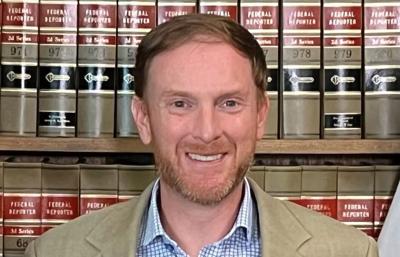



West Virginia Attorney General J.B. McCuskey
CHARLESTON – West Virginia Attorney General J.B. McCuskey urged a federal judge to reject two environmental organizations’ request to block his investigation into their climate advocacy.
In an October 26 reply, McCuskey argued the state’s consumer protection law allows him to investigate potentially deceptive statements intended to discourage fossil fuel purchases.
In the filing, McCuskey also withdrew any demands that could require the West Virginia Rivers Coalition and 350.org to identify donors, including organizational funders, and pledged not to seek enforcement of those requests. The groups had argued the subpoenas threatened their confidential funding relationships and chilled their constitutionally protected advocacy.
The response opposes the organizations’ motion for a temporary restraining order and preliminary injunction. The groups are asking U.S. District Judge Joseph R. Goodwin to stop the subpoenas and the underlying investigations, which they describe as retaliation for their opposition to fossil fuel development.
McCuskey’s lawyers argued that the investigations concern possible deception, not the organizations’ political positions.
“Plaintiffs – unabashed opponents of fossil fuels – are well within their rights to advocate for less (or even the complete abolition of) fossil fuel extraction,” the filing states. “But the First Amendment is not a license to lie or knowingly deceive or mislead.”
The subpoenas, dated September 16, require the organizations to produce records by November 2. As previously reported, they contain 16 document demands covering nearly 10 years of records about climate statements, scientific models, fundraising appeals, relationships with renewable energy businesses and coordination with other advocacy groups.
At the center of the case is whether the West Virginia Consumer Credit and Protection Act authorizes McCuskey to investigate the advocacy described in the subpoenas.
The organizations contend the demands concern political speech and charitable activity, not the sale of goods or services. Their complaint says the subpoenas identify “no consumer, no transaction, no complaint, and no act by either recipient that the Act regulates.”
McCuskey’s response argues that the law reaches beyond sellers and individual transactions to cover deceptive practices affecting commerce, including false statements disparaging another business’s goods or services. His lawyers contend that efforts to persuade consumers not to buy fossil fuels can fall within that authority.
“Both plaintiffs actively engage in ‘the conduct of trade or commerce’ by expressly encouraging consumers to stop buying – and attempting to prevent producers from selling – fossil fuels,” the filing states.
The response cites cases involving pharmaceutical marketing and an egg industry trade association to argue that misleading statements intended to influence purchasing decisions can be investigated even when they are not traditional advertisements.
The organizations, by contrast, say their nonprofit advocacy does not become commercial activity merely because it concerns energy businesses. They acknowledge incidental merchandise sales but say none of the subpoena demands concerns those transactions.
McCuskey’s response identifies several statements that his office says supplied probable cause to investigate.
For the Rivers Coalition, the filing points to its participation in a climate change guide that used projections from a high-emissions scenario known as RCP8.5. It also cites the organization’s endorsement of 2023 comments to the Federal Emergency Management Agency describing that scenario as a “business-as-usual pathway.”
McCuskey argues that using that description after scientific criticism of the scenario’s assumptions could mislead consumers about the consequences of fossil fuel use. That is the attorney general’s contention, not a finding by the court.
For 350.org, the response cites an April 2026 report repeating an estimate that past and current emissions had committed the world to an income reduction of about 19% by 2050. According to the filing, the underlying study was retracted in December 2025. McCuskey’s lawyers also challenge some of the organization’s statements linking climate change to extreme weather.
The filing stops short of asserting that those examples establish violations.
“To be clear, these examples may not themselves violate the WVCCPA,” the response states. “But they don’t need to in order to provide the honest belief necessary to establish probable cause.”
The groups’ lawsuit acknowledges charitable organizations are not immune from fraud investigations but alleges McCuskey has not identified a knowingly false statement of material fact intended to mislead donors.
The response also narrows the investigation’s demands for funding information.
The subpoenas already excluded lists identifying individual donors, members, subscribers and volunteers, as well as material protected by attorney-client, work-product or First Amendment associational privileges. But the groups argued that those exclusions left organizational funders and coalition relationships exposed.
In Monday’s filing, McCuskey’s lawyers said any language requiring disclosure of donor identities, including organizational donors, was withdrawn.
The attorney general “will not attempt to enforce any request for donor identifying information of any kind,” the filing states.
That concession addresses a concern raised by the Rivers Coalition, which said more than 80% of its approximately $2 million annual budget comes from foundations and other organizational funders. The coalition alleged that the investigation jeopardized those relationships because it could no longer promise confidentiality, according to the earlier report.
McCuskey’s response acknowledges that withdrawing the demands does not, by itself, end the organizations’ broader constitutional claims. His lawyers nevertheless argue the withdrawal reduces any need for an injunction.
McCuskey also argues the organizations’ request for emergency relief is premature because the subpoenas are not self-enforcing. His office would have to seek a court order to compel compliance, and the organizations could challenge the demands before being required to produce records, the filing says.
“No documents have been seized and no enforcement action has been filed,” the response states.
McCuskey’s lawyers characterize changes the organizations have made to their operations as self-imposed precautions against possible future enforcement rather than injuries supporting federal court intervention.
The groups allege the investigation already is affecting their speech and work.
The Rivers Coalition says staff members have censored internal communications, reconsidered presentations and paused a community mini-grant program. It estimates that collecting and reviewing the records would take months and overwhelm the organization.
350.org says the investigation prompted it to extend a special review process for public communications and halt new work in West Virginia. McCuskey’s response notes the review process began before his subpoena, in response to a separate federal inquiry, and argues its creation cannot be attributed to him.
McCuskey also disputes the groups’ retaliation allegations, arguing that their cited social media posts, letters and press releases do not overcome the presumption that public officials act properly when exercising statutory authority. He maintains that independently sufficient grounds for the investigation undermine claims it was prompted by hostility toward their advocacy.
Finally, McCuskey’s lawyers argue the requested injunction would sweep too broadly by restricting future investigative steps and enforcement proceedings, including actions that might rest on new facts or different laws.
“Even if specific subpoenas or investigative acts warrant relief, the remedy should address the constitutional injury shown – not bar investigative steps not yet taken, proceedings not yet commenced, and statutes not yet invoked,” the filing states.
U.S. District Court for the Southern District of West Virginia case number 2:26-cv-679

