


Nessel
GRAND RAPIDS, Mich. - Another creative attempt to craft a climate lawsuit to get around unfavorable legal rulings failed as a federal judge dismissed Michigan’s case accusing major oil companies of conspiring to drive up energy prices by suppressing renewable energy sources.
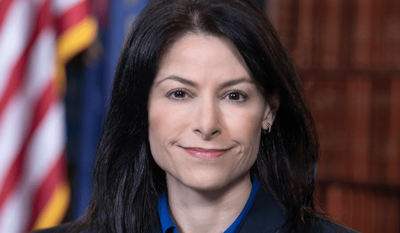
Michigan Attorney General Dana Nessel filed the antitrust suit in January against ExxonMobil, BP, Chevron, Shell and the American Petroleum Institute, saying the defendants worked together to keep Michigan consumers “locked in transportation and energy markets that rely on dated and expensive technologies.” The alleged conspiracy included hiding the effects of greenhouse gases on the global climate, infiltrating environmental groups and using the API to coordinate efforts to starve renewable energy projects of investment.
All that may be true but it doesn’t give Michigan standing to sue the oil industry for antitrust, U.S. District Judge Jane Beckering ruled in a Sept. 22 decision. “The distance is too great between the alleged conspiracy” and the alleged effect on energy prices, the judge ruled, noting most of the cooperative efforts Nessel cited in the state’s complaint occurred decades ago.
“Michigan asks the Court to infer that because defendants agreed to reduce renewable energies, they succeeded in doing so,” and that allowed them to charge excessively high prices for oil and gas, Judge Beckering wrote. There were too many other factors, including technological developments, supply and demand for fossil fuels and investors’ appetite for renewable energy projects, to determine whether the alleged conspiracy was successful, she wrote.
“This decision adds to the growing list of federal and state courts that have dismissed climate lawsuits,” said Ted Boutrous of Gibson, Dunn & Crutcher, who represents Chevron. “These climate suits are baseless no matter plaintiffs’ attempts to concoct new litigation theories, like these meritless antitrust claims.”
Courts in Pennsylvania, South Carolina, New York, Delaware and New Jersey have dismissed climate cases. And in Maryland, multiple judges dismissed lawsuits and were affirmed by the Maryland Supreme Court in a ruling that said climate litigation of this type “cannot be seriously contemplated.”
The U.S. Supreme Court has the opportunity to end most climate litigation when it hears a lawsuit by the City of Boulder, Colo., against Suncor and ExxonMobil this fall. The defendants in that case argue federal law preempts such lawsuits even though government plaintiffs, working with private lawyers on contingency, have tried to craft them as being based on state consumer-protection law.
Most of the lawsuits accuse oil companies of somehow hiding information about global warming from consumers, although scientific theories about human-induced atmospheric warming have been widely discussed for more than a century.
Michigan hired private lawyers at Sher Edling, DiCello Levitt and Hausfeld to represent the state under contingency fee contracts that would give them a share of whatever they won. The state accused the oil giants of coordinating efforts starting in 1979, when Exxon’s internal studies concluded there would be catastrophic global warming unless renewable energy reached 50% of global demand by 2010. Exxon allegedly shared this information with competitors through API, fueling an industrywide conspiracy to suppress research into alternative fuels and electric vehicle technologies like lithium batteries.
Nessel also accused the oil companies of using “hackers” to spy on environmental groups and attorneys general and pouring some $2 billion into universities to fund research that supported “the cartel’s goal of suppressing renewable energy innovation and maintaining fossil fuel supremacy.”
It would be a waste of court resources to try to determine the price impact of this wide-ranging alleged conspiracy, the judge said. While the State of Michigan can claim it was injured as a primary consumer of fuel, even that case would be impossible to disentangle from all the other market forces driving energy prices over the past several decades.
“Michigan fails to plausibly plead that this conspiracy proximately caused and continues to cause overcharges,” the judge concluded.
Manufacturers’ Accountability Project Special Counsel Phil Goldberg called the ruling a reminder that lawsuits “are no substitute for sound climate and energy policy.”
“Michigan sought to stretch antitrust law into a tool for litigating decades of national energy policy and global climate change, and the court rejected its federal claims,” he added. “Manufacturers remain focused on working with Michigan and other states on practical, durable solutions to reduce emissions while maintaining affordability, reliability, and access to energy.”