
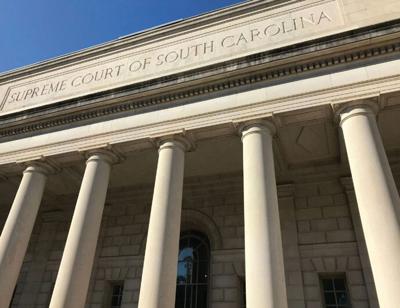



South Carolina Supreme Court
COLUMBIA, S.C. - South Carolina’s Wage Payment Act doesn’t include a private right of action for claims an employer didn’t provide proper notice of payment terms, the state’s highest court ruled, reversing a $1.9 million judgment against a pediatric practice for underpaying a nurse practitioner.
One section of the wage law allows employees to sue for treble damages if they are shortchanged pay after they are terminated but it has a three-year statute of limitations that barred most of the nurse’s claims, the South Carolina Supreme Court said. The nurse could sue for contract violations regarding a single year of miscalculated bonuses, the court ruled in a Nov. 18 decision.
Nurse Paul Hess sued Morphis Pediatric Group in Lancaster along with Dr. Elizabeth Morphis and her accountants and lawyers in 2018, claiming he’d been stiffed on bonuses since 2010. Under contracts Hess signed in 2009 and 2015, he was supposed to receive a salary of $100,000 a year plus bonuses equal to 50% of practice profits, or as modified in 2015, 5% of gross revenue.
Hess repeatedly questioned how his bonuses were calculated over that time and acknowledged as early as 2010 he suspected he wasn’t receiving as much as he was owed. He also said he saw bank statements revealing Dr. Morphis was driving a BMW paid for by the practice and employees told him she was drawing a salary, increasing expenses and reducing the earnings available to him as a bonus.
A jury awarded Hess $548,000 in actual damages and $475,000 in punitives, which Hess decided to forgo in favor of seeking treble damages under the Wage Payment Act. The trial judge awarded him a total of $1.6 million in damages, $156,000 in attorney fees and $407,00 in prejudgment interest.
Both sides appealed and the South Carolina Court of Appeals last year upheld the damages award, eliminated prejudgment interest and increased attorney fees from $300 an hour to $450 an hour, or $215,000.
Morphis appealed to the South Carolina Supreme Court, which ruled the bulk of the damages were based on a misinterpretation of the wage law. The trial and appeals courts decided Hess could sue for MPG’s failure to give proper notice of changes in his pay, but that section of the law can only be enforced by the state Labor Dept., the high court ruled.
The three-year statute of limitations also limited most of Hess’ remaining claims because there was ample evidence he suspected he was being shortchanged years before he sued. The court warned “the bench and bar” to be careful determining whether a plaintiff knew or should have known a claim existed.
But the general rule is a plaintiff can’t make use of the “discovery rule,” postponing the statute of limitations until the time a injury is discovered, “by putting his or her head in the sand. In other words, a party cannot close its eyes to easily discernible facts."
In this case, the only viable claim left was over Hess’ 2015 bonus, the court concluded, which he could sue for under contract law.
David Eliot Rothstein represented the plaintiff, while Malone Thompson of Summers & Ott represented Morphis. The South Carlina Association for Justice also submitted a friend-of-the-court brief in the case.
