



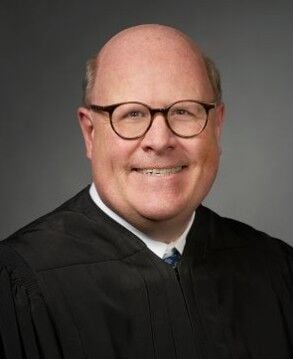
Connolly
MINNEAPOLIS – Business owners who lost money because they happened to operate where George Floyd was killed by a Minneapolis cop have lost a lawsuit alleging the city had essentially taken their property.
The Minnesota Court of Appeals this week ruled against CUP Foods and other companies that suffered declining income in 2020, the year Floyd died outside their property. Four brothers owned CUP Foods, Southside Electronics, NMA Investments, 3759 Chicago Ave. and Menthol Tobacco.
Business was stunted by memorials, roadblocks and increased violence after Floyd’s killing on May 25. Citizens created a “No Go Zone” in the area and, despite a $50,000 forgivable loan program for businesses in the area, numbers fell dramatically.
In 2021, CUP Foods’ sales fell 11% from 2019. Menthol’s and Southside’s each went down by half over the same span, and Southside closed in 2023.
A 2024 petition said Minneapolis had unlawfully taken the properties through inverse condemnation and asked for police protection. A trial court said Minneapolis’ actions did not constitute a per se physical taking, regulatory taking or right-of-access taking.
The Court of Appeals said the companies needed to establish the government had failed to perform an official duty imposed by law.
“(T)here is no evidence supporting appellants’ theory that respondents physically appropriated or compelled third-party occupation of their property by placing the concrete barriers and reducing police presence in the area,” Judge Francis Connolly wrote.
“More specifically, there is no evidence showing that respondents physically occupied appellants’ properties, that appellants lost the right to possess their properties, or that they lost the right to exclude others from their properties.”
Connolly added Minneapolis made its decisions for public safety and “strategic restraint amid evolving community tensions.”
The petition argued the lack of police, presence of barricades and inaction on protests led to a loss in value of the companies. The City itself acknowledged the barriers were “harming local businesses.”
But the downturn doesn’t constitute an illegal taking of the properties, the court ruled.
“(A)ppellants’ businesses were not restrained by changes to the property’s zoning or otherwise altered by any legal framework governing its use,” Connolly wrote.
“Although the barriers and lack of police presence may have resulted in less business, appellants acknowledge that the public still had access to their businesses. And appellants acknowledge that they remained open while the barriers were in place.
“In fact, the barriers were removed after approximately one year. Consequently, this factor does not weigh in appellants’ favor.”