



RICHMOND, Virginia – A federal appeals court has cleared the way for a class action accusing a prison medical contractor of systematically denying opioid treatment to incarcerated people and forcing them through withdrawal, calling the alleged practice akin to carving insulin out of “comprehensive” care for diabetics.
The Fourth Circuit Court of Appeals three-judge panel issued an opinion May 4 in the case that upholds certification of a multistate damages class against Wexford Health Sources, which provides health care in correctional facilities.
The case was remanded back to federal court in West Virginia to review a separate class that seeks an injunction ordering Wexford to provide opioid-use-disorder treatment going forward.
The class consists of individuals incarcerated at more than 100 facilities across the country where Wexford Health is contracted to provide healthcare.

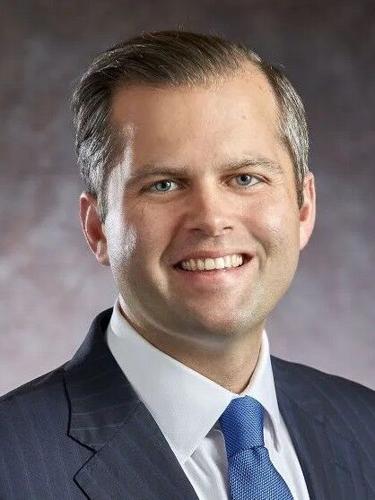
Forbes
“This is an important win for basic human rights in jails and prisons throughout the country,” attorney Jesse Forbes, who argued the case before the Fourth Circuit, told The West Virginia Record. “This case sends a clear message: constitutional rights do not stop at the jailhouse door.
“These are people coming into facilities from all walks of life who had their medical treatment in some cases completely stopped and ignored. That shouldn’t happen in a third world country much less in approximately 100 facilities across our nation.”
Another lead attorney on the case agreed.

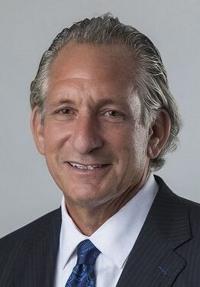
diTrapano
“The appellate court’s well-reasoned decision upheld class certification both for damages that the denial of this necessary medical care caused and for injunctive relief so that those that might be subjected to such inhumane treatment in the future are protected,” L. Dante diTrapano told The Record. “The defendants sought to overturn the district court on class certification but the appellate court rightly saw that this case is completely appropriate for certification on this basis and these claims will now move forward so that those affected will have their rights protected in court.”
Judge Nicole Berner, writing for a unanimous panel, affirmed the lower court’s decision to certify a damages class of formerly incarcerated people who allegedly were denied screening and medications for opioid use disorder at 19 Wexford-served facilities across the country, including West Virginia state prisons and jails.
But the panel also remanded the injunctive-relief class so the district court can decide a threshold question: whether the three named plaintiffs who no longer are in custody (though one has since been reincarcerated) have standing to seek relief on behalf of people currently or later held in Wexford-run institutions.
Opioid use disorder is a “progressive brain disease,” and the opinion says roughly two-thirds of incarcerated people have moderate to severe substance-use disorders. Since 2002, the court notes, the medically accepted standard of care for OUD has been maintenance medications (MOUD) such as methadone, buprenorphine or naltrexone prescribed in controlled doses and often compared to insulin for diabetes in their long-term management role.
The opinion says major medical and public health bodies – from the World Health Organization to the American Medical Association – recommend screening for OUD and providing MOUD where appropriate. By contrast, simple “detox,” or forcing someone through withdrawal without MOUD, is not considered treatment at all and can cause severe suffering, heightened risk of suicide, and increased long-term risk of relapse, overdose, and death.
The plaintiffs allege Wexford, which contracts with nearly 100 jails and prisons nationwide, intentionally structured its “comprehensive” medical packages to exclude OUD screening and MOUD unless a correctional system paid extra, even while always including treatment for other serious conditions such as cancer, heart disease and diabetes.
At the 19 listed institutions” at issue – including systems in Alabama, Illinois, New Mexico and West Virginia – Wexford concedes it contracted to provide comprehensive care but did not include MOUD, despite acknowledging that this omission violated the prevailing medical standard.
Before 2022, Wexford’s own guidelines barred MOUD in its facilities, requiring withdrawal even for people who arrived with valid MOUD prescriptions. Later guideline revisions praised comprehensive MOUD programs and recognized withdrawal’s dangers, but conditioned MOUD on institutional leadership approval, which plaintiffs say simply codified the policy of exclusion and shifted blame to jail and prison officials.
Named plaintiffs Lauren Spurlock and Heather Smith were detained in West Virginia jails, and Shawn Zmudzinski was incarcerated in a New Mexico prison. All were under Wexford’s medical care. Each has long struggled with OUD and says they were denied screening and MOUD, instead being forced through painful withdrawal.
They sued claiming Wexford maintained a uniform policy that amounted to deliberate indifference to a serious medical need in violation of the Eighth and Fourteenth Amendments.
The court summarized their core theory succinctly: you cannot promise “comprehensive medical services” and then carve out treatment for a chronic, life-threatening condition like OUD any more than you could contract for comprehensive care and exclude insulin for diabetics.
U.S. District Judge Robert C. “Chuck” Chambers certified two narrowed classes after pushing plaintiffs to tighten their definitions. One is a damages class of people at the 19 listed facilities during the relevant period who had OUD or a MOUD prescription, or were monitored for opioid withdrawal; were not continued on or screened for MOUD; and were later released.
The second is an injunctive-relief class of current and future people in any facility where Wexford provides comprehensive medical services, who have OUD or are monitored for opioid withdrawal or test positive for opioids.
The court found class members could be identified from Wexford’s own medical records, found numerosity easily satisfied, and held that common questions about Wexford’s policy, its knowledge of risks, and whether that policy was constitutionally deficient tied the class together.
On appeal by Wexford, but the Fourth Circuit panel largely sided with Chambers.
Wexford also said individual questions about injury, causation and the impact of local law would overwhelm common issues. The Fourth Circuit disagreed, emphasizing that the central liability question – did Wexford operate under a uniform, unconstitutional policy excluding MOUD from supposedly comprehensive care – is common and at the “heart of the litigation.”
The panel dismissed Wexford’s suggestion that some facilities or laws barred MOUD, noting the record showed at most one institution with alleged resistance and no concrete legal prohibitions, and that disputes over who truly held policymaking power belong at the merits stage.
It also said plaintiffs had articulated a damages model tied to their theory of liability, including an expert’s per-day denial model, sufficient for certification even if damages will require some individualized calculations later.
Because the named plaintiffs are not currently incarcerated, Wexford argues they cannot show the “real or immediate threat” of future harm required for injunctive relief. The plaintiffs respond that people with OUD face a concrete risk of re-arrest and reincarceration, and one has in fact already returned to a Wexford-served facility during the appeal.
The Fourth Circuit declined to decide that question itself and instead remanded for Chambers to develop the record and determine whether the named plaintiffs can properly represent the injunctive class.
The plaintiffs are being represented by L. Dante diTrapano and David Carriger of Calwell Luce diTrapano in Charleston and by Jesse Forbes and Jennifer Taylor of Forbes Law Offices in Charleston. Wexford is being represented by Jordan Herrick, Justin Taylor and Harrison Cyrus of Bailey & Wyant in Charleston.
U.S. Court of Appeals for the Fourth Circuit case number 25-2038 (U.S. District Court for the Southern District of West Virginia case number 3:23-cv-00476)