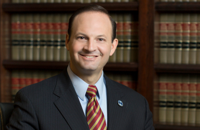


Wilson
DOVER, Del. – The top lawyers of 11 states are asking the Delaware Supreme Court to save evidence that companies use to fight asbestos lawsuits from being destroyed.
South Carolina Attorney General Alan Wilson calls preservation of these documents critical, warning that their once-planned deletion would open the door to “corrupting the legal process.” He and 10 colleagues from other states filed an amicus brief as the Delaware Supreme Court considers the issue.
“This case is ultimately about fairness and truth-seeking,” the brief says. “There is no dispute that the claims data that Defendants-Appellants seek to destroy is relevant both to the claims and defenses presently at issue in state-court asbestos dockets across the country, but also to future litigation.”
There are two avenues for asbestos victims to be compensated – sue companies in court and/or submit claims to companies that have already established bankruptcy trusts. There are dozens of these trusts.
Exposure evidence is key in court. Should someone sue Johnson & Johnson or others, those defendants want to be able to show whether the plaintiff also blamed other products in claims with bankruptcy trusts.
It's called "double-dipping," and in 2014 evidence of plaintiff lawyers manipulating the system by blaming different companies at different times for the same injuries was uncovered during the bankruptcy of Garlock Sealing Technologies.
This dispute began last year when those in control of asbestos trusts announced they were planning to destroy evidence gathered in resolved claims. Trusts have advisory committees that are often full of plaintiffs lawyers.
Companies who fight these cases in court often use claims data to show whether plaintiffs blame some companies in their lawsuits while naming others that established trusts. A Delaware judge last year stopped the deletion of records, and the trusts have appealed to the state Supreme Court.
The trusts, which are operated by boards that are aided by trust advisory committees often featuring plaintiffs lawyers, claim destruction of old records is key to protecting the privacy of claimants.
Wilson said it was “commendable” to protect personal information, but “the complete elimination of these documents would have great harm on the integrity of the legal process.”
Joining Wilson’s cause are the attorneys general of Delaware, Alabama, Alaska, Arkansas, Georgia, Iowa, Louisiana, Mississippi, South Dakota and Texas.
“With respect to defendants specifically, because of the dynamics of asbestos litigation, some defendants are at times induced to settle weak claims of liability, even if there is little evidence that a particular plaintiff’s asbestos-related disease was caused by a product manufactured by the defendant,” they wrote.
“This problem for defendants is only compounded in the (hopefully rare) cases where gamesmanship, hiding the ball, and obfuscation, rather than truth seeking, can and do occur.”
Before Garlock Sealing Technologies convinced a judge in 2014 that double-dipping by plaintiff lawyers was happening, companies facing lawsuits had no way to prove the same clients were telling different exposure histories in claims made to bankruptcy trusts and in lawsuits filed in various courts.
After the Garlock ruling, which came after the company showed exposure history contradictions in the 15 cases it was permitted to investigate, 16 states passed laws requiring automatic disclosure of trust claims to civil defendants so they could find out who was being blamed for what.
Vice chancellor J. Travis Laster ruled last year that without the claims data, defendants will lose more cases and settle more claims for larger amounts.
“For solvent defendants, the settlement trusts constitute the only realistic source of information about other potential exposures and their severity,” Laster wrote.